Devon Energy to spend $1 billion in Eagle Ford
Oklahoma City-based Devon Energy Corp. plans to invest $1.1 billion into the Eagle Ford Shale in 2014, according to company officials. The company has plans to drill 200 wells in the region this year.
Last month, Devon sold the majority of its Canadian conventional assets to Canadian Natural Resources Limited for $2.8 billion and they intend to use the proceeds to repay the debts incurred for the Eagle Ford shale expansion, officials say.
Devon Energy acquired 82,00 net acres in the Eagle Ford Shale from Geo Southern Energy for $6 billion in late February. The acquired assets are located in DeWitt and Lavaca counties in Texas and have at least 1,200 undrilled locations.
BP creating new business for onshore assets
BP Upstream CEO Lamar McKay announced March 4 that BP would create a separate and more competitive business to manage its onshore oil and gas assets, including its shale operations.
BP PLC, which will own the new business, currently oversees the region through its North America Gas group based in Houston.
McKay says that his company has reshaped its North America Gas portfolio over the past few years. They did that by shedding non-core assets and concentrating on unconventional development such as the Eagle Ford Shale.
The business will have a separate management team and separate governance, processes and systems designed to address the region’s unique competitive and operating environment, McKay says.
BP plans to start reporting separate financial results for the new business in 2015.
Heated frac-tank fleet operator expands
It gets cold in the winter in North Dakota and hydraulic fracturing operations need hot water.
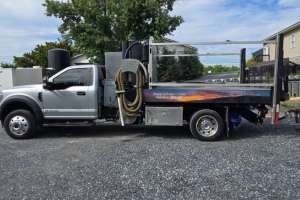
Intercept Energy Services – a Canadian company that specializes in heated frac water trucks – has deployed two new frac water heated-tank trucks to North Dakota.
Intercept trucks can heat water to 140 degrees F and incur only 1 to 3 percent heat loss during transportation, according to Intercept President Randy Hayward.
Hayward noted that the company only bills for the hours that the heated water tanks are used, not for the time it takes the truck to set up on the well site. Intercept uses a propane-based heating system to heat the water.
MarkWest Energy to beef up operations
MarkWest Energy Partners LP announced plans to build 17 major processing and fractionation projects in the Midwest and Northeast.
The 17 new projects will take place at nine locations in Ohio, Pennsylvania and West Virginia.
The Denver-based company does most of its work in the Utica and Marcellus shale plays. The company says it has brought seven new projects online in the past four months, including five cryogenic processing plants and two fractionation facilities.
Cryogenic processing plants separate natural gas liquids, while fractionation plants separate those liquids into butane, ethane and propane parts.
GE, Chevron Corp. expanding partnership
General Electric and Chevron Corp. have announced plans to expand their partnership and promises to send business to GE’s planned Oil and Gas Technology Center in Oklahoma City.
The Chevron GE Technology Alliance will focus initially on flowmeters for oil, natural gas and other products.
“It’s one of the many examples of things we’re going to do at the center, and the kind of collaboration we’re going to do with the industry,” says Mike Ming, general manager of the Oklahoma City facility.
Mining company agrees to settlement
As a result of a settlement, Alpha Natural Resources Inc., Alpha Appalachian Holdings (formerly Massey Energy) and 66 subsidiaries have agreed to spend an estimated $200 million to install and operate wastewater treatment systems and implement systemwide upgrades to reduce discharges of pollution from coal mines in Kentucky, Pennsylvania, Tennessee, Virginia and West Virginia.
The settlement, which covers about 79 active mines and 25 processing plants in the five states, was announced March 5 by the Department of Justice and the U.S Environmental Protection Agency (EPA).
The EPA estimates that the upgrades and advanced treatment required will reduce discharges of total dissolved solids by over 36 million pounds each year, and will cut metals and other pollutants by approximately 9 million pounds per year. The companies will also pay a civil penalty of $27.5 million for thousands of permit violations, which is the largest penalty in U.S. history.
The companies must also build and operate treatment systems to eliminate violations of selenium and salinity limits, and also implement systemwide improvements to ensure future compliance with the Clean Water Act. They’re also required to maintain a database to track violations and compliance efforts at each outfall.
The government complaint alleged that, between 2006 and 2013, Alpha and its subsidiaries violated limits in 336 of their state-issued CWA permits, resulting in the discharge of excess volumes of pollutants into hundreds of rivers and streams in the five states. The violations also included discharge of pollutants without a permit.
Continue reading for free