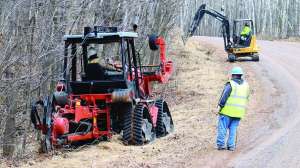


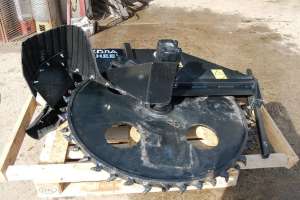
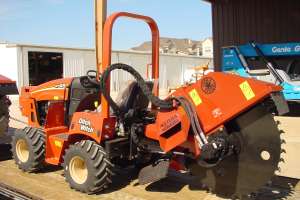
A rock saw isn’t a digging tool that is in every contractor’s arsenal. That is because for many conditions, it is not the piece of equipment you want to look toward.
“A rock saw is probably the world’s worst dirt-digging machine,” says Bob Erickson, manager of engineering for rock saw maker River City Manufacturing in Austin, Texas. “It’s easy to run a saw through dirt, but generally the dirt will cling to the teeth when you’re running an upcutting saw. The dirt will go around and fall off the back and the ditch can be just as full as when you began. The bottom line is that a rock saw works better in rock than dirt.”
But the conditions in which a rock saw is most effective may not occur regularly enough to justify the permanent purchase of the equipment. You may be looking at a rental just to get a particular job done. So maintaining the most significant wear item on a rock saw, the teeth, becomes somewhat difficult.
“That’s an area where we will see problems crop up, because if you rent a saw, it comes to you with some type of teeth on there, and whether the teeth are good or not is another issue,” Erickson says. “A lot of people when they’re renting a machine understandably don’t want to put new teeth on when they’re returning it in a few hours, but the condition of the teeth is one of the biggest things that can either hurt or help you.”
If the teeth become too blunt and rounded over, the saw will not be able to penetrate effectively. When should you replace the teeth then? It’s a balancing act between the cost of a new set of teeth and productivity, Erickson says.
“The teeth will never stay needle-point sharp, but if they’re blunt and rounded it’s almost a no-dig condition. How far can you go on those teeth and still get the job done?” he says. “You’re trying to balance the cost of a set of teeth with the revenue you’re getting for cutting that ditch. It may actually cost you more to not replace teeth because your productivity is going to increase when those teeth are nice and sharp.”
Not only will blunt teeth not be productive, they will also produce unnecessary wear on other components as the machine continues to work hard and try to penetrate.
“You’ll just beat the machine to death,” Erickson says. “It will shake and sort of destroy itself.”
While the timetable for a tooth replacement may change among contractors as they weigh the various factors, the minimum criteria that must be met is the saw making progress even if it’s slow, Erickson says.
“I don’t know an absolute pat answer about tooth replacement other than you have to be able to penetrate to make that saw pay its way,” he says. “If the machine is still moving forward and spoils are coming out of the ditch, you’re productive.”
For more tips on rock saw maintenance, check out the Machine Shop feature in the September/October issue of Dig Different.
Continue reading for free