
Across Canada, environmental regulations have steadily evolved, narrowing the gap between the byproducts of vacuum excavation and the industry’s ability to manage them responsibly. NCM Hydrovac owner Kris Norris says he began paying even closer attention as more than 200 trucks in Ottawa alone were dumping slurry soils each day.
The commissioning of an on-site, Italian-made vac spoil and clean-water separation system marked a major development for NCM Hydrovac in Ottawa this year. Combined with the company’s designation as a licensed soil management processing site and the opening of its soil transfer station, the move is helping NCM gain traction as a waste and environmental services leader while advancing vertical integration within the vac truck industry.
Based in Ontario’s capital, NCM specializes in hydroexcavation for utilities and sewer infrastructure cleaning. The company employs 30 people and operates a fleet of 16 vac trucks, including eight combination sewer units equipped with front-mounted 1-inch hose reels and roughly 600 feet of hose for cleaning pipes, utility holes and catch basins.

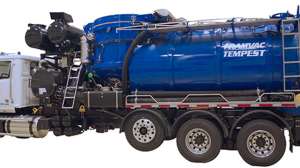
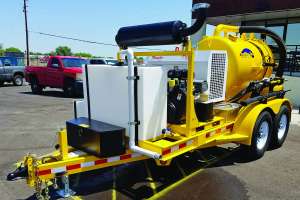
Vactor combination units and Super Products’ Mud Dog line are among the company’s go-to equipment. Last year, NCM added two new Sewer Equipment Model 900 ECO combination sewer trucks, and recently expanded the fleet with a new hydrovac from Tornado Infrastructure Equipment, ensuring equipment remains current as older units are phased out.
From recent waves of sewer work to ongoing demand for vac truck services, the business is applying a systems-thinking approach to maintain operational resilience and stay ahead of regulatory and market shifts. Vacuum excavation is intended to be a safer solution to traditional digging, Norris says, while acknowledging that managing excavated soils remains a challenge. Founded in 2012, NCM Hydrovac has increasingly focused in recent years on vertical integration within the vac truck industry.
A NEW CLASS
The Canadian government in Ontario, emphasizing excess soil management guidelines, has reclassified excavated slurry as “liquid soil waste” requiring disposal only at licensed facilities. Soil tracking rules demand documentation of where material originates, how it is handled and where it ends up.
At the same time, enforcement actions against illegal dumping and the threat of fines have raised the stakes for contractors.
Last year, NCM obtained a nod from the Ministry of the Environment and was designated as a licensed Class 1 Soil Management processing site, authorizing the company to process hydrovac slurry waste and dry soils including nonhazardous contaminated soils.
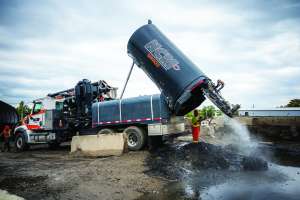
They launched a new soil transfer station leveraging Italian-made equipment supporting vac spoil and clean water separation technology that, according to Norris, is a first-of-its-kind for this type of system in the greater Ottawa area. The new transfer facility was named by Norris as Can Dump Depot.

The station accepts vac truck loads and recycles the material for incorporating back into the environment and disposing of any nonreusable or recyclable materials properly. It’s for their own purposes, but also for other operators.
MANAGING IT
Support of 24-hour emergency work is a necessary hedge in climates like Canada’s, with freeze-thaw cycles and seasonal ground movement in regions like Ontario driving water main failures, the need for quick hydrovac on utility locates for supporting safe digging, inspections and break repairs.
Crews can be found around Ottawa and surrounding areas with NCM also bidding on remote jobs for customers in the company’s territory. Their original thought behind delivering the new processing facility, a project that was more than five years in the making, was meeting the company’s own needs, staying in compliance, supporting steady growth and expansion.
Norris and team must keep equipment ready, staff on call and disposal capacity available at all times to handle any sudden surges. Before, NCM had been relying on a small shaker deck that separated the stone and the sand from the slurry and would wash it clean.
A pond with freshwater was pumped to the company’s wash plant as part of that previous setup and included sampling and monitoring equipment. “We’d treat it that way, let solids collect, then use an excavator to bail the material out, pile it and let it dry,” Norris provides.

Remaining material would be hauled away or crews built berms with it. Even with just their own trucks, it was becoming almost unmanageable. “You turn landscapes into saturated wetlands,” he adds. “The material doesn’t dry out, the ground becomes like a lagoon.”
GOING DEEPER
In January 2025, NCM took possession of their new equipment from Matec Industries and began fabricating the new plant on site. The first vac loads were washed in April, and the system went through testing and validation paces before opening to others.
It’s part of their next big move tied to managing vac spoil considering the transformations that are taking place. What NCM needed was a more permanent and reliable system that could handle liquid soils at scale, not just screening aggregates, but also treating the fine silts and clays suspended in the water.
Today, they have a fully operational soil transfer station with modular equipment and controls from Matec and a custom modified filter press — moving slurry through multiple stages of screening, clarification and pressing, recovering clean water and reusable aggregates, minimizing waste.
CLEAR RESOLUTION
At the center of the new facility’s operation is a 90,000-liter deep-cone clarifier and a 40-foot dirty water holding tank, which together anchors a multiphase separation process and is designed for live, continuous handling.
It starts on a recessed concrete dump pad large enough for four trucks to unload at once. Sloped floors guide the vac spoil toward a catch basin and material treatment begins immediately. Larger rock and debris are removed while flow is directed into the dirty water tank.
Agitators keep material in suspension, so solids don’t settle prematurely, allowing downstream equipment to maintain a consistent feed. A screening component pulls out any trash, grass, leaves, seeds, wood chips, other organics. Debris is screened from 2 inches down to 2 mm before the slurry mix moves into the main separation system, clarification and pressing phases.

It is pumped into the deep-cone silo where the finer separation begins, and a polymer treatment chemically binds fine particles so they can settle out of the water stream.
Initially, water samples are pulled, and a clear tube allows for operator visibility as an automated dosing system goes to work. An evaluation of how quickly solids bond and settle occurs, and polymer dosing can be adjusted in real time. The feature helps with eliminating guesswork and preventing chemical waste.
“A laser eye times how long it takes solids to settle,” Norris explains. “If it’s longer than 40 seconds, it discharges that sample, increases the polymer dose and starts again. If it’s less, it dials the dose back down. We’re always looking for that exact perfect treatment level.” The system resamples every 1 to 2 minutes, taking steps to that settling target.
As solids flocculate and drop to the bottom of the cone, clarified water overflows into a clean-water tank. Norris says independent lab testing confirmed suspended solid levels of less than 1 micron.
The clean water that’s reclaimed is reused on site, flowing back into the plant to wash incoming material and loaded directly back into NCM’s vac trucks, and Norris says they go back to work.
KEEPING UP
The on-site upgrades and additional capacity for NCM were becoming less of an option and more of a mandate. Now they are kind of demonstrating what future-ready waste handling could look like in an industry under increasing scrutiny, tightening regulations and environmental standards.
In addition to their new soil transfer station and technology, the company has also invested in a new 11,000-square-foot steel building for its sewer waste processing operations. There is an indoor dump pad with two full bays and sloped floors that channel flow into a catch area, meeting all NCM’s requirements and regulatory obligations to contain, handle and dispose of sewer debris effectively and efficiently.
NCM is trying to have more of a presence and quality storefront to represent the business.
Their newly constructed enclosed building houses both the sewer and contaminated liquids dump facility and practical new amenities like interior office space, change rooms, showers and a maintenance shop for a growing fleet.
The vac spoil processing remains outdoors at present, with NCM exploring a covered structure for winter operations, the owner says.
LOOKING INTENT
For Norris, getting the new soil transfer station operational was not just about getting past a finish line. He wanted to go over the top.
The transition came through continuous improvement and new integrations year after year that bring them closer to the end goal — meeting customer needs daily, supporting growth, not ignoring current realities and aligning with what the Canadian government wants.

“There’s been a progression up until this point and then it was finally like a hard stop of 2025 when the ministry said all liquid soils have to go to a licensed dump facility,” Norris says. “For example, if the permit says you’re using a loader but you’re actually using an excavator, they’re very critical about what’s involved in the process of permitting the facility.”
The challenge wasn’t just about producing washed stone; it was about creating a closed-loop process that could clarify water, recover usable sand and manage liquid soils under regulatory oversight.
NCM began researching equipment makers and capturing insights across North America and Europe. They looked closely at Canadian oil and gas, specifically drilling and fracking operations, studying how others were managing liquid waste and dealing with fluid-heavy waste streams.
Next, they turned to the conventional North American dirt screening and rock crushing companies. “As we saw through our own internal growth and in the industry in general, the amount of slurry became overwhelming,” Norris recalls. “So we started looking for the tech, who’s doing this right, right now.”
It didn’t happen overnight. NCM started buying equipment and doing a lot of trial and error. When things didn’t work, the company would sell it, buy different equipment and try again. Manufacturers wanted to stay in their lane. The team realized finding a solution for the type of vac load-handling system they wanted was tough.
The notion was largely dismissed. Norris recalls being told, “You’re going to get out what you put in. If you put sand in, you’re going to get sand out.”
Eventually they landed at Matec in Italy.
UP FIRST
The final stage of the process is a filter press that compresses the remaining slurry into stackable “patio slab” cakes of dehydrated soil. The mechanism reduces disposal costs and can ensure nothing leaves the plant in an unstable or contaminated state.
Norris says the press was modified to be an even better match for slurry loads. An upsize to 120 plates, from 90 smaller ones, gave capacity a boost.
The press processes about 20 tons of sludge every 50 minutes. Running five to six cycles in a 12-hour shift, the press handles roughly 100 tons to 120 tons of pressed material per day.
A Colt 1000 mobile screener (Terex Corporation) handles up to 80 tons per hour of dry soil, removing larger rock and organics before it enters the main separation process.

Combined with the slurry line, total system throughput reaches about 100 tons per hour without delays.
Separated aggregates and sand are screened, washed and graded — returning clean stone and hydro sand suitable for reuse in backfill and utility protection. Material can be reused as clean fill, applied in erosion control or hauled to landfill at a fraction of its original volume.
For materials that are reusable and not earmarked for transportation to landfills or designated as special waste, more of those can be made available to customers who need them, making acquisition easier. By reintegrating, Norris suggests they are reducing resource depletion and closing the loop between excavation and restoration.
GETTING STACKED
NCM is getting bigger in terms of equipment and assets, trying to provide a service and add value while also taking a more critical look at the byproducts produced through vac operations. The organization has also taken ownership of a system that enables fewer municipal water resources to be diverted from local communities and households, Norris says.
This is where he sees NCM plowing a path and where they are becoming more of an open source in an industry. “We took the approach of, here was a way for us to try and be a leader in our community and in our industry and set a bit of a benchmark for how vac trucks need to manage their liquid soils,” he says.
“We’re still open-door policy; guys can come and register an account and dispose of their material properly.”
The containerized design of the new slurry plant will allow NCM to scale capacity like stacking LEGO-style building blocks, Norris points out. The layout is built for high-volume throughput, and they have the option of adding tanks or presses as their internal needs, or external demands, grow.
People aren’t telling Norris it can’t be done anymore. He says what he sees now are more makers who were never in this line of soil before entering the market trying to provide a solution and fill the “void.”
“Now that it’s built, operating and processing, the technology is available,” Norris continues. “It’s out there. So, they’re not just out dumping and asking, ‘Where can we take it? Who’s licensed?’ Dumping may be causing other impacts, and we now have a way to manage it properly. Our hope is that the industry recognizes the benefit and embraces it so it can grow.
“We’re plowing a path trying to provide them with a solution to the pollution. There’s no real excuse anymore.”
Continue reading for free