
Wages for oil and gas professionals reached a record high in March, according to a Rigzone analysis of data from the U.S. Bureau of Labor Statistics. Looking at the combined categories of oil and gas extraction and support activities for oil and gas, energy workers were paid an average of $33.22 per hour, higher than any other time recorded.
Part of what’s driving up wages, they believe, is high productivity because of shale activity.
“Production levels are at their highest levels since the mid-1980s,” says Paul Caplan, president of Rigzone, an online information clearinghouse for the oil and gas industry. “We’re hitting record production, and a lot of that is driven by shale in the U.S.”
Several specific shale plays seem to be leading the way in that production. “What the U.S. Energy Information Administration has said is that oil production from hydraulic fracturing in North Dakota and Texas made up 83 percent of oil production growth in the U.S.,” Caplan says.
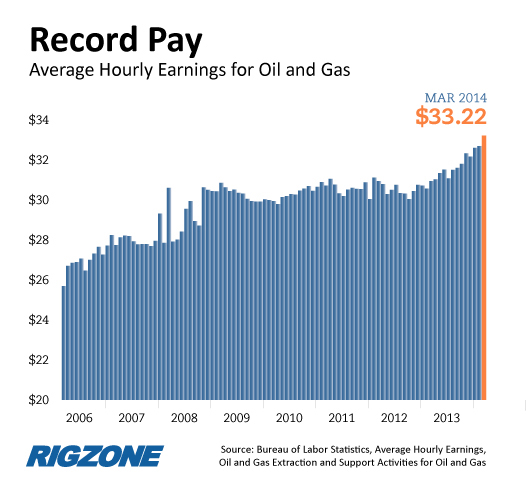
Plotted on a chart dating from 2006 to the present, wages have been on a consistent climb in the past eight years, with only a few slight drops (and a few larger ones around the 2008 recession).
“Record production activity in the U.S., coupled with an increased need for experienced oil and gas professionals is having a positive impact on wages,” Caplan says. “Companies are having to pay up to attract skilled talent and energy professionals can reap the rewards of a solid job market.”
In that regard, technology has opened up a lot more possibilities. So, too, has more success in searching for deposits in many of the shale areas that are huge fields. “That certainly has driven production,” Caplan says.
The hourly rate, obviously, fluctuates depending on the specific job. Senior level engineering positions are often more difficult to fill, and, Caplan notes, in some areas, there are huge gaps between supply and demand in positions. While some areas of production are easier to fill because they may require less experience, many production jobs are still difficult to fill because they require highly specialized skill sets.
Continue reading for free