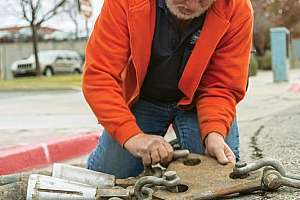
Paying attention to what you are doing and making sure you know what is belowground where you are working will not only save your company money and extra work — it could save lives, too.
Locating water, power, fiber optic and other lines before digging seems like plain common sense. And yet, statistics from a 2012 OSHA report showed that every three minutes a utility line was damaged by excavation. The federal statistics also showed that more than a third (34.1 percent) of all serious pipeline incidents between 1991 and 2010 resulted from excavation damage.
Calling in hydro- or air-excavation equipment to expose utilities can prevent crews from damaging lines — unlike an excavator bucket, these methods are nondestructive. But not every contractor has access to these machines. Contractors using trenchers, boring machines and directional drills to get to where they need to go must take other precautions.
LOOKING DOWN
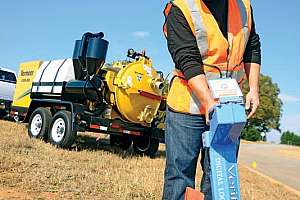
Utility locating devices are an important tool in avoiding strikes. Whether you have your own equipment on hand or can call in a utility locating services company, it’s important to find out what you are digging near.
Pegasus Utility Locating Services, profiled in this issue, has been serving contractors and homeowners since 1994 when Colission Wells founded the company in Phoenix. Wells has kept the company’s equipment as up-to-date as possible: “Having the latest and best technology available is important. It gives us the ability to find just about anything at typical scanning depths.”
Pegasus has several locators capable of everything from doing 3-D models to hearing the sound of leaks from a lateral distance of 150 feet.
With the construction industry bouncing back from the 2008 recession, Wells now plans to expand his company with branch offices as needed.
THE STANDARD
Before starting excavation work, there are several standards OSHA recommends, including:
- Determine the approximate location of utility installations such as sewer, telephone, fuel, electric and waterlines, and other underground installations.
- Contact the utility companies or owners involved to inform them of the proposed work.
- Ask the utility companies or owners to find the exact location of underground installations. If they cannot respond within 24 hours or cannot find the exact location of the utility installations, you may proceed with caution.
Another tool for contractors who may not have their own utility location equipment are services such as 811 — sometimes called Diggers Hotline or One Call. With 811 services, contractors can call three working days before digging and have the lines marked to show where these utilities are located.
Each state has its own set of rules and regulations. To learn more about those, go to www.call811.com.
USING CAUTION
Our Safety First feature this month focuses on predicting safe outcomes. Think ahead to the excavation you are about to do and consider what dangers could be ahead and what you can do to help eliminate them.
The feature recommends using safety observations rather than actual incidents to predict the future. You’ve been in this business a long time, and you probably have seen your share of accidents — so you have a pretty good idea what to expect. Now put that experience to use and create a safe working environment for yourself, your crews and the general public.
WHAT HAVE YOU SEEN?
As you read through this issue, we want you to think about jobs you’ve been on. What is the most complicated job you’ve tackled where you’ve had to use a locator? What made it complicated?
Email me at editor@digdifferent.com or call me at 800/257-7222 with your story.
Continue reading for free