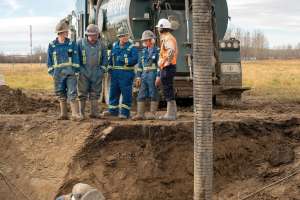
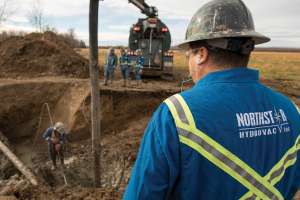
Buoyed by an emphasis on employee safety and a sharp focus on nothing but hydroexcavating, Northstar Hydrovac has grown into a multimillion-dollar-a-year company with a fleet of 30 hydrovac trucks rumbling daily throughout western Canada, primarily in the sprawling oil fields of northern Alberta.
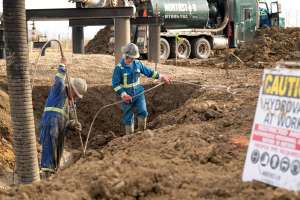
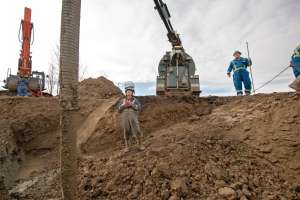
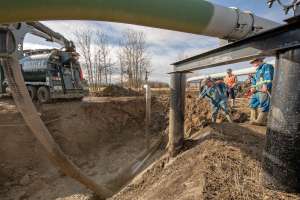
From its headquarters in Grande Prairie, as well as strategically located satellite operations in Fort Saskatchewan, Valleyview and Whitecourt, the company services more than 300 different clients a year, primarily oil field- and construction-related companies. More than 70 percent of the work centers on exposing underground pipelines and wires in preparation for building or maintaining oil pipelines.
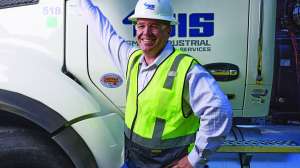
The remainder revolves around commercial infrastructure, municipal projects, highway and road construction, and electrical-power projects, says Ken Wittig, the company’s business development manager. He also co-owns the company along with founder Wilf Rast and three silent partners.
The privately owned company has built its reputation in Alberta’s oil fields. And Wittig maintains that one of the keys to the company’s success since it was established in 1998 is an unerring focus on only hydroexcavating.
“We stick to what we know and strive to excel at that one thing,” he explains. “That allows us the best opportunity to keep our clients satisfied on an ongoing basis.”
KEYS TO SUCCESS
Two other factors heavily contribute to the company’s success. The first revolves around creating a familylike atmosphere for employees, which aids retention efforts in an industry known for high employee turnover.
“We really value our employees,” Wittig says. “Everyone is unique, and Northstar tries to accommodate individual needs and family situations as they arise. We support our employees whenever possible, whether they have a last-minute family emergency, require time off, or need financial help for, say, a flight home to deal with personal circumstances.”
The other factor is comprehensive training and safety programs. “It’s extremely important that all of our employees are able to do the job required by the customer in a safe and competent manner, then return home safely at the end of the day to their families,” Wittig says. At the time this article was written, the company had compiled a streak of 2,098 days without a recorded lost-time incident.
A reputation for safe work practices and safety is extremely important in the oil patch, Wittig says, noting that the company employs a team of experienced safety professionals, including a health and safety manager, field-safety personnel and office administrators who stay on top of this complex part of the industry. “If your employees operate in an unsafe manner and are a liability to your customers on their work sites, no one will hire you,” he says. “And with no work, you’re out of business in a hurry.”
FROM OPERATOR TO MANAGEMENT
Wittig, 39, was operating a bulldozer for a highway-construction company in the fall of 1998 when a neighbor told him that Northstar Hydrovac was looking for employees. “That’s how my career at Northstar got started,” he says.
After putting in time as a swamper on hydrovac trucks, Wittig became a truck operator before moving up the ranks in several management positions. The company owners recognized his dedication four years ago by offering him a stake in the company — an offer he gladly accepted.
“I love the work because it’s something different every day,” he explains. “One day I’m out in the oil fields and shaking hands with customers and potential new customers, and the next day I could be managing a project, taking care of the fluid and mud management.”
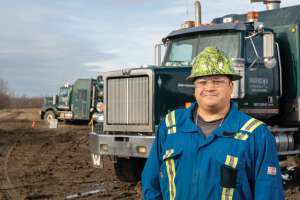
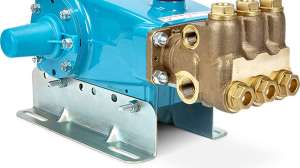
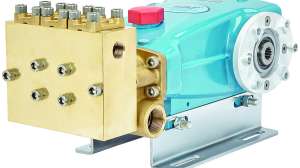
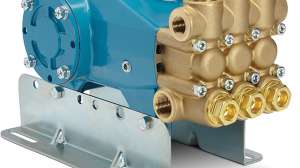
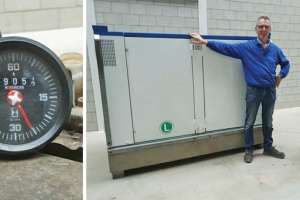
To service its customers, the company owns 30 hydrovac trucks, most of them tri-axle units built out by Foremost on Western Star 4900 series truck chassis. Most of the trucks feature a 13-cubic-yard debris tank, a 2,000-gallon water tank, a water pump manufactured by Cat Pumps (3,500 psi at 18 gpm) and a blower made by Robuschi USA.
The tri-axle units boost productivity because they can carry more water and debris. That allows them to work longer in between disposal and water runs and still comply with road weight restrictions. “Smaller trucks can’t carry as much water, so then you require a water truck or a water source nearby,” Wittig points out. “It’s just more economical to use tri-axle trucks, especially considering the distances that many of our work sites are from a freshwater supply and dump sites.”
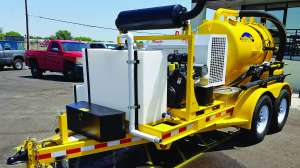
To handle expected growth in municipal markets, the company has recently invested in a smaller and lighter tandem-axle hydrovac truck made by Rival Hydrovac. It features a 7-cubic-yard debris tank, an 800-gallon water tank, a water pump made by Cat Pumps and a blower manufactured by Robuschi USA.
In addition, the company owns several water trucks, both tri-axle and tandem-axle units built out on Western Star chassis. The tank sizes range from 4,400 to 5,400 gallons.
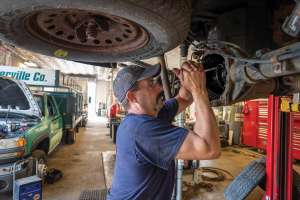
To keep such a large fleet running, the company employs four full-time mechanics. Most repairs are made in the shop, though there are times when mechanics travel out to job sites, depending on the complexity of the repair. “In either case, the mechanics are vital to the company’s overall operations,” Wittig notes.
“Downtime is one of the worst things for our clients,” he explains. “We’re just a piece of the puzzle on job sites, so if we break down, it can hold back everyone else on the job site. So we need to get up and running as fast as possible.”
OVERDEPENDENCE NOT AN ISSUE
Wittig says company owners aren’t particularly concerned about how much the business relies on oil field work. There have been ups and downs in the oil industry since the company’s inception 20 years ago, but efficient cost controls and planning have helped the company avoid downsizing or layoffs, he says.
“We significantly reduced capital expenditures during hard times and closely managed our employee costs,” he explains. “We kept very close track of everyday expenditures.
“We also pursued different avenues of work, focusing more on maintenance-type jobs instead of new-construction pipeline jobs,” he adds. “For example, integrity digs are a big thing right now. When pipelines get old, oil companies are required to check the thickness of their walls in order to confirm the integrity of the line. Sometimes we have to expose these pipelines so appropriate repairs can be made.”
In addition, the company doesn’t immediately hire new employees when work increased. Instead, Northstar Hydrovac asks existing employees to step up and shoulder the extra load when necessary. “In particular, our field supervisors have picked up the extra workload in different areas,” he says.
Asking existing employees to do more work is easier when companies treat them well, which is why Northstar Hydrovac managers and supervisors reward workers and ensure they’re properly trained.
“We have strict hiring practices and enforce a tough drug-and-alcohol-use policy,” Wittig says. “We try our best to hire standup people with good work ethics and attitudes. We also invest in them — train them up to our standards at a considerable cost to the company each year.”
To show its appreciation for employee loyalty and minimize turnover, the company implemented a retention-based bonus program that rewards long-term employees. “We like to keep our key senior guys because they mentor the new guys — teach them the way Northstar does business,” he explains.
GOOD GROWTH POTENTIAL
Looking ahead, further growth is on the owners’ agenda, prompted by slowly increasing oil prices that are spurring oil companies to consider expanding facilities and pipelines. That growth could include investing in more hydrovac trucks in 2019 and expanding into neighboring provinces, Wittig says.
“Our goal is to be the best hydrovac company out there, providing excellent service at a good value to our customers,” he says.
As for service diversification, it remains unlikely. “We’ve seen a lot of other companies succeed when they diversify, but we’ve also seen a lot of companies fail,” he says. “We have a lot of families to look out for, so we’re going to keep sticking to what we’re good at.”
Playing in the mud can be a challenge
Northstar Hydrovac’s slogan is “We like to play in the mud.” And its primary clients — the owners of oil field pipelines — give employees ample opportunity to do so.
While some of job sites where employees work are just minutes away from one of the company’s four facilities in northern Alberta, others are hours away in remote locations, accessible only via narrow and winding dirt-and-gravel roads. These crude roadways quickly become treacherous and muddy quagmires when it rains or snows.
“You need a good set of tires and chaining up is a must,” says Ken Wittig, the company’s business development manager. He also is a co-owner of the company.
Some of the roads are radio-controlled. Because the roads are so narrow and include blind corners and single-lane bridges, drivers are required to use a specific radio channel to broadcast their location, kilometer by kilometer. “That way other people on the road know what to expect as they come around a corner or a blind spot,” Wittig explains. “You just go slow. You’re definitely not passing other trucks.”
Wittig drove a hydrovac truck for years and says winter driving in remote locations can definitely be a “white-knuckler.” Sometimes drivers must traverse 50 or 60 miles of unpaved roads to get to job sites. “It definitely can be challenging,” he says.
Sometimes these unpaved roads include 30- to 45-degree hills, known as mandatory-pull hills, where a large tractor or bulldozer winches vehicles up hills and lowers them down the other side. “That’s definitely interesting with a truck that weighs more than 30 tons,” Wittig says.
All of Northstar Hydrovac’s trucks are equipped with electronic logs and GPS systems. That ensures that dispatchers always know where trucks are — an important safety consideration in areas so remote that cellphone service might range from poor to even nonexistent. “We can keep an eye on them and know how to get to them if they’re stranded or broken down,” Wittig says.
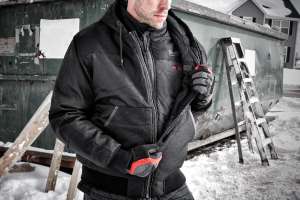
Drivers also usually take along a backpack with extra food, plus an extra pair of socks, and wear one-piece Helly Hansen suits and underwear. “You never know how long you’re going to be out in the bush,” Wittig notes. “It could be a short day or a really long day.”