
On the south-central border of Kansas, the little town of Harper is home to DLS Underground, a horizontal directional drilling and hydrovac company that keeps breaking new ground.
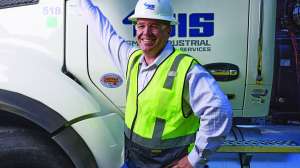
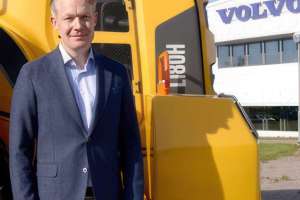
Owners Dustin and Lindsey Stansbury — from thence the initials, DLS — are homegrown business owners. He grew up on a farm and attended Butler Community College on the other side of Wichita. He worked for seven years with a Midwest pipeline construction company learning to operate HDD equipment before taking a sales role at Vermeer Great Plains.
At age 28, after years of listening to co-workers talk about starting a company of their own, Stansbury actually did. He had watched his farmer grandfather work for himself as a salesman in winter months and mopped floors and stocked shelves for his mother when she decided to open a small grocery store, so his entrepreneurial instincts were homegrown, too.
With his wife working in a dental hygiene practice to provide for the young family, he took a month and a half off and worked up a plan. He borrowed $10,000, with half of it earmarked to pay for rental of a Vermeer drill package, Stansbury then called former Vermeer Great Plains customers and contractors looking for drilling opportunities. The jobs came and DLS Underground broke ground.

STEADY GROWTH
Eleven years later, the company has grown from Stansbury, his pickup truck and one rented machine to 17 employees and two equipment yards with five HDD machines and assorted other pieces of heavy equipment in them. The HDD units are Vermeer and Ditch Witch brands. “When I came up through the ranks, my employer had Vermeer drills so that’s what I learned on,” says Stansbury, who came to appreciate the Ditch Witch machines, too.
By 2019, DLS Underground had begun to win more contracts in and around Wichita. Because it is a 40-minute drive to Wichita from Harper, Stansbury opened a second equipment yard and office in the state’s largest city. Today, about half of the company’s business is in the Wichita urban area.
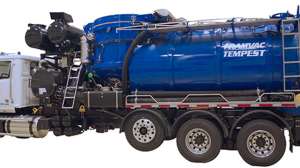
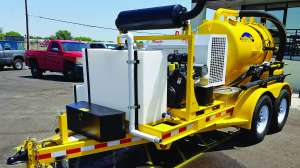
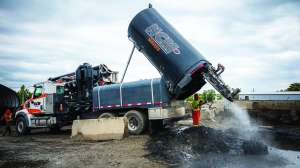
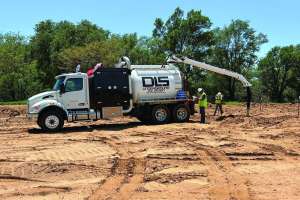
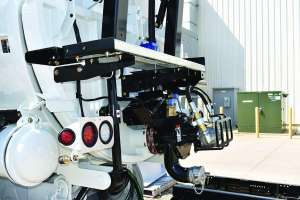
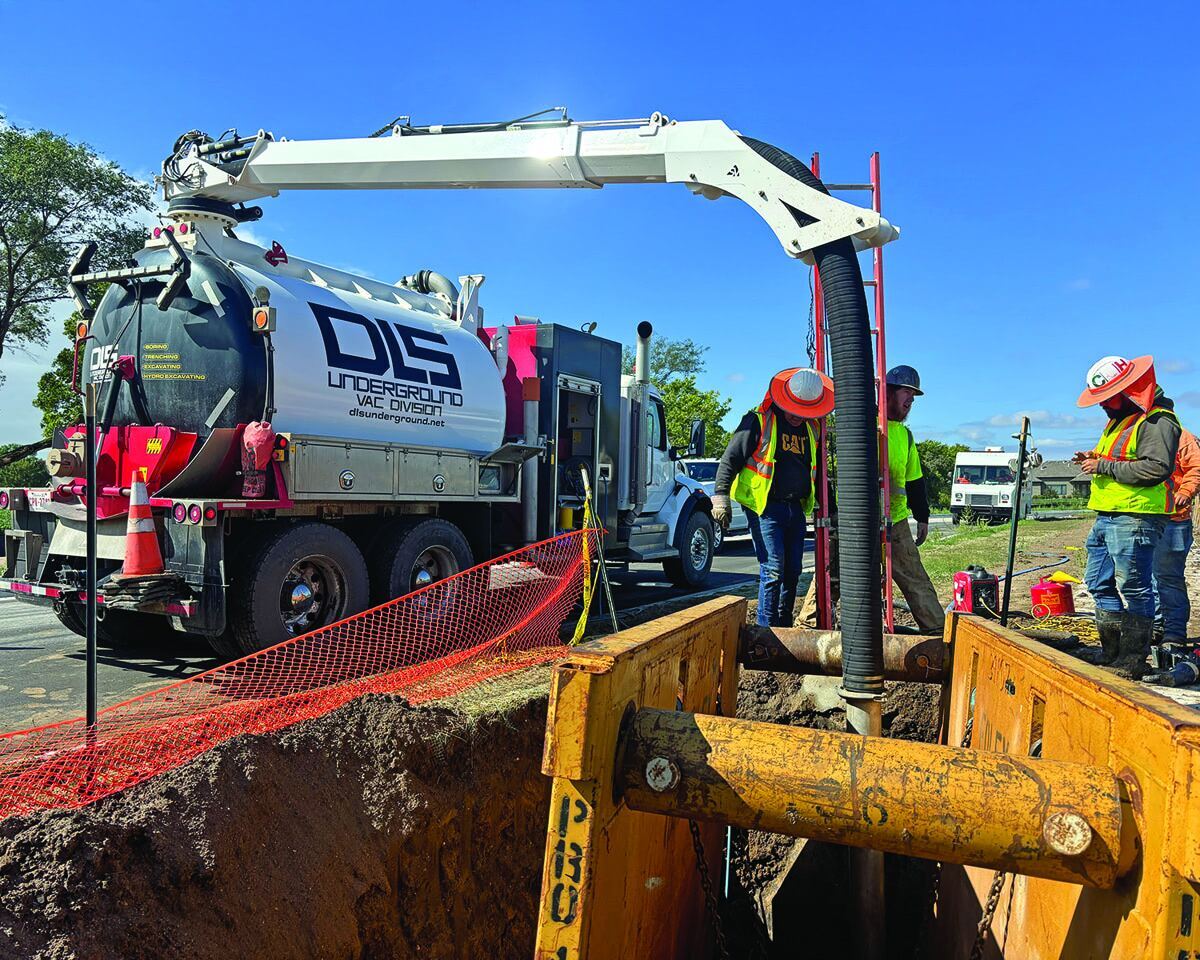
Besides horizontal directional drilling, Stansbury also has invested in hydrovac trucks and is quickly building up that part of the business. He owns three SmartVac hydroexcavation trucks, each with 8-cubic-yard debris capacity and a 3,200 cfm suction unit. A fourth truck is on order with a fifth coming later this year.
“The vacs probably account for a quarter of our business right now,” the company owner says. “It will account for half of our business by next year. I have plans to go into Colorado and to expand into Oklahoma with an office in Oklahoma City. The hydrovac division is expanding rapidly.”

TOUGH WORKING CONDITIONS
Both tech systems are busy at this point. The toughest drilling jobs Stansbury thinks back on include a continuous bore of 1,800 feet in a rear blind easement that effectively blocked operators from seeing the end of the project from the beginning — a totally blind job that relied on technology and radio communications. It worked out fine. In another case, the company bored a path for a 20-inch casing pipe in the town of Pratt. “That was some big pipe, as big as we’ve done so far.”
While Kansas doesn’t have any Rocky Mountains running through it, southern Kansas soils encountered by drills are not always the friendliest, according to Stansbury. He talks about red rock west of Harper, about limestone encountered in bores east of Interstate 35 and challenging sand deposits in Wichita. “And sand is a whole different animal. You have to be very universal in your training when you start drilling in Kansas.”
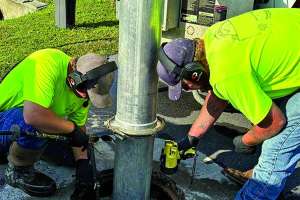
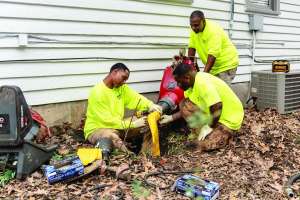
As for the vac work, the calls are for removing soil around structures in oil or natural gas fields, cleaning out sewer and septic pits and, at the moment of the interview, helping install fire lines at a Walmart store in Wichita. The current temper of the country regarding energy — “Drill, Baby, Drill” — bodes well for more oil field work, Stansbury says. “There is going to continue to be a demand for vac work. There are never going to be fewer utilities in the ground, only more, and there may come a time when the government or property owners require contractors to hydroexcavate a site for buried lines before they are allowed to dig.”
Some of the biggest HDD customers of DLS Underground include IdeaTek, a broadband service provider headquartered in Buhler, Kansas, that lays a lot of fiber optic lines — 7,500 miles across the state, so far. DLS has benefited from its expansion in rural areas. Another is Kanokla Networks, a two-state fiber-optic provider that began 75 years ago as a telephone cooperative in Harper County.

MORE THAN JUST TRENCHLESS
Such large customers notwithstanding, rural southern Kansas probably is not the friendliest market for directional drilling companies. The people of the state are friendly, but the countryside between small towns and on the edges of cities like Wichita is rudely open. That is, when a utility line or fiber optic cable needs laying, trenching or excavating a path for it is the first solution that comes to mind. Dragging a trenching plow through a wheat-stubbled field or a pasture is a no-brainer.
Which is why DLS Underground also offers trench solutions along with trenchless. Its equipment yard has John Deere excavators and mini-excavators and a 700J dozer with a BRON plow parked next to its stable of Vermeer HDD machines.
“I offer horizontal directional drilling as a first option,” he says. “When I tell them about the benefits of trenchless — no settling of the soil, no scarred ground — a lot of them start thinking about it. It amazes me how amazed some people are by the technology.”
Trenching or burying a line with a plow is cheaper than HDD, however. “In urban areas, they don’t want us to cut through a driveway in an open dig or mess up the lawn, so they are willing to pay a little more. People wanting to put a line in the ground for a mile through a wheat field do not, of course, want to pay extra to drill it under the surface.”
Yet Stansbury knew there was an HDD market waiting to be tapped. While working for the pipeline company, he and others constantly questioned why the contractor was limiting itself to pipelines where there were so many other applications. “It was so one-dimensional. At Vermeer Great Plains, I was on water jobs, fiber jobs, electric jobs and so on. It’s all the same thing: You bore a hole and drag in a line.”
His HDD crews are doing exactly that. The drilling crews are specialists trained on the HDD units — “Not everyone in the crew gets to climb on that expensive equipment” — but as new members join the team and express interest in doing so, they are offered training to operate a drill along with learning operation of the other machinery.
A SUCCESS STORY
At 39 and sitting atop a rapidly growing enterprise Stansbury seems confident about the future of DLS Underground, both the drilling and vac divisions as well as the company’s complementing traditional excavation and plow offerings.
“Today, we have two crews in Wichita finishing a waterline and another one in Oklahoma, as well as various subcontractors. We’re really, really busy,” he says.
He and his wife are satisfied with the progress of the company and its potential to continue to support them and their three daughters. The family-owned company has become part of the family’s success story.
Stansbury also looks back with satisfaction remembering an exotic application of his DLS team and equipment eight years ago. After Hurricane Maria hit Puerto Rico in 2017, Stansbury was contacted by AT&T about doing some recovery work on the stricken island. For six months, DLS crews with trucks and excavators helped restore services. “If they give us another call after another hurricane, we’ll entertain it.”
More recently, the company owner has personally taken on community work. He was elected to the board of trustees of Wheatland Electric Cooperative, which serves some 20,000 community homes and farmsteads in the state and, in 2025, was reelected to the position. In conjunction with the board work, he also serves on the Harper County Fair board.
Is this public service the start of a life in politics? Probably not, he says. Serving as a county commissioner or on the school board — which Harper friends have suggested — might open him to conflict with a DLS customer or otherwise disrupt his business model. Stansbury has concluded that, for now, the electric cooperative position is sufficient payback to the community.
Continue reading for free