Well-functioning sewer systems make possible many modern conveniences that are often taken for granted, from personal hygiene to passable roads. Over time, the water and waste these systems handle take their toll, and asset owners must determine which repair options will most effectively balance future reliability with current disruption and costs.
For many larger repair projects, pipe bursting paired with manhole rehabilitation is the most effective approach in the short- and long-term.
Infiltration and Inflow
Sewer systems are under constant attack. Infiltration — groundwater leaking in through cracks and intrusions; and inflow — stormwater flowing rapidly into a system after a weather event — both take their toll on infrastructure and are accelerated by extreme weather events, ranging from blizzards to hurricanes. Sewer systems include countless connections, all of which are especially vulnerable to infiltration and inflow.
Water isn’t the only challenge. As waste deteriorates, it produces hydrogen sulfide gas, which is flammable and highly toxic. Since H2S is heavier than air, it often collects in sewers and manholes, eating away at infrastructure and posing risks to the people who maintain and repair those systems. In addition to water and waste, pipes experience additional stress from the ground itself. Certain types of soil are less stable than others, which impacts underground structures as shifting occurs.
While sewer repairs are inevitable, accessing pipes can create new challenges. The traditional opencut repair method requires direct vertical access to pipes through the roads and ground that cover them, which results in roadway closures and significant disruption for businesses and residents. Opencut repair also exposes sewer contents to the air, raising the risk of contamination.
TRENCHLESS REPAIR WITH PIPE BURSTING
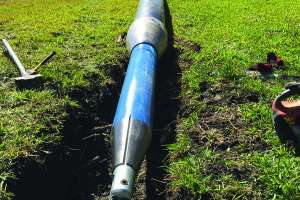
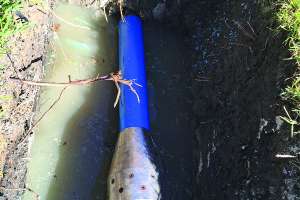
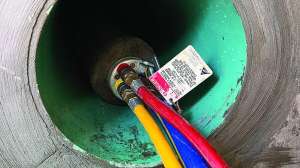
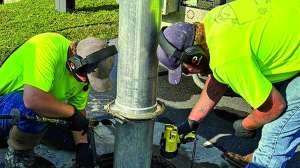
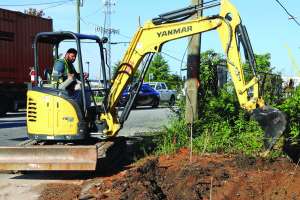
Trenchless technology approaches, such as pipe bursting, transform the repair process by allowing horizontal access through a single point or limited number of points of access. With pipe bursting, a small entry point is made in an easily accessible area rather than a paved surface, and a downstream manhole is established to run a cable through the line. The existing pipe bursts as a new high-density polyethylene pipe is pulled in, eliminating the need to trench the entire pipeline.
Replacing old pipe with new HDPE creates a fresh 50-year design life and a “monolithic” pipe without connection areas that can be vulnerable to water infiltration. Pipe bursting addresses the entire system, not just mainlines, and is one of the few technologies that can add capacity via trenchless methods. This is advantageous for communities that have significantly grown since the original pipes were laid in place.
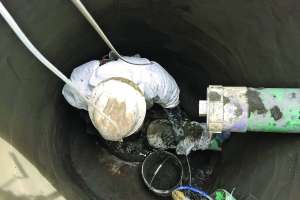
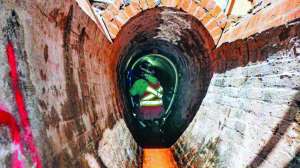
When performing pipe bursting, it’s also important to rehabilitate manholes which can continue to be a source of I&I once the new pipe is installed. As traditional manhole materials age, they become compromised and leak. While the new pipe will be impenetrable, surrounding manholes in a state of disrepair can remain a source of leaks. Eliminating all sources of infiltration for a seamless system necessitates manhole rehabilitation as part of the process.
8,000 FEET IN THREE MONTHS
A municipality southeast of Houston recently embarked on the process to repair and rehabilitate its sewer system. Years of typical use magnified by weather events including hurricanes and tropical storms had taken a toll on the system’s clay and reinforced concrete pipes and brick manholes. However, a traditional opencut repair would have required access through backyard easements, affecting a large number of potentially unhappy homeowners by disrupting yards, fences and landscaping.
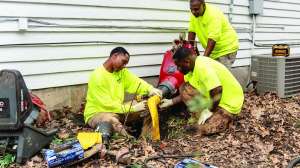
Pipe bursting combined with manhole rehabilitation was employed to repair approximately 8,000 linear feet of the city’s sewer system. Using the pipe bursting approach enabled new HDPE pipe to be installed without damaging homeowners’ properties — only a simple reconnection of their service line to the new pipes was necessary, which also allowed any leaks in the old connections to be addressed.
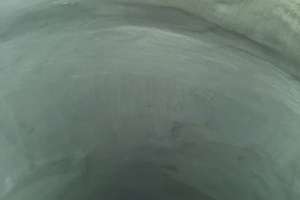
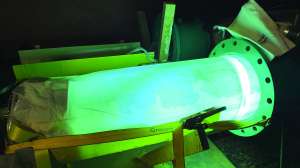
Additionally, more than 20 brick manholes missing mortar and exhibiting moderate to severe I&I required repair. Quadex GeoKrete geopolymer mortar (Vortex Companies) was used to restore structural integrity, protect against corrosion and eliminate groundwater infiltration.
The pipe bursting approach not only extended design life and restored the system’s integrity, but also significantly reduced the total time required for the project. The project was completed in approximately required at least twice as long to finish. Despite the extensive repairs, the refreshed system maintained its >span class="s3">previous flow capacity and community disruption was minimized.
Asset owners have many trenchless repair options available to them. Pipe bursting combined with manhole rehabilitation is an advantageous and durable solution that can upsize pipes while delivering a durable structure. As this approach is minimally intrusive to the surrounding community, it is an excellent option to rehabilitate aging infrastructure.
ABOUT THE AUTHOR
Brent Keller is senior regional vice president, southwest / Rockies for Vortex Companies. His trenchless technology and field expertise span eight years.