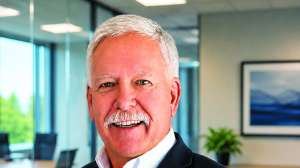
Jessica Vargas-Cabrera

Patrick Valois


Jessica Vargas-Cabrera
Patrick Valois
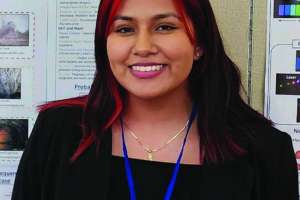
Tunneling can be dangerous for contractors and clients alike. So, what can be done to make it less risky? This is the question that Jessica Vargas-Cabrera and Patrick Valois answered in their entry to the NASTT’s 2025 Trenchless Research Competition. Their three-minute presentation and poster at the 2025 NASTT No-Dig Show — held in Denver, Colorado, March 30-April 3, 2025 — was titled “Risk Management in Tunnel Construction: A Probability-Impact Approach.”
For their efforts, Vargas-Cabrera and Valois won third prize. She is a recent graduate of California Polytechnic University, Pomona, with a bachelor’s degree in construction engineering and management, and served as a treasurer for the Western Chapter of NASTT. Valois is a master’s student at the same university focusing on environmental and water resources engineering, and a member of the Western Chapter of NASTT.
“Our research for the 2025 Trenchless Research Competition explores the application of a Probability-Impact Analysis framework to improve risk management in tunneling construction, particularly in projects involving tunnel boring machines,” says Vargas-Cabrera.
“The goal was to find a way to improve risk management, especially in projects that use tunnel boring machines,” says Valois. “We wanted to develop a structured matrix that could help contractors identify, quantify and prioritize risks more clearly, and ultimately reduce uncertainty, avoid delays and prevent financial losses due to unexpected events.”
Vargas-Cabrera handled probability analysis, which involved evaluating 81 tunneling case studies to determine how frequently specific risks such as tunnel collapse, fault zones and TBM jamming occurred. She used ISO 31000 standards to quantify the likelihood of each risk and built a color-coded matrix to highlight their probability rankings.
Valois was responsible for impact analysis, where he studied how delays caused by these risks translate into financial losses using real-world contract elements like liquidated damages. To do this, Valois examined survey responses from industry professionals and used the Expected Monetary Value formula — Impact × Probability — to estimate delay costs for each risk, tying the theoretical model directly to contractual consequences.
“What began as a basic exploration into risk grew into a comprehensive risk management framework that combines academic methods, expert feedback and practical construction contract considerations,” Vargas-Cabrera says. “Together, our joint research delivers a meaningful tool for the trenchless industry to anticipate, mitigate and manage TBM-related risks more effectively.”
“For my part, I really wanted to quantify impact in a way that reflected real consequences,” says Valois. “That’s where the liquidated damages clause in construction contracts came in. It’s a tool that compensates the client when the project runs late, essentially charging the contractor for every day beyond the agreed deadline. It made sense to include that in the impact side of the analysis because it connects risk directly to financial loss. That’s how our framework began to take shape by tying together theoretical risk models with real-world contractual outcomes.”
“What motivated us to enter was having the opportunity to showcase our hard work and research — and to potentially make a meaningful contribution to the industry,” Vargas-Cabrera says.
“Having the opportunity to showcase what we learned through our research was more than enough motivation for us,” Valois agrees. “The first time we competed was at the No-Dig Show in Providence, Rhode Island. Although we didn’t place, the experience was invaluable and many of the WESTT board members encouraged us to compete again. That encouragement, along with the continued support of our advisor, Dr. Jinsung Cho, inspired us to give it another shot.”
Both of these students were surprised and delighted to win third prize in the 2025 Trenchless Research Competition. “We were both laughing, screaming, and just so relieved and excited that we placed third,” Vargas-Cabrera says. “It was such a great feeling to know that Cal Poly Pomona was bringing home not only our third-place plaque, but also that Sonja, our president of our NASTT chapter, received the Michael E. Argent Memorial Scholarship. It was an unforgettable moment!”
“Yes, I was thrilled,” Valois says. “Jessica FaceTimed me out of the blue, [she was at the 2025 No-Dig Show] while I was with my parents. She said, ‘I have a surprise for you!’ and then held up the plaque showing that we had placed in the competition. My immediate reaction was disbelief. I think I said something like, ‘You’re joking, right? Seriously? That’s crazy!’ Honestly, I was in shock.”
Looking back on their third place win today, both of these Cal Poly Pomona students see it as a high point in their academic careers.
“One of the biggest benefits of winning this award is the recognition of all the hard work we put in — it’s incredibly rewarding to see it all come together in a plaque,” says Vargas-Cabrera. “Beyond that, the process of conducting research, especially going through 81 tunneling cases, really helped sharpen my critical thinking and even improved my writing skills. I also enjoyed learning different research strategies and seeing how they can be applied directly to real-world industry challenges.”
“Receiving recognition for our research was truly the icing on the cake,” Valois says. “It validated the significant time and effort we invested in the project. Beyond the recognition, the research experience has been highly beneficial for both of us in different ways. For me personally, going through the entire research process has provided valuable insights and skills that will directly support my work in my master’s program. Furthermore, the recognition we received will give us credibility and a competitive edge in future job interviews and opportunities within the field of civil engineering.”
Continue reading for free