
When three industry veterans looked beneath the surface of their fiber installation work, they saw more than just crowded utility corridors and tight project deadlines — they saw opportunity. Blain Elliott, Seth Schadel and Zeb Deal recognized that vacuum excavation wasn’t just a tool for safe digging, but a rapidly evolving solution with the power to change how projects get done across the Southeast.
That realization became CUEVAC. Launched in 2023 and based in Charlotte, North Carolina, the company wasted no time proving it belonged in a competitive market. On their very week in the field, the new venture not only deployed its first hydrovac truck, but also brought on Scott Robinson, a seasoned operator whose decade-plus of experience in daylighting and potholing immediately set the tone for CUEVAC’s ambitions.
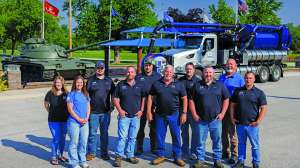
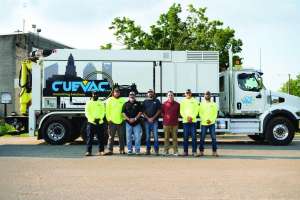
In just 18 months, the startup has gone from concept to a full-fledged operation with eight employees, a diverse fleet of hydrovac and dry-vac trucks, and a growing reputation for precision excavation. By pairing cutting-edge equipment with a commitment to protecting underground infrastructure, CUEVAC has carved out a niche in a region where congested rights-of-way and sensitive job site conditions make nondestructive excavation more valuable than ever.
At its core, the company is more than a contractor with powerful machines. It’s a team determined to push vacuum excavation forward — blending safety, efficiency and innovation in ways that are helping clients rethink how they approach complex underground work.
HEART OF IT
CUEVAC was formed to protect underground utilities and infrastructure through safe and efficient best practices.
They lead with being prepared to dig around sensitive areas — in tandem with the types of constraints facing the oil, gas and energy majors, private developers and utilities, grading companies, civil engineering group projects and others.
The company, emphasizing specialization in air vacuum excavation, owns two traditional hydrovac trucks and three dry-vac units at crews’ disposal. Elliott says a Vacall jetter truck, made by Gradall, was recently acquired to supplement its vacuum excavation equipment, providing jetting and storm and sewer clean-out services.
This evolved naturally and quickly into offering camera and pipe inspection services using advanced video equipment, allowing crews to identify blockages, verify line conditions and support pre- and post-construction documentation with precision and efficiency.
“A number of years ago, we started kind of adopting the use of vacuum excavation through some contract vendors we were hiring,” he says. “The more we engaged with vac services, we started considering, maybe we need our own truck.”

UNDER THE SURFACE
CUEVAC’s expertise centers on daylighting, slot trenching, excavating for construction, conducting core drilling for site assessments and material removal. They acquire equipment that enables fast excavation while minimizing the risk of utility strike risks, ideal for soft-digging requirements under government regulations and existing codes.
The focus is on determining and utilizing the most suitable excavation methods, especially where the big shovels, the creation of open pits or the introduction of moisture may be unsafe or impractical.
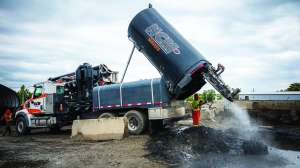
Trucks with high-pressure water systems and vacuums set the original standards as a safe, nondestructive method for daylighting operations. They are force multipliers, strong and effective for tough, soft excavation jobs, such as when water’s cutting ability makes digging easier and when frozen ground or conditions involving hard clay and rocky soils exist.
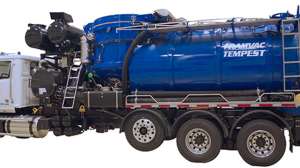
When called for, crews are ready to maneuver with the large payload capacity and modular design of a Wolf by TRUVAC, which is manufactured by Westech Vac Systems, part of the Federal Signal family of companies.
With a 12-cubic-yard debris body, 1,500-gallon water tank and 3,000 psi water system, the hydrovac truck combines strength, speed and smart systems like a three-quarter rear opening door and raising debris body offload for optimized hydrovac application productivity.
It was made for reliable deployment with heated compartments, valves and waterlines to aid performance while operating in all climate conditions.
CLOSE QUARTERS
Elliott and his partners, for more than two decades, have been following the growing emphasis and attention being paid to well-planned excavations and utility conflict mitigation across the United States.
Both CUEVAC and STS Cable are housed in the location in Charlotte — their foundation is based on shared experiences and challenges they have faced and stood up to together.
CUEVAC was essentially spawned to fulfill the business needs of what is now a sister company. The new business has additionally expanded support for civil, commercial and industrial clients, providing excavation, utility spotting and locating services primarily throughout the Carolinas and Southeast United States.
What they see, amid congested urban rights of way of crowded utility corridors, is a solid reliance on nonmechanical excavation, and those technologies are becoming more entrenched in strong digging power and purpose-built utility.
For Elliott, knowing team CUEVAC would have STS Cable’s business made starting a brand-new company from scratch much easier for them. This also lessened apprehensiveness about buying expensive vacuum excavators.
The relationship has essentially allowed STS Cable to transition from being reliant on contracted services to self-performing such needs through the sister entity CUEVAC.
Being around the same ages and on the same relative page at work over the past few decades, they’ve doubled down on the future of fiber and soft digging while witnessing vacuum excavation turn into an industry.

STAYING DRY
CUEVAC in Q2 2025 took possession of its third dry-vac from German-headquartered RSP (Reschwitzer Saugbagger Produktions).
That manufacturer formally entered the U.S. market as RSP North America in April 2025, opening its first facility for domestic parts, service and inventory support, after recognizing growth potential.
The standard key features on its Metro-America class suction excavator include a 116 psi compressor, 24,700 cfm, 148 feet of suction depth and 394 feet of linear suction, depending on the material and installed suction capacity.
The units are equipped with a 20-foot articulated excavator-style suction boom and can carry up to 10 yards of material. Two fan size options are available to suit most applications, according to the manufacturer. Material can be offloaded on site and excavated material reused.
CLEANER DIGS
Nonabrasive air won’t cut or nick pipe coatings, cable sheaths or tree roots. Compressed air requires no water tanks or refills while producing clean, reusable spoils.
With potential savings on downtime, fuel costs, disposal or tipping fees, precise air excavation utilization can minimize trench size and backfill settlement, cutting restoration work as backfill can occur quickly.
The implementation is beneficial when navigating Brownfield sites or areas with potentially contaminated soil that is not allowed to be removed without special handling, says Robinson. He notes CUEVAC’s dry excavation approach meshes with the current guidelines and environmental context for the best practices that agencies are encouraging.
The U.S. EPA and state environmental regulators increasingly promote in situ management of excavated soil, meaning treating or reusing soil on site whenever possible rather than hauling it off.
If soil is contaminated, removing it from the ground can trigger complicated remediation waste rules. By using air excavation on Brownfield sites or areas with known contamination, CUEVAC can avoid the creation of contaminated slurry that would need pumping and disposal as hazardous waste.
The inherent advantage of dry-vacs is that they make traffic less congested, slurry avoidable and spoil reusable — the native soil can stay, Robinson says.
“Disposing of [mud and slurry] was costly,” Elliott says. “The time it takes to dispose of it was costly and we were losing hours a day of production. So we didn’t realize there was an alternative to that when we were just hiring these services occasionally when we started looking into trucks.
“We discovered RSP is the manufacturer out of Germany and we discovered that they use air displacing the ground so that they’re creating dry soils that can be reused and repurposed or left on site. Much easier to dispose of.”
This dry-vac workflow keeps job sites cleaner, makes soil reuse straightforward and cuts material-handling and transport costs, while supporting owners’ environmental goals.

IN THE FIELD
In field applications, Robinson says that dry-vacs can be used to safely excavate footings 20 feet deep without water, preserving soil bearing conditions that water injection may otherwise undermine.
“It’s these types of excavations and the services that people really call you out for,” he says. “You may be doing utility spotting and then in addition to that you do the jetting and camera lines. Or our utility conflict mitigation.”
Robinson continues: “We can get to more places that we couldn’t get to in a mini-excavator and attach a hose 100 feet long, and run out to the backside of a building. You can’t get there with traditional equipment.
“For us, we’ve done several of those with the dry truck and the hydrovac as well. The dry truck, the way it digs, looks for voids and blows that apart.”
Even arborists have been supported through dry-vacs, alleviating concerns about the ability to carefully expose root systems for engineers on construction sites.
Compaction and a buildup of water are the two most frequent reasons leading to the time-consuming renovation of tree roots, according to RSP. Roots can be inhibited if oxygen content in the soil falls below 13%, stopping growth, they say.
The dry-vac process, requiring no water, allows for root identification without causing damage and enables the use of pier systems that protect tree roots during the construction phase.
FULL OF AIR
CUEVAC isn’t satisfied following the shifts in its market space and segment of the industry, instead desiring to lead where they can.
In lieu of retrofitting an existing hydrovac with an aftermarket air compressor system, which Robinson sees as a trend among large companies, he described how their custom RSP dry-vacs are designed and supposed to work, operated as built and intended.
They are engineered to provide enough pull to facilitate efficiency and avoid snags.
“We have clients tell us, some are built as a hydro-truck using a separate air compressor,” Robinson says. “It’s 4,500 cfm versus approximately 24,000 cfm, and it’s not the same. The way it is designed, there is not enough cfm to pull that dry material. At the top of their truck. It clogs constantly.
“Our truck is built and designed to be dry. Nobody can touch our trucks.”

A SOLID OPERATION
CUEVAC began operating about a week after its first hydrovac arrived in Charlotte, and the same day the Robinson came on board. They didn’t waste any time displaying their drive for utilizing the technology efficiency, sticking to fundamentals and following the rules, looking for what’s next.
Every excavation is different, necessitating a strong handle on safety and a solid work plan. Weather and soil conditions can make significant differences, for a proposal regarding which vacuum excavation technique may be ultimately relied on.
Good digging always depends on a variety of factors, including the types of materials being excavated, selected techniques, soil type, access constraints to the site and the type of underground utilities or sensitive structures, among other circumstances.
CUEVAC’s preference is to avoid utility strikes, cost overruns, environmental headaches that cut into project schedules, and profitability. They address all the angles with customers, complying with regulations, ensuring people and communities can be kept safe, staving off the hard costs of transporting materials and locating ways to save time and money.
Elliott notes CUEVAC has successfully completed active utility relocations without the need for new installations or costly service interruptions by fully exposing all telecoms along an entire city block and carefully dragging the existing lines out of conflict.
ALL ANGLES
CUEVAC and their employees like the work and have worked hard building up the company over the past few years. They are setting out to provide best-in-class, safe and precise services, making them practical for business.
Safety, maintaining the public’s trust and client satisfaction is the end goal right now. Ensuring projects can stay on track and within budget is always a step forward and in the right direction.
“The difference in our trucks is less so the air compressor and more so the vacuum capability, the 24,700 cfm and dry spoils,” Robinson explains. “It has a bigger elephant trunk, 10 inches and it’s all the way directly into the hopper. There’s no reduction in size, so you don’t spend more time busting up clogs than you do moving dirt. It has a side dump, dumps off the driver’s side. Clean, reusable soils. You do not have to bring in fresh backfill material.”

A GLOBAL UNIT
CUEVAC’s dry-vacs incorporate components from around the globe. While the preference is for American-made Western Star truck chassis, CUEVAC’s air excavation units and vacuum systems are custom-engineered in Germany.
High-caliber, precision rotary screw air compressors from Boss Industries, out of Indiana, are shipped to Germany for integration into RSP’s suction excavation systems during the final assembly phase.
One aim of RSP is ending inefficiency and lessening hard costs by eliminating the need for hand digging in sensitive areas where nondestructive excavations are necessary and required. That manufacturer’s U.S. presence is “powered by Vexcor Vacuum Excavators Inc.,” their domestic partner for providing parts, distribution and support.
“Our slogan is ‘unearthing solutions,’” Robinson says. “People find creative ways to use our trucks. They are calling on us more and more, getting away from hydro, going strictly dry.”
“The potential for North America is huge,” Elliott says.
Continue reading for free