
Across North America, infrastructure managers are being asked to do more than repair aging assets. They are expected to extend service life, reduce disruption, manage costs responsibly and make decisions that can stand up to operational, environmental and financial scrutiny.
In many cases, the challenge is not simply the condition of the pipe. It is where that pipe is located.
When underground infrastructure runs beneath buildings, close to electrical systems or through areas that cannot easily be taken out of service, conventional excavation can quickly become the most complicated part of the project. What begins as a preventive repair can turn into weeks of disruption, site coordination, restoration work and added exposure to surrounding infrastructure.
That was the situation faced by the National Research Council of Canada at its Ottawa site, near Ottawa International Airport.
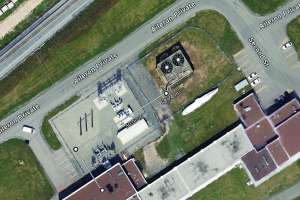
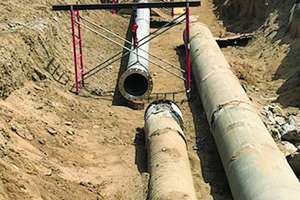
The NRC needed to rehabilitate an aging 18-inch pipeline located near the U66 Cooling Tower building on Aileron Private. The line, approximately 220 feet long, had lost its watertight integrity over time. While the work was preventive, the consequences of delaying the repair could have been significant. A full excavation would have required intervention around critical infrastructure and beneath the building itself.
For this project, the NRC selected a trenchless rehabilitation approach using FORMADRAIN’s cured-in-place pipe technology.


A PIPE THAT COULD NOT SIMPLY BE DUG UP
On paper, the project involved the rehabilitation of one existing pipeline. In practice, the site conditions made it far more complex.
The 18-inch line ran under critical electrical installations and toward a cooling tower building. The pipe also included a 90-degree bend, adding another layer of technical difficulty to the rehabilitation.
A conventional dig-and-replace method would have required excavation in a highly sensitive area. That would have meant more than opening the ground. It would have involved planning around electrical infrastructure, managing disruption to site operations, protecting adjacent installations and restoring the affected area once the work was complete.
For facility owners and infrastructure managers, these indirect impacts are often the source of excavation costs. The cost of the pipe replacement itself is only part of the equation. Downtime, operational constraints, safety planning, restoration and schedule risk can all multiply the true cost of the intervention.
In this case, the NRC needed a method that could restore the pipeline’s structural integrity and watertightness without turning a targeted preventive repair into a large-scale construction project.
TRENCHLESS REHABILITATION AS A RISK REDUCTION STRATEGY
Cured-in-place pipe rehabilitation is often discussed in terms of speed and cost savings. Those advantages matter, but in sensitive environments, the bigger value can be control.

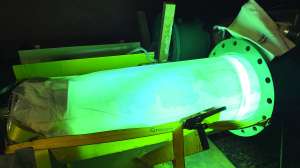
By rehabilitating the existing pipe from the inside, CIPP technology can eliminate the need for open excavation. A liner is inserted into the existing pipeline, cured in place and transformed into a new pipe within the old one. The result is a fully structural, watertight system that extends the service life of the asset while limiting disruption above ground.
For the NRC project, FORMADRAIN’s steam-cured CIPP technology was selected using Durapox 501, a high-performance liner manufactured in Montreal. The liner features a 60-day latent resin, which allowed it to be transported to the Ottawa job site without refrigeration.
That matters in the field. Refrigerated transport can add costs, complexity and coordination requirements to a project. A longer-latency resin reduces logistical pressure, supports more flexible scheduling and simplifies handling between manufacturing and installation.
The geometry of the existing pipe was also a deciding factor. With a 90-degree bend in the line, the rehabilitation system needed to maintain structural continuity and watertightness through a challenging section of pipe. FORMADRAIN’s technology was selected in part for its ability to line pipelines with bends while delivering the performance required for a structural repair.
The installation was completed by Aqua Drain, a specialized contractor with expertise in trenchless pipeline rehabilitation.
PIPE REHAB COMPLETED IN UNDER THREE DAYS
The work was completed in less than three days, including preparation, liner installation and steam curing.
Instead of excavating around sensitive infrastructure and disrupting NRC operations for several weeks, the project created a new fully structural, watertight pipe inside the existing one. The pipeline’s service life was extended without excavation, major disruption or impact on surrounding installations.
For public sector infrastructure projects, that combination is especially important. Every repair method must be assessed not only for technical performance, but also for cost, schedule, operational impact and long-term value.
In this case, the completely no-dig approach helped reduce project complexity while supporting responsible public fund management. It also aligned with the NRC’s broader role in supporting innovation. The technology was developed and manufactured by a contractor on a federal research site.
Continue reading for free