
A Texas-based environmental services company has developed technology that converts oilfield drilling mud and cuttings into an eco-friendly road-foundation product that’s stronger and more durable than conventional materials.
Headquartered in The Woodlands, R360 Environmental Solutions produces the product, called R3 RoadBase, at a $5 million facility in Rincon, located in South Texas, near the Mexican border. R360 is a wholly owned subsidiary of Waste Connections Inc., one of the largest solid-waste-disposal companies in the United States.
The development of R3 RoadBase reflects a larger industry trend toward developing waste-treatment processes that sidestep conventional disposal techniques and turn massive amounts of oilfield-waste products into usable materials.
At peak capacity, the 6-year-old plant can produce up to 120 tons of R3 RoadBase an hour. Currently, R3 RoadBase primarily is used in a large shoulder-widening program run by the Texas Department of Transportation, aimed at two-lane highways and roads throughout the state, says Joe Laubenstein, the company’s director of RoadBase technology.
Innovative beginnings
The vast amounts of drilling mud and cuttings R360 collects for customers around the country motivated company researchers to develop the R3 RoadBase technology. “We’re sitting on literally millions and millions of tons of drilling mud and cuttings, which prompted us to think about what we can do to use them beneficially,” Laubenstein says. Work on the concept began in 2006.
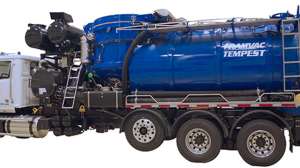
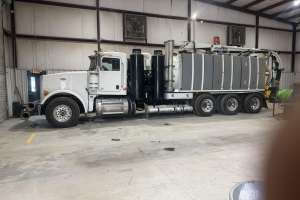
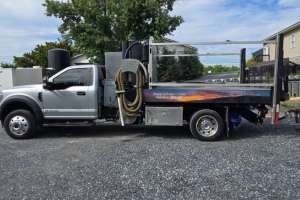
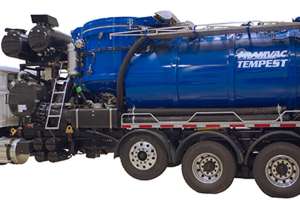
Here’s how R3 RoadBase is produced: Vacuum trucks that collect drilling mud and cuttings from a roughly 200-mile-radius around Rincon pump the waste materials into large lined cells, or lagoons, that are about 4 feet deep and range in size from four to 10 acres. The Rincon facility includes about a dozen of these cells, Laubenstein says.
The material is periodically flushed with fresh water to remove unwanted hydrocarbons and chlorides. The periodic washings continue for months — typically four or five in all — until the material is clean enough for re-use. Water is periodically skimmed off the top and sent through a separator that removes any oils; the water then is injected into a saltwater well and the oils get shipped to refineries, where they’re converted into oil-based products, Laubenstein explains.
After the solids are clean and completely dry, they’re uniformly mixed in a computer-controlled pug mill with aggregate and cement to create R3 RoadBase. The recipe for R3 RoadBase — the ratio of solids, aggregate and cement — can be changed to accommodate course-base specifications, which can vary from state to state. Moreover, the R3 RoadBase mixture is homogeneous, unlike conventional road-base mixtures, which are spread on the ground and tilled together by large machines right on road-building sites, Laubenstein says.
Exceeding expectations
“We produce a product that meets higher specifications than the native materials typically used to make roads (rock and stone), so the roads stand up longer over time, which reduces maintenance costs,” Laubenstein says. “The homogenous quality of R3 RoadBase is key. When native materials are blended on-site, it creates pockets where there’s no cement to bind the materials together. That creates weak spots in the road base, and that’s where roads break down and form potholes.”
R3 RoadBase also helps reduce the carbon footprint left by equipment that’s used to quarry native materials, he adds. In addition, the product is cold-mixed, which means the materials are blended at ambient temperatures — no heating required. This results in no production of greenhouse gases and further reductions in the carbon-footprint of end-use projects, such as roads.
Laubenstein concedes that RoadBase costs more than native materials, but points out it still reduces road-building costs because construction proceeds much faster when crews don’t have to blend road-base materials on-site. “They can build five, six or seven miles of road a day, compared to only two or three miles per day when using native materials that require on-site blending,” he notes.
While R3 RoadBase currently is used only for the shoulder-widening program in Texas, Laubenstein says it will eventually be marketed for road construction and other things, such as commercial parking lots.
“We’re also working on getting permits for three more plants in three other states,” he says. “We see broad market potential because with R3 RoadBase, you can build lower-cost, better roads in a much more environmentally friendly way.”
Continue reading for free