Although a set of standard operating procedures might be available, the safe and successful response to an emergency depends on maintenance performed under pressure. Often, such repairs are temporary, carried out under less-than-optimal conditions.
Because emergencies can involve many risks and unique situations, it’s important to remember these rules:
- Safety of personnel always comes first. Protecting the environment is second, and preserving equipment comes third.
- Analyze the situation. Determine the most dangerous or detrimental aspect of each emergency, and address problems in descending order of severity.
- Devise a logical sequence of remedial action.
- Assess tools, equipment, personnel and materials for feasibility of repairs and make arrangements to acquire anything needed.
- Implement repairs.
- Re-evaluate the situation for effectiveness of repairs.
- Follow up. Order parts, make notifications and arrange for permanent repairs.
In addition to specific emergency preparedness (such as a chlorine “B” kit), you must focus on the inherent characteristics of wastewater treatment to prepare for emergencies.
1. Leaks, overflows, and backups
First, determine what is leaking, from where and what risks are presented by the leak. Containment might be your first priority. To stop a leak, you might only have to shut a valve or you might need to pump out an entire tank and make structural repairs. Be sure to have spare gaskets, caulking, repair couplings, patches and plugs on hand for any kind of leak you encounter.
2. Electrical outages and electrical problems
Obviously, a properly maintained and adequately sized standby generator is your best defense against general power failures. Be sure to stock spare motors, wire, fuses, breakers, motor starters and relays, especially for critical equipment. Keep emergency contact information for a trusted electrician readily available for all employees.
3. Clogging of pipes and equipment
Emergencies that involve clogs in a collection system are fairly common, but make sure your plant is also prepared for clogging of pumps, equipment and pipes within the facility. One positive aspect of clogs is they often occur in the same areas so they can be somewhat anticipated.
4. Mechanical failures
Even with proper maintenance, things can break. This category encompasses a wide range of potential emergencies, and the most critical aspect of preparedness is stocking spare parts. It is impractical to have every spare part on hand, but with careful planning, the most likely contingencies can be covered. Take careful consideration of parts that are subject to wear, and research which parts have failed in the past. Consult with manufacturers for recommended spares.
5. Natural emergencies
Depending on your location, natural disasters can be a major concern. Power failures, flooding and wind damage typically cause natural emergencies. A good stock of sandbags and a well maintained trash pump are staples for flood prone areas.
6. Computer, SCADA and instrumentation failures
Keep and maintain backups of your hard drives and files. Consult with your equipment manufacturer on recommended instrumentation spare parts.
The Emergency Toolbox
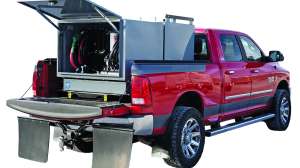
It’s a good idea to prepare a dedicated toolbox, cart or trailer for emergency response purposes. Because countless scenarios are possible, include tools and equipment that are versatile.
Lighting cannot be over emphasized. Keep a few quality flashlights in several places around the plant and in your toolbox. Keep them charged or stock batteries.
Locking pliers are a must-have. Get a range of sizes and styles including standard, C-clamp and chain grip. With a welder and some imagination, you can custom modify locking pliers for specific tasks.
A welder is one of the best investments you can make for repairing and fabricating in metal. For treatment plants, I recommend an MIG welder with stainless steel wire. With a little practice, a welder can easily pay for itself, but the biggest benefit is the ability to make timely, permanent repairs using scrap materials.
Rechargeable drill/drivers can really come in handy for patching and attaching. Be sure to stock various screws for wood and metal as well as material for making patches.
Lifting and support implements, such as portable jacks, chain, rope, blocks and planks are often needed in emergency situations. Keep an assortment of shackles with your chain. A quality come-along should also be in your emergency kit.
Epoxies, tape, gasket material, fiberglass patch and resin, silicone products, pipe wrap, etc, certainly belong in an emergency response kit. Be sure to check for chemical compatibility before using a product. Also, remember that such repairs are often temporary and should be properly repaired or replaced as soon as possible.
General tools should be carefully selected. You want to have everything you need, but you also do not want a clutter of tools you don't need. A large and standard size hammer, a crowbar and a flat-bar, large and small pipe wrenches, adjustable wrenches, metal and wood cutting saws, and a good multitool are a good start. I like to think about tools that satisfy the basic needs of mechanics: pound, pry, grip, cut and torque.
Miscellaneous items to consider stocking include tarps, plywood and 2x4s, plastic sheeting, buckets, caution tape, and of course, spare belts, bearings, hoses, fittings and anything else that is subject to failure.
Marcel Tremblay is chief operator at the MCI Concord Wastewater Treatment Plant in Concord, Mass. He can be reached at MHTremblay@doc.state.ma.us.
Continue reading for free