
Record winds brought down trees, power lines and poles throughout portions of Seattle Aug. 29, creating a mess for utility crews.
Seattle City Light, a public utility providing electrical power to Seattle and eight nearby jurisdictions, was hit hard by the storm. The utility, which serves about 400,000 customers, had many customers without power afterward.
“We had high winds coming in off the coast,” says Roberto Bonaccorso, a spokesperson for Seattle City Light. “We were warned there was a storm coming in and we prepositioned materials and people ahead of it, but it hit a little farther north than what we expected. It started around noon Saturday and high winds continued for two to three hours.”
The National Weather Service says wind gusts ranged from 45 to 60 miles per hour, depending on the region.
“It knocked down trees and branches and took out lines and poles,” Bonaccorso says. “The areas of the city that were most heavily hit were the ones with the most tree canopy.”
Using Hydroexcavators
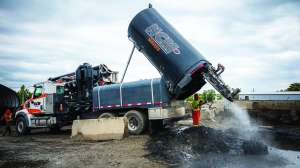
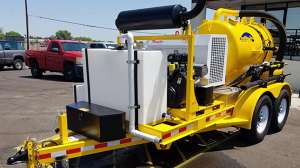
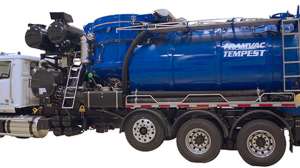
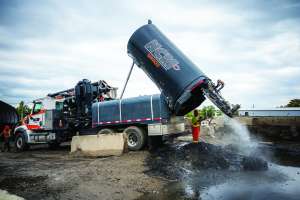
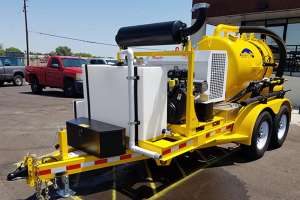
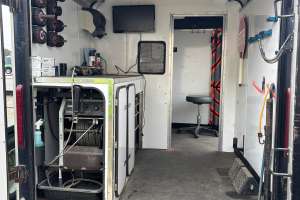
The utility called out its seven Vac-Con hydroexcavators to help with storm cleanup.
“Our operations chief says the machines were critical in the repairs because, especially in emergency situations like that, you don’t know what’s in the ground,” Bonaccorso says. “You might have some maps, but you’re never entirely sure of what other utilities are going to be there.”
A photo on the Seattle Times’ website shows one of the utility’s hydroexcavators at work along with bucket trucks repairing poles and lines.
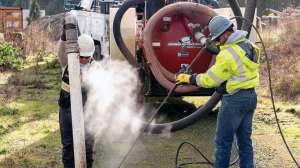
“To replace poles in an emergency situation, the safest and fastest way is to use a hydroexcavator,” Bonaccorso says. “It doesn’t make any direct contact with other underground utilities or equipment and it makes the cleanup easier.”
Seattle City Light started using the hydroexcavators 10 years ago and has an eighth unit on order. The utility has them stationed at two different locations to assist with responding to calls.
“We use them a lot,” Bonaccorso says. The utility will use them if there is any kind of contamination in the ground because they can suck up the soil. “Anytime we’re not sure of what is in the ground we’ll use them.”