
Trencher operators can never really plan for what they might run into when out on a job site. It could be sandy soils or tough clay soils to dig through. Either way, the operators have to be ready for whatever might come up and having the tools to help them is important.
Longtime trencher operators Keith Newhouse of JK Trenching in Freedom, Wisconsin, and Ron Zerfas of RZ Trenching in Lansing, Michigan, both know what tools are a must to help them with their work.
“Excavating is a job that’s in your blood,” says Newhouse. “You have to know what tool to use and when.”
UTILITY LOCATORS
Neither Newhouse or Zerfas had to think too long about what their go-to piece of equipment was — besides the trencher. The first must-have tool was a utility locator to find lines already underground. The locators give contractors the opportunity to double check what the locating company has marked, preventing damage to other utilities and potentially dangerous accidents from happening.
“A locator saves us time on every site,” Newhouse says. “When we get to the job, it’s already painted and we know the exact depths. When it’s time to excavate, we know where everything is. The line could be 1 foot deep or 6 feet deep. It could take hours to try to find a line, but with the use of a locator, it’s a matter of minutes.”
Newhouse uses a 950R/T locator from Subsite Electronics. The receiver detects signals generated by 31 kHz and 50/60 Hz power, as well as re-radiated radio frequencies. In beacon mode, the 950R detects signals from optional beacons to locate nonmetallic service lines. Newhouse uses it to locate buried telephone, cable television, power, gas and waterlines before digging.
VACUUM EXCAVATORS
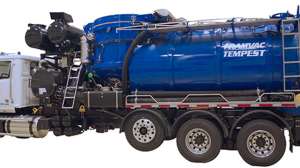
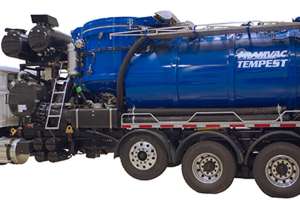
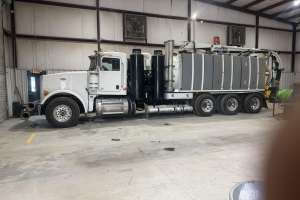
A great way to work around utility lines when the probability of hitting a line might be high is to use a vacuum excavator. With the use of high-pressure water or air, a vacuum excavator can safely dig around utility lines without harming any of the lines that are present.
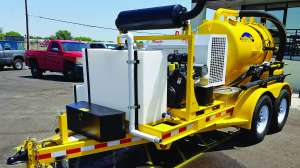
Another benefit of a vacuum excavator is the ability to easily move dirt without causing harm to the ground outside of the trench. With the type of jobs Newhouse takes on, his VacStar 500 vacuum excavator gets quite a bit of use.
The trailer-mounted VacStar 500 is capable of water pressures up to 2,000 psi and 4 gpm and has a 535 gallon spoils tank capacity and 250 gallon freshwater tank capacity.
“If we get to a job and there are five, six, seven lines to cross, we’ll expose them and that saves us time on that job,” Newhouse says.
COMPACT EXCAVATORS
When a contractor needs to get around tight spaces or the scope of the job is of a smaller scale, a compact excavator is crucial.
This smaller piece of equipment will enable operators to get into areas that would otherwise be difficult to reach, and the impact to the land is substantially decreased. With a smaller bucket, the job is done in a manner that’s clean and neat.
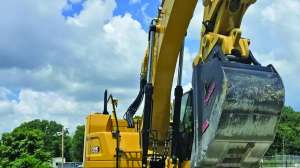
Newhouse utilizes his John Deere compact excavator often in the field.
VIBRATORY PLOW ATTACHMENTS
Utilizing a vibratory plow attachment allows operators to get underground and dig without having to tear up the land. “There is less destruction to the lawn,” says Zerfas. “This increases profits, saves time, and does a cleaner job.”
However, Zerfas says it’s not always possible to use a vibratory plow attachment because of ground conditions.
Using primarily Ditch Witch equipment, Zerfas has several options from the manufacturer, including the 100SX and the 410SX models and the Zahn plow.
QUALITY ALWAYS MAKES A DIFFERENCE
The quality of tools and equipment always makes a difference.
“When you’re looking to buy new machinery and equipment, look for good hydraulic flow and always go with a name-brand engine,” Zerfas says. “It might cost more out of pocket up front, but when it comes to the ability to stand up to time and the elements, you’re going to get a more durable piece of equipment that will save money and time in the long run.”
Continue reading for free