
Spring in southern Montana does not ease in quietly. It shows up fast, fueled by snowmelt pouring down from the mountains and swelling the Yellowstone River into a wide, fast-moving stretch of whitewater.
From the bank, it is the kind of scene people stop to watch. For Tru Directional Drilling, it was the kind of condition that calls for a creative approach.
The crew had been tasked with completing two fiber bores beneath the river, connecting broadband service to a remote retreat. The timeline did not allow for waiting out the runoff, and the river was not going to settle anytime soon. Water levels were high, the current was strong and more than 500 feet separated from the entry and exit points.
Under normal conditions, the crew would walk a locator along the bore path from above, tracking the drill head as it advanced underground. Here, that was not an option. There was no safe way to stand over the line, no way to hold position on the water and no clear path to maintain visibility of the drill head below.
Before the first rod went in, the challenge was already clear. Drilling the crossing would be difficult. Tracking it would be the real test.
OVERCOMING LOCATING LIMITS
The job came through Triangle Communications, based in Havre, Montana, which was upgrading fiber infrastructure throughout the region.
On paper, the work appeared manageable. In the field, the river told a different story.
“Spring runoff was the biggest challenge,” says Trevor Herman, president of Tru Directional Drilling. “The river was roaring and locating across it was tough.”

The crossing required the crew to drill hundreds of feet beneath the river while working from a steep embankment nearly 60 feet above the water, carefully navigating the slope before setting up equipment along the riverbank.
TRACKING FROM ABOVE, NOT ACROSS
With the drill head advancing beneath the river, the crew needed a clear locator signal above water. Attempting to track the bore from a boat was quickly ruled out. The current was simply too strong to safely maintain position long enough to gather reliable locating data. The solution was as unconventional as the crossing itself.
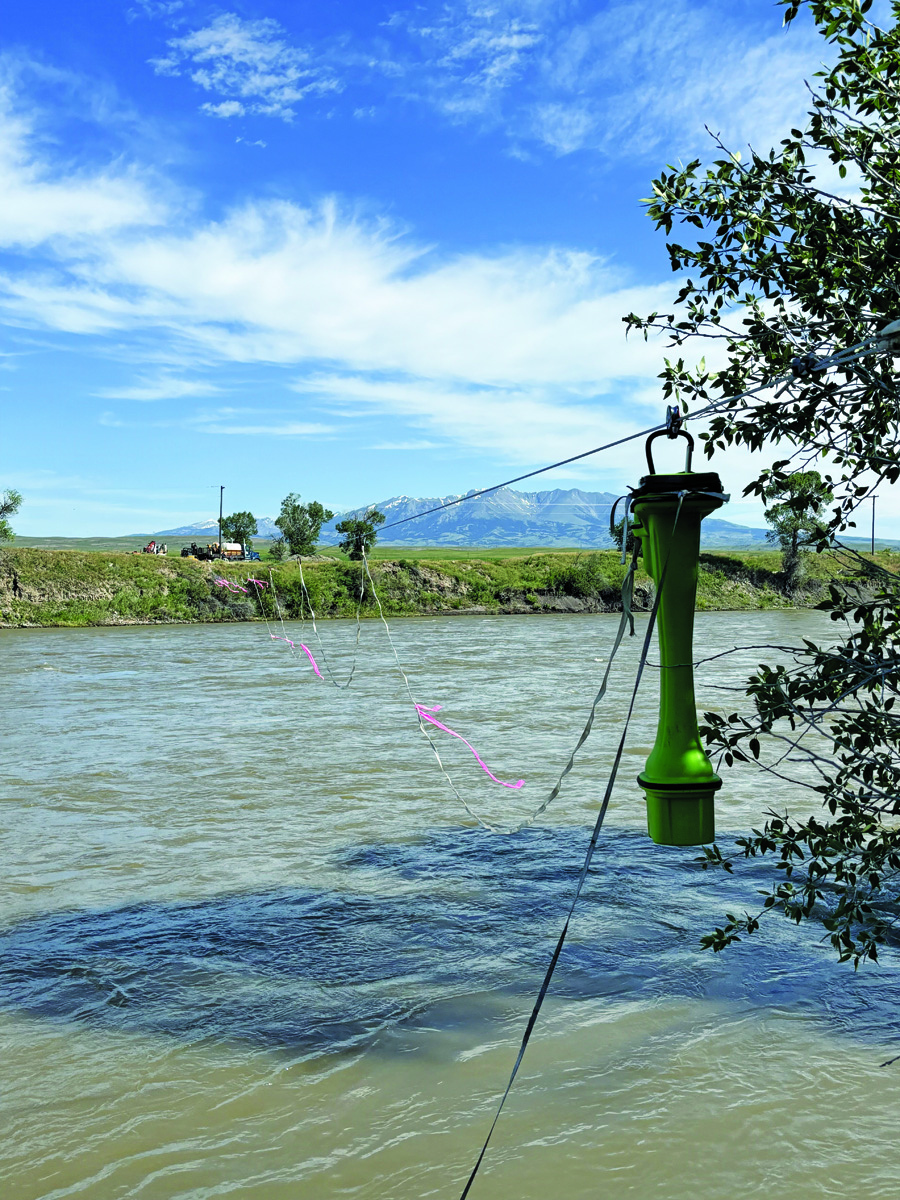
Using a pulley system anchored to the bridge structure, the crew suspended Subsite’s Marksman+ HDD locator roughly 60 feet above the rushing rapids below, allowing the locator to maintain a line of sight to the drill head moving beneath the riverbed.
From the riverbanks, operators moved the locator back and forth across the span, tracking the drill head as it advanced underground.
However, setting the cable across the river proved challenging in the wind and spray of spring runoff, and it took several attempts before the crew was able to pull the cable tight.
Once in place, the Marksman+ provided the locating data needed to guide the bore, allowing operators to monitor pitch, signal strength and drill head movement while maintaining a safe distance from the water below.
“Crossing more than 600 feet under a river requires a high level of confidence in both the equipment and the crew,” says Brett Romer, Subsite regional sales manager. “Having the right locating technology in place makes it possible to maintain control and visibility throughout the shot.”
SETTING UP FOR SUCCESS
On a river crossing like this, planning is not just a step in the process. It is what makes the shot possible.
Working along the Yellowstone River during peak spring runoff meant the crew was operating in a sensitive environment where mistakes could carry real consequences. High water, unstable banks and rapidly changing conditions left little margin for error. Every part of the job had to be carefully planned before drilling began.
“Preparation is everything on a crossing like this,” Herman says. “You want to know exactly where you’re starting and where you’re exiting before the first rod goes in. Once you’re under the river, there’s not much room to adjust.”
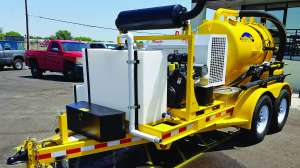
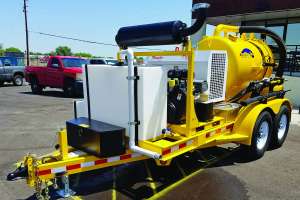
Ground verification was one of the first priorities. The crew used a Ditch Witch HX75 vacuum excavator to pothole and expose existing utilities before drilling operations began, helping confirm conditions and eliminate uncertainty before the bore was underway.
Congruently, support from the local dealership also played an important role throughout the project. For Herman, the relationship with Ditch Witch West is a key reason the company continues running Ditch Witch equipment. On remote projects like the Yellowstone crossing, access to experienced technicians, parts availability and responsive service help keep equipment running and schedules on track.
“When you’re running jobs in places like this, you need to have a partnership that understands the equipment and what contractors deal with on the job site,” Herman says.
On projects that take crews into remote environments and demanding conditions, dependable dealer support can be just as important as the machine itself.
“It’s not just the machine,” Herman says. “It’s the people behind it. Knowing the dealership has your back when you’re out on a job like this gives you a lot of confidence.”
Continue reading for free