

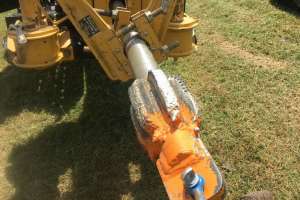
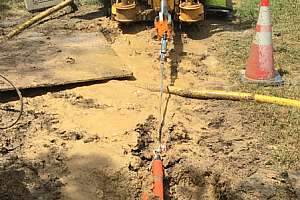
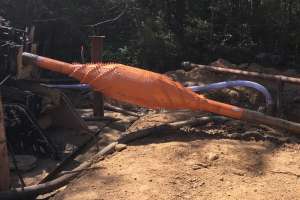
Directional drill bits may be a small piece of equipment on an excavation job, but finding the right one can make a significant difference in a project’s success.
Attached to the end of equipment used for excavating, drill bits range in size and shape. Choosing the right one can “make the difference between a contractor making money that day or not,” says Jeff Davis, Ditch Witch’s product manager for Horizontal Directional Drilling (HDD) Tooling.
“There’s a lot to think about when choosing a bit,” he continued. “You have to think about the job and what needs to get done. Bits aren’t cheap so you need to understand how they work and what you want them to do.”
LOOKING AT SOIL TYPE
Contractors need to consider several factors when choosing a drill bit, but soil type is the most important, says Steve Quisenberry, sales manager with Drillhead. Different soil conditions require distinctive drill bits. For example, a larger bit works better in loose, sandy soil while a smaller bit performs better in tighter or more compact rocky soil.
“The right bit can cut your drill time in half,” Quisenberry said. “You also need to factor in all the costs. If it’s going to take you longer on a job because you’re not using the right-sized bit, then you will spend more on diesel and more on hotels. You have to consider it all.”
Contractors using the same bit in different soil situations will discover that it will wear out more quickly, says Chris Fontana, Borestore/Cutting Edge sales manager for the Vermeer Corp.
“We try to sell the total experience. We talk to contractors and point out that while they may choose one drill bit that they hope to use in multiple soil types, it will not last as long as one specifically designed for the soil they’re digging in,” he says. “We talk about the peace of mind and that they won’t need a replacement as quickly.”
LOOKING AT THE SIZE AND DESIGN
Once contractors look at soil type, size is the next factor to consider, Quisenberry says.
“There are about 20 different manufacturers who make housings. I always tell people if they tell us what kind of machine they have, we can figure out which bit size will work best,” he says. “By becoming experts, it takes the burden off of the customer and they can focus on the job.”
Drill bit ends come in a variety of designs, Davis says. For example, some have “teeth” or a chisel-like look while others have a flatter look. Those endings determine what soil types the bits will work best in, he says.
Along with different sizes and design, drill bits can vary in their composition, whether they are made from alloy or carbide, Davis says.
“The material is usually related to where the bit is designed to be used, whether it’s loose or compact soil,” he says.
KEEPING AN EYE ON THE BUDGET
Contractors also cannot forget their budget, Fontana says, adding monetary concerns drive some contractors to purchase a universal bit to use in multiple types of soil. “I tell people to look at the soil they’re working with and then what their budget will allow and from that decide,” he says. “Also think about how many jobs you may have in a certain kind of soil and how often you’ll be able to use it.”
Making the right drill bit choice is key since using the wrong one may damage the drill, Quisenberry says: “If you choose the wrong bit, it can place undue pressure on the drill and cause damage.”
Continue reading for free