When trades companies want to grow their workforce, poaching the best employees from the competition is one option, but growing your own talent from within makes more sense.
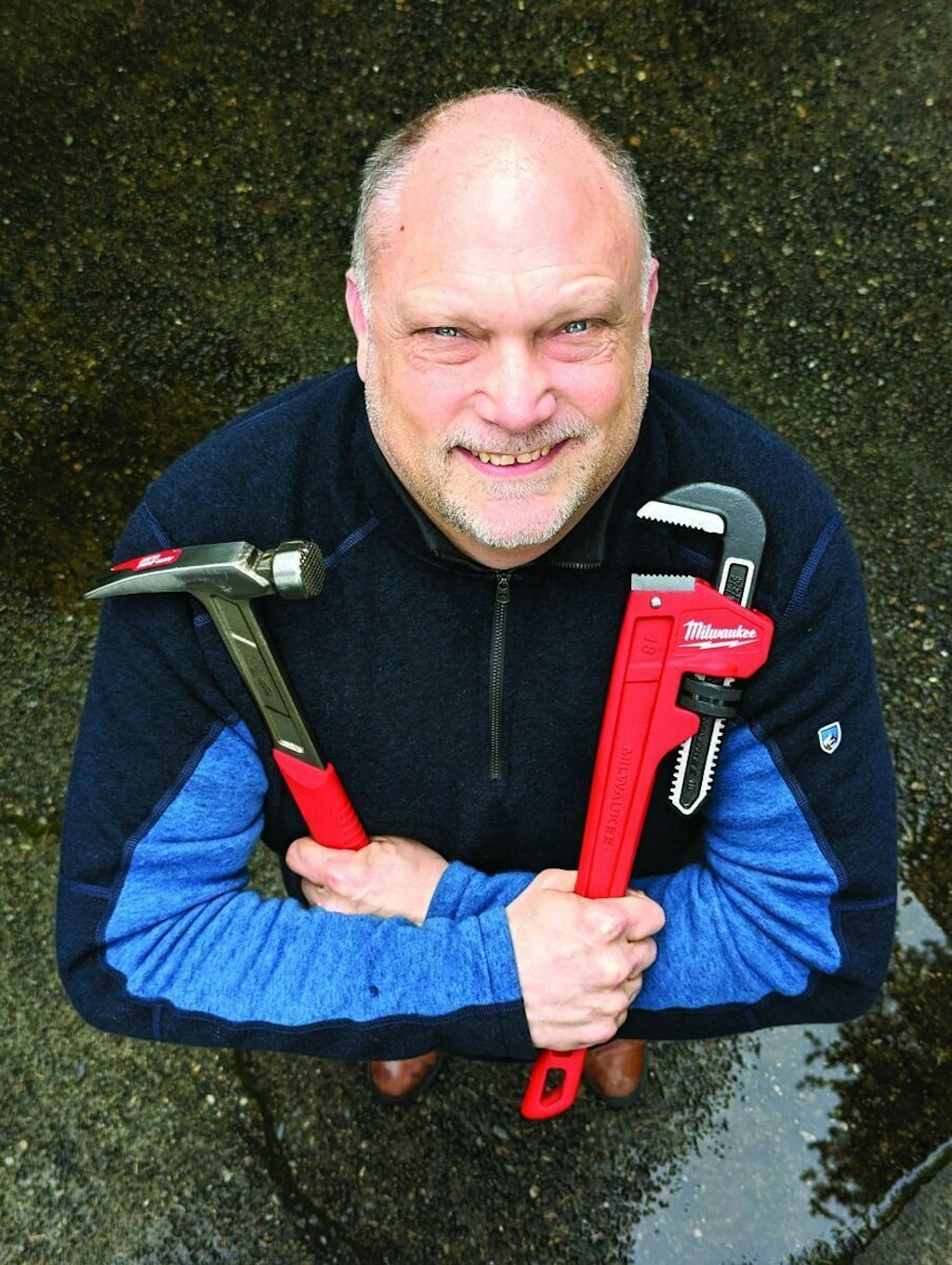
When Dennis Hamon joined his family’s plumbing business in Seattle, Washington, he started developing the company’s own plumbers through an apprenticeship program. Because he had already completed an apprenticeship in another industry, he knew the effects of a successful apprenticeship firsthand. He says he realized that developing apprentices into productive tradespeople could lead to explosive growth for the company.
Two years ago, Hamon and his business partner sold the plumbing company, and Hamon now owns and operates Dennis the Apprentice. The organization helps young people in the trades make the most out of their apprenticeship years.
In-house training
While a business owner may have the best intentions of creating a strong training culture, meeting payroll comes first, Hamon says. Businesses need to be profitable, otherwise the training program will be hijacked by the accounting department. For companies that are profitable and looking to grow, training employees within the organization can yield a lot of benefits.
First, a strong training program will lead to less chaos in the field, because technicians perform work right the first time.
“The better trained your people are, the fewer callbacks you have,” Hamon says.
Callbacks and warranty issues cost a company time, money and possibly its reputation.
Second, training also helps apprentices pass licensing exams on their first try, shortening the time from apprenticeship to independent work as a journeyman.
“You speed up the process to take on a truck faster,” Hamon says.
Every state regulates trades licenses independently, so the level of experience, education and testing requirements vary. Hamon and his business partner developed their own training program, in part, because of the time and hassle of driving to the nearest training center. Hamon started the company’s training program with a one-hour plumbing code class at 6:30 a.m. on Wednesdays. He took questions from the back of the book, put them on flash cards and quizzed the group.
“Everybody showed up,” he says. “It took about six months to get that going, but pretty soon, it was the cool place to be.”
Getting hands-on
Initially, the plumbing company did their hands-on training at customers’ homes. Customers were offered a 10% discount if they agreed to open their home to a company training. Hamon would bring pizza and soda, wholesale reps would attend and the group would complete a project in the basement, bathroom or kitchen.
“Not having a beautiful lab is no excuse to not start a training culture,” Hamon says. “Whether it’s in your own house or your customer’s house, you can start today — after you’re profitable.”
Searching for a space to hold trainings on site, Hamon emptied a lean-to at the office that had been a catchall of spare equipment and parts. His plumbers designed and built a training lab. They installed furnaces, water heaters, toilets, a bathtub, shower and a wall for roughing-in plumbing. Everything was hooked up and working. In addition to this equipment, technicians brought in plumbing fixtures and equipment from job sites to fix, rebuild or install at the training lab.
Attendance was not mandatory, but most employees would show up. With experienced technicians teaching the apprentices, both groups benefited.
“Most plumbers want to leave a legacy,” Hamon says. “There’s an innate desire to give back, and so when you have an apprentice that wants to learn and a veteran that wants to teach, it’s a really cool culture that happens.”
The training lab even attracted plumbers from other companies, and the camaraderie grew.
“A lot of blue-collar guys work on their own all day,” Hamon says. “To come have a piece of pizza, some music going, drink a pop, and shoot the breeze at the company, that became the place to be.”
The training lab created buzz in the area and attracted job seekers, including experienced plumbers looking to change jobs.
“What I built in that lean-to that was filled with miscellaneous stuff became a recruiting tool,” Hamon says.
When the plumbing company later relocated to a new facility, it developed a state-of-the-art training lab.
Building full skill sets
Over time, the company also introduced a weekly sales training meeting, teaching technicians the skills to sell with confidence.
“One of the problems in our industry is we try to make our technicians salespeople,” Hamon says.
Without sales training, technicians have a distinct disadvantage.
Apprentices attended a weekly apprenticeship meeting, instead of the sales meeting. In total, the company would hold four training classes every week. At the start, Hamon attended all four, bringing coffee and doughnuts in the morning and pizza in the evenings.
“The owner has to go if you want this to be your culture,” he says.
To maintain good standing with the boss, veteran technicians attended the meetings, too. They kept attending because the meetings were worthwhile. Hamon says his approach was simple: Let me help you make more money and have a better week this week.
“If they’re learning something, and they’re getting results in their careers, they will show up,” Hamon says.
Recruiting pitch
To motivate young people to apply for apprenticeships, Hamon relied on social media. Knowing that images of toilets and garbage disposals wouldn’t go viral, the company posted about people instead. In some posts, they told a story about their apprentices’ success: “Josh did a perfect job replacing his first toilet.” The social media posts were directed at parents, and the posts depicted plumbing as a challenging and worthwhile career.
“Parents aren’t encouraging their kids to aspire to be plumbers. They aren’t saying, ‘Maybe one day, you could be a plumber,’ but they should say that,” Hamon says.
Hamon also attended Career Day events at the local high school, with mixed success.
“High school classes are a pretty tough crowd when you’re talking about plumbing, but I would have a few people light up and ask to know more information,” he says.
Whenever Hamon interviewed candidates for the apprenticeship program, he looked for candidates with motivation and aptitude.
“We were very serious about making plumbers, and so we turned a lot of apprentices away. We had more people than we needed,” Hamon says.
He made a promise to every apprentice he selected: Give me three years, and you’ll be a licensed plumber with no student loan debt, making $100,000 a year. The company’s in-house training program made that possible. One great apprenticeship hire can change an entire company culture for the better.
“These young people are super bright,” Hamon says. “They don’t lack capacity; they lack teachers.”
Continue reading for free