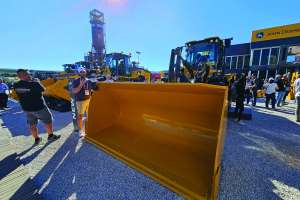

Every three years, the underground construction industry converges on Las Vegas for CONEXPO-CON/AGG, the largest construction equipment trade show in North America. With more than 2,000 exhibitors and thousands of machines and technologies on display, the event has become a preview of where the construction and utility installation industries are headed next.
For contractors specializing in vacuum excavation, horizontal directional drilling (HDD), trenching and other underground construction methods, the 2026 show floor highlights several trends that are reshaping the way utilities are installed and maintained. From smarter drilling systems to new hydrovac trucks and advanced machine control technologies, the equipment on display reflects a growing focus on safety, productivity and digital job site management.
Here are 10 innovations for underground contractors to keep an eye on from CONEXPO 2026.
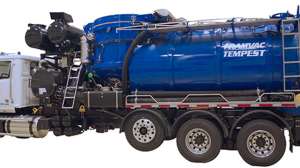
Hydrovac trucks designed for urban work
At this year’s show, manufacturers are introducing hydrovac units designed specifically for tighter job sites and municipal work.
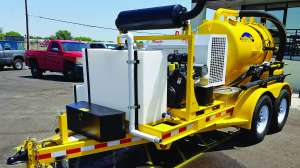
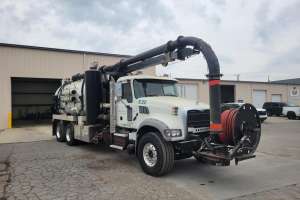
One example is the AllExcavate 35 vacuum truck, being introduced by Vacall. The compact unit features a 3.5-yard debris tank, 500-gallon water capacity and a blower rated around 2,200 cfm, making it suitable for potholing and utility maintenance in dense urban areas.
The smaller footprint reflects a broader trend: equipment built to navigate alleys, sidewalks and congested utility corridors without sacrificing performance.
Quieter, more capable hydrovacs
Another development in vacuum excavation equipment is a push toward lower noise levels and dual-digging capabilities.
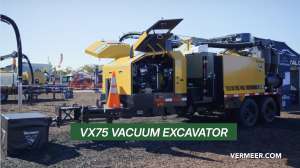
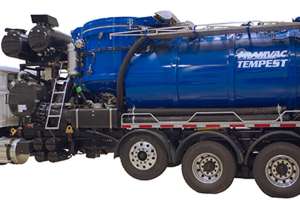
New machines such as the Vermeer VXT400 and VXT500 vacuum trucks highlight that shift. These purpose-built hydrovacs are designed for quieter operation — around 70 dB(A) — while offering enhanced digging capabilities and improved visibility through integrated camera systems that help operators monitor boom reach and positioning.
For contractors working in neighborhoods or congested urban projects, quieter machines can mean fewer restrictions on when work can be performed.

Radar tech to prevent utility strikes
Damage prevention remains one of the biggest challenges in underground construction. One of the most intriguing technologies on display at CONEXPO addresses that problem directly.
RodRadar’s Live Dig Radar integrates ground-penetrating radar directly into an excavator bucket. The system scans the ground during excavation and can detect buried utilities before the bucket hits them. When paired with safety systems from Hexagon’s Xwatch platform, the machine can even automatically stop the bucket before impact occurs, helping reduce costly strikes and project delays.
Think of it as an emergency braking system for excavation.
Compact excavators for tight corridors
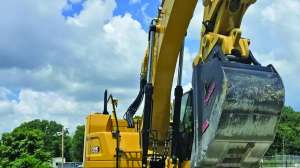
Compact excavators remain a staple of underground construction fleets, and manufacturers continue to refine machines for work in confined environments.
Machines such as Caterpillar’s compact-radius excavators feature reduced tail swing designs that allow operators to dig safely near structures, traffic lanes and existing utilities. Many are also equipped with digital grade systems and fleet connectivity tools that help track productivity and machine performance.
These features make compact excavators increasingly valuable as multi-purpose machines for trenching, service installation and support work around directional drilling projects.
Digital fleet management platforms
Equipment connectivity is another major theme at CONEXPO 2026.
Manufacturers like John Deere are showcasing integrated digital platforms such as the John Deere Operations Center, which allows contractors to monitor machine data, job site performance and maintenance information from a centralized dashboard.
For underground contractors managing multiple crews and machines across wide service areas, these systems can improve fleet utilization and reduce downtime.
Semi-autonomous equipment and AI assistance
Automation is extending beyond drilling systems to heavy equipment in general.
At its CONEXPO exhibit, Hitachi Construction Machinery is demonstrating a range of emerging technologies including AI-assisted equipment controls, machine guidance systems and remote-operated equipment.
These technologies are designed to help operators perform repetitive tasks more consistently while also addressing the industry’s ongoing labor shortages.
Electric and hybrid equipment concepts
Electrification is slowly making its way into construction equipment, and several manufacturers are showcasing electric machines and alternative power systems at the show.
Examples include compact electric excavators and equipment powered by advanced engine platforms designed to support alternative fuels such as renewable diesel.
While large-scale adoption may still be years away, the technology offers a glimpse at how future job sites could reduce emissions and noise.
Advanced operator training simulators
Another emerging solution for workforce challenges is simulation-based training.
Companies such as CM Labs are demonstrating upgraded simulation systems capable of modeling soil behavior and machine performance with greater realism. These systems also allow instructors to track operator performance metrics during training exercises.
For contractors struggling to find experienced operators, simulation technology could help accelerate training programs.
The connected job site
Taken together, many of the technologies on display point toward a larger shift in the industry: the digitally connected jobsite.
From radar-equipped buckets to automated drilling systems and cloud-based fleet monitoring platforms, equipment is becoming more intelligent and interconnected. For underground construction contractors, that means fewer utility strikes, better productivity data and machines that can help compensate for labor shortages.
A preview of the future
CONEXPO has always served as a barometer for where the construction industry is headed. In 2026, the innovations on display show a clear direction: safer excavation, smarter equipment and more connected job sites.
For contractors working in vacuum excavation, trenchless construction and utility installation, the show floor offers a glimpse of tools that could reshape underground construction in the years ahead.
Continue reading for free