

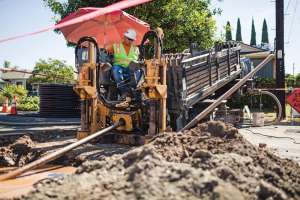
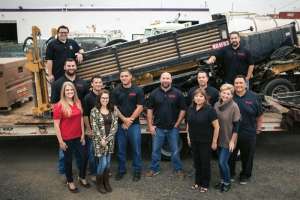
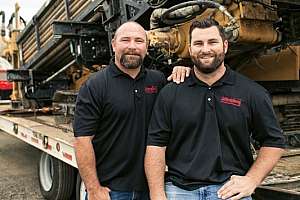
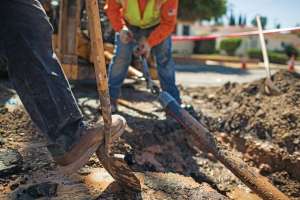
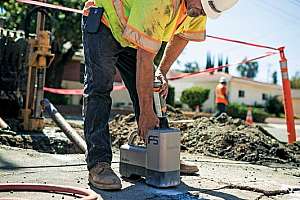
When Kevin Reardon started California Boring 20 years ago, not many people knew about directional drilling and other trenchless technologies. Reardon learned on the fly along with the rest of the market.
“It has evolved immensely,” Reardon says. “When directional drilling first started, it was basically used for telephone and street light installation. Now we’re doing gas and electrical work.”
Reardon’s company has also evolved, starting with saw cutting and evolving into directional drilling. Now, thanks to several subsidiaries, the company can undertake almost any underground construction job, from auger boring to sewer inspections.
The company has grown to 50 employees and 13 directional drilling machines — becoming one of the largest contractors in the state offering the method.
“We serve all the directional drilling and auger boring needs for contractors in California,” Reardon says. “We also do underground services such as sewer locating, potholing and anything to do with underground construction and utilities. Our main focus is on boring, though.”
Reardon launched the company in 1993 as a concrete-cutting company when he was just 20 years old. “Originally I was doing saw cutting for pipeline companies and pulling a trailer behind my truck,” he says.
He quickly saw room for growth after several pipeline companies asked him if he would do directional drilling. With the help of his father, Reardon bought his first drill rig in 1995. “We started with one drill rig, and we had some pretty patient customers at that time,” he says. “We basically learned on our customers’ jobs.”
California Boring’s 13 rigs are all manufactured by Vermeer. The inventory includes a 9x13 machine, a 20x22, two 36x50s, eight 24x40s and one 100x40. “Vermeer equipment has been durable over the years,” Reardon says. “We get pretty good support from them. They work well with us in taking care of our needs.”
Typically, 10 crews are out each day for directional drilling throughout the state.
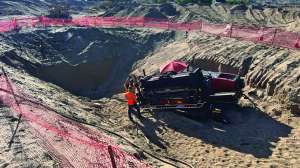
A statewide service area brings plenty of job variety. One of the company’s toughest was working on a solar-power project in Calexico, for Abeinsa Abengoa at the Mt. Signal Solar Project. Abeinsa Abengoa hired California Boring to complete the underground canal crossings; when it was determined that regular excavation would not be allowed, directional drilling became the best option.
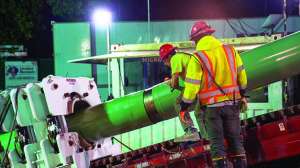
Crews were installing high-density polyethylene conduit with innerduct placed inside, surrounded by a special thermal resistant grout to stop it from heating up.
“We provided and fused the 28-inch HDPE pipe, installed the multiple HDPE innerducts, dug bore pits, did the HDD and used a specific thermal resistive grout for the inside annulus of the casing,” says Mike Reardon, project manager for the company. “We then backfilled the bore holes and left the pipe exposed for the customer to run their lines.”
California Boring did seven canal crossings and worked through challenging soil conditions. “On this project we dealt with a reactive clay soil that had expansive properties,” Mike Reardon says. “Sticky clay conditions like this make large HDD bores challenging because you have to break up the clay enough to be able to transport the cuttings out of the bore hole.”
The clay becomes problematic when crews try to recycle the material. “We want to recycle it so we can reuse the bentonite for the reaming operation,” Mike Reardon says. “With the help of Vermeer’s 9x12T recycling unit, we were able to process the material and pull in all the bores with no problems.” Crews finished the project in three months.
Watch: "Tackling Southern California's Rocky Soil"
Soil conditions are just one factor directional drilling contractors must look at when heading into a job. Others include existing utility locations, access to water and job layout. “We need to know where we’re going to set the drilling equipment as opposed to where the pipe is getting pulled in from,” Kevin Reardon says. “With directional boring, you’re trying to basically avoid disrupting the flow of traffic as much as possible, leaving driveways open, trying to get the conduit into the ground without impeding the general public.”
Helping to get those tough jobs completed safely is the crew of California Boring. “Our employees are well trained, and they’re very safety conscious,” says Sarah Gutierrez, company president. “Our guys have the ability to think on their own and make their own decisions to get the job done safely.”
At the start of each job, crews complete a job safety analysis that covers the project details and safety considerations of the site. “If they have two or three jobs a day, they’re going to have two or three of those safety analyses to complete,” says Art Gutierrez, safety manager. “We’ll then review them for accuracy.”
New crew members are required to complete a boot camp where they learn how to operate equipment and tools, and where they receive their initial safety training.
“Once they complete that, they come to us and we have them go through our required safety orientation,” Art Gutierrez says. “Drillers and locators also go through a session on safe operation and maintenance of Vermeer drilling equipment.”
Once trained, the company rewards its employees for being safe by having parties and barbecues throughout the year. “Our people stay. They don’t come and go,” Sarah Gutierrez says. “We want to keep our people and keep them happy, especially since we put so much time and training into them. We feel we have the best drillers and locators available.”
California Boring offers more to its clients than just directional boring: The company has an entire underground division.
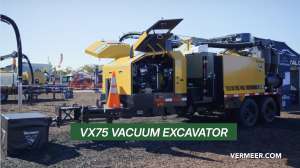
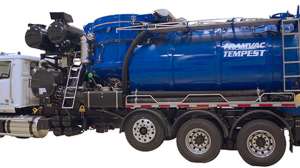
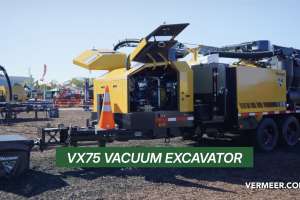
“A majority of our clients do possess these capabilities, so we are very careful to never vie for opportunities against them,” Kevin Reardon says. The company offers vacuum excavation through its underground division, as well as asphalt and concrete restoration, engineered shoring pits and general labor.
The company also has two subsidiaries: California Auger Boring and California Locating Services. California Auger Boring, owned by Kevin Reardon, launched in 1995; California Locating Services, owned by Sarah Gutierrez and Kevin Reardon’s wife, Jennifer, started operations in 2010.
“Before directional boring, there are a lot of things that need to take place on a particular project,” Kevin Reardon says. “What we’ll do is meet the customers, walk the project and then send out the locating service. We’ll send out the saw cutter to cut the pothole location, and then the vacuum excavator to pothole for utilities.”
Once those steps are completed, California Boring comes in to place the pipe. To handle maintenance and repairs on all the equipment, California Boring has its own crews that can travel if needed. “We have four mechanics in our shop, and they are mobile,” says Sarah Gutierrez. “If we have something break down on a job site, we can dispatch a mechanic. It’s one of the many ways we are set up to make it more efficient.”
Sarah Gutierrez is excited to see where the company goes from here.
“Kevin has done a great job and has a lot of respect in this industry from being in it so long,” Sarah Gutierrez says. “He had a vision for this company when he started, and now here we are. Now we’re serving customers the only way we know how — the best way.”