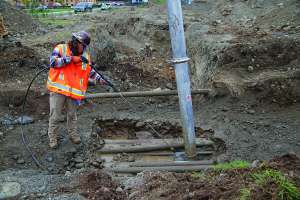

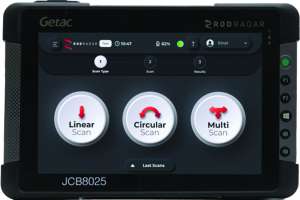
When it comes to digging underground contractors are always at risk of running into existing buried utilities ranging from electrical to water and wastewater lines. Even when utilities are marked it’s a gamble of knowing where exactly those are and how deep they are.
RodRadar offers a unique technology platform, which automatically detects underground utility infrastructure in real time, on location, without the need for expert analysis. RodRadar’s flagship product is the LDR Excavate, the first of a series of products and services to carry the company’s Live Dig Radar (LDR) technology.
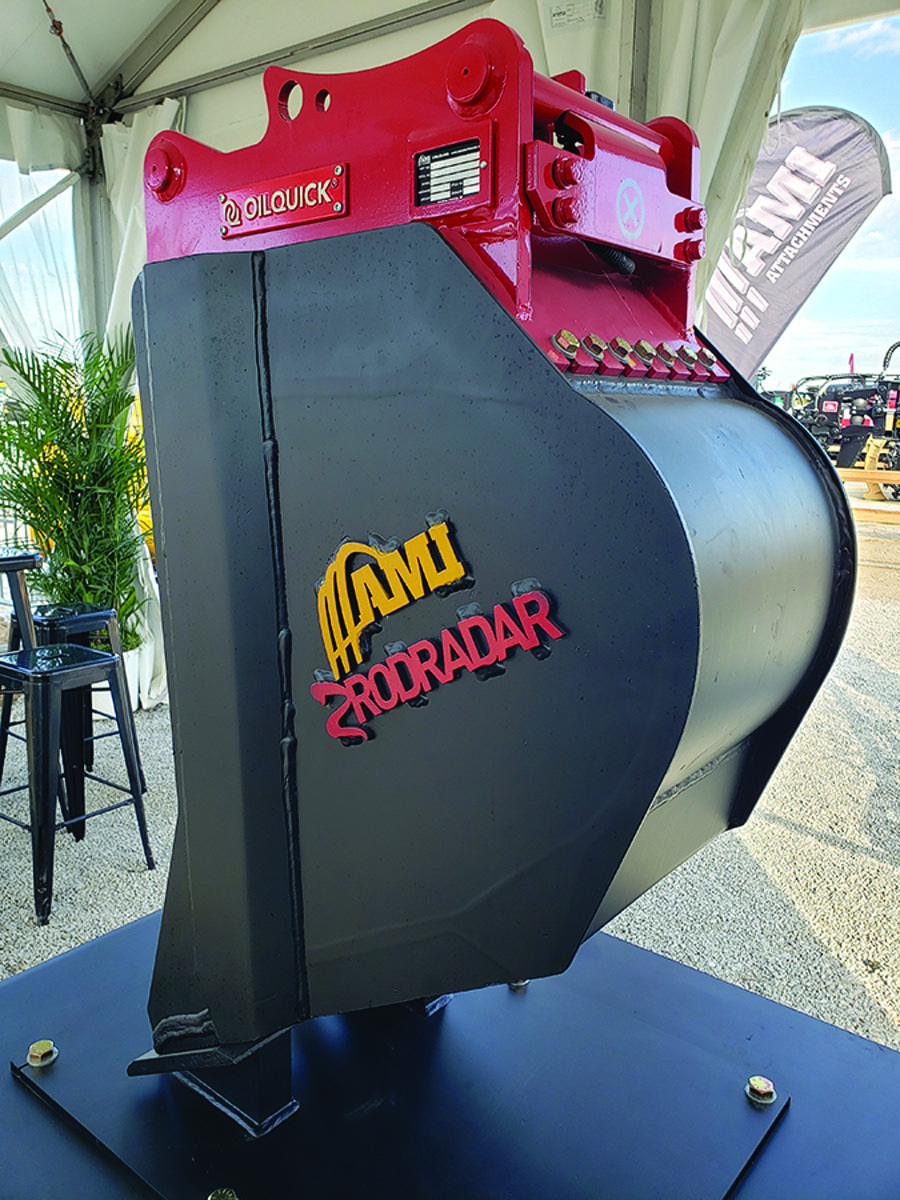
Embedded in the digging bucket, LDR technology overcomes existing GPR limitations, detecting underground utilities during excavation, including at shallow depths. On the surface and during trenching, LDR Excavate creates a new scan with each pass, alerting the excavator operator of utilities in proximity to the bucket, in the ‘next digging bite.’
“It’s the first ever GPR integrated into a GPR,” says Amir Tsrouya, director of business development for RodRadar. “It communicates the data collected at the bucket’s sensor, to the tablet in the cab. That allows the operator to have an independent system in real time, which makes digging safer and more efficient. It allows them to work faster around utilities and retrieve accurate information about the buried utilities.”
When an operator uses the excavator with the bucket attached, they position the LDR Excavate bucket on the ground away from the cab and press the “start scan” on the in-cab tablet. The operator will then draw the bucket towards the cab by sliding it along the ground. Results will appear within a few seconds on the tablet revealing any gas, electrical, water, fiber or phone utilities buried there. Information will include the distance from the start of the scan and depth range of the underground utility.
The buckets come in three different sizes, including Type I for excavators between 3,000 and 10,000 pounds; Type II for excavators 10,000 to 24,000 pounds, and Type III for excavators 24,000 to 45,000 pounds. All buckets come in 18- or 24-inch widths.
“The antennas and electronics are the same for all buckets,” Tsrouya says. “What will change is the mechanical interface to fit the customers’ types of machines they have. They can also order the buckets with or without the teeth.”
While the product is currently available, RodRadar is selecting the customers and partners they are working with.
“We’re doing it that way to get feedback from them on the technology so we can continuously develop and advance it toward full market availability,” Tsrouya says. www.rodradar.com
Continue reading for free