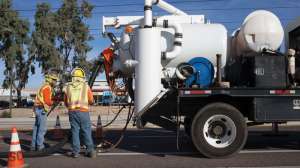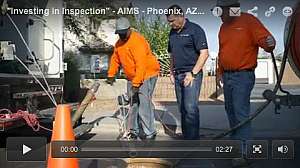

Recently, Arizona Instrument’s lab manager and research chemist had the unique opportunity to visit a wastewater treatment facility in Tolleson, Ariz. The invitation was extended by an operations manager who was concerned about an "unpleasant smell" emanating from the area. In accordance with their air-quality testing protocol, when Maricopa County receives three odor complaints from nearby residents, the facility must test the air at the closest occupied location. In this intance, that location was an elementary school on the corner of the nearest major intersection.
AZI’s representatives brought a handheld Gold Film Hydrogen Sulfide gas analyzer (Jerome 605) fitted with an ammonia scrubbing filter to help identify the origin of the obnoxious odor. Other locals in the area described the odor as a pungent aroma that smelled "like burned materials." It is important to note the surrounding area is also home to a dairy as well a meat-packing plant, all within two miles of the school. Because H2S has a distinct rotten egg smell, it was unlikely the source of the described odor was H2S, but analysis was still required by law.
The J605 sampled the air in the school parking lot for 30 minutes. The instrument was set on survey mode and in range '0' but did not detect any H2S during the 30-minute allotment. The elementary school was notified there was no detection of hydrogen sulfide gas surrounding the premises.
In addition to the testing conducted at the school, the operations manager for the wastewater facility also conducted a perimeter test by walking along the surrounding fence and measuring emissions in survey mode. During this testing, the instrument read 0.00 ppb for most of the fence line. The one exception was the area where the wastewater entered the facility. At this inlet, the instrument measured concentrations as high as 110 ppb. As we left the high concentration area, the readings returned to 0.00 ppb. A few processing areas did have odors of ammonia and chlorine bleach, but no H2S signal was produced.
Following the perimeter walk, the facility was surveyed from end to end through the middle of the compound, starting in the north and heading to the south, and again starting from the east heading to the west. During the north/south testing, the instrument did not register a reading above 0.00 ppb. One section that was traversed from east to west was an area of sludge drying beds where solid waste was air dried before being shipped or sold. The material beds were about 30 percent filled and smelled like plant fertilizer. No rotten egg smell was noticed, and the instrument did not provide a reading above 0.00 ppb in this area. When the instrument passed near the area where the raw sewage entered the building, the instrument again spike within the 100 ppb range.
The final areas that were tested were the air scrubbers used at the exhaust of the sealed sewage processing station. There were two cylindrical scrubbers rising about 20 feet off the ground with a diameter of about 6 feet. The scrubbers were filled with activated carbon and were in year three of five before needing to be replaced. The operations manager informed the AZI representatives that no prior testing had been conducted and these were the initial tests to ensure the scrubbers are maintaining efficiency. At the top of the scrubber where there was an inlet of air to be filtered, the instrument measured close to 8 ppm H2S for Scrubber 2 and 3 ppm. For Scrubber 1, the gases coming into the scrubbers were measured at 1 ppm, but there was a pressure gradient that could have influenced the results.
The operations manager stated they could test solids in sludge, but do not typically do this because the sludge is air dried for weeks before distribution off-site. However, many larger facilities do not have the ability to air dry their sludge for weeks and a rapid loss-on-drying instrument would be vital to monitoring mechanical drying processes. The operations manager also discussed testing Hg in water, and stated they do test for Hg, but send water samples to an independent lab for metal analysis.
Overall, the Tolleson wastewater facility hydrogen sulfide emissions were below prescribed levels. AZI’s first visit was able to demonstrate the cleaning scrubber could be monitored by the J605 to ensure it was working properly. Additionally, solid content determination would best be marketed to facilities that are only doing mechanical drying processes and shipping material shortly after drying. This would help them ensure their dryers are working efficiently, and that they are spending money prudently. Hg testing would be worth pursuing, but difficult as a stand-alone method since they are interested in other metal contaminant levels as well. These observations made by AZI’s representatives describe a multifaceted approach to a wastewater treatment using not only toxic gas analyzers but rapid loss-on-drying technology to aid them in their efficiency.
Continue reading for free