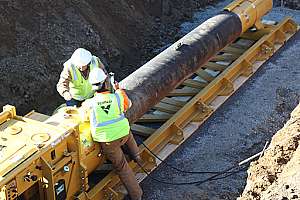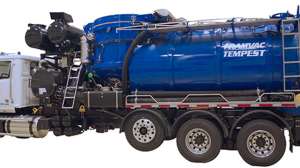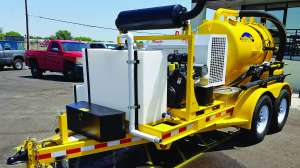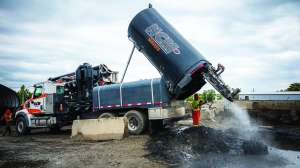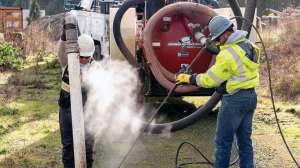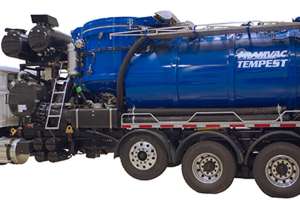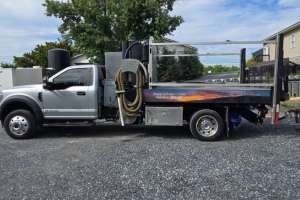

Hydroexcavation has been heavily used in Flint, Michigan, to identify locations of lead service lines as the city works to eradicate lead pipe from its distribution system. But the city’s mayor recently questioned its effectiveness, saying too many lead pipes are likely being left unidentified.
According to a report by The Flint Journal, Mayor Karen Weaver told members of the Flint Water Interagency Coordinating Committee (FWICC) on June 15 that she is “putting a pause” on using hydroexcavation to dig up service lines to identify their material makeup.
“Hydrovacing is missing lead and galvanized service lines. I’m not going to be a part of putting profit over people or having cost savings more important than life-saving,” Weaver told FWICC members.
Straying away from hydroexcavation could potentially raise the cost of the lead pipe replacement program and slow its pace, but the mayor’s concern is that pipes have been uncovered through hydroexcavation that appear to be copper but were later found to have connections containing unsafe materials. A worker involved in the program spoke at the June 15 meeting, and said he was aware of a few dozen instances in which that happened.
“As we dig a little we find there are connections under the ground that are galvanized and lead as well. So some that have been identified as copper … truly aren’t,” the worker told FWICC members.
In response to questions from The Flint Journal, the Michigan Department of Environmental Quality issued a statement:
“The DEQ supports and encourages the use of hydroexcavation for service line composition verification and replacement. When executed properly, the DEQ believes hydroexcavation is an extremely effective and reliable method of identifying service line composition. Proper procedures include sending a technician into the home to verify the composition of the material going into the home is the same as the material identified during the hydroexcavation process at the curb-box.”
When the city paid two contractors earlier this year to excavate sites at 124 homes without hydroexcavation, the DEQ questioned the spending, noting that the average cost of a traditional excavation was $1,660 compared to $228 for hydroexcavation.
“The DEQ is emphasizing that, moving forward, all service lines that are to be replaced utilizing federal or state funding should first be hydroexcavated to determine material type,” stated a DEQ letter to the mayor’s office.
Weaver responded to the DEQ in a letter, expressing the same concerns she brought up at the FWICC meeting. She wrote that Flint shouldn’t be mandated to use only hydroexcavation when trying to identify its remaining lead service lines.
Source: The Flint Journal
Continue reading for free