Industrial vacuum systems play a crucial role across a wide range of sectors from manufacturing and construction to energy and municipal services. One longstanding challenge, however, has been the efficient offloading of collected materials. Traditional methods can lead to unnecessary downtime and lost opportunities to reclaim, reuse or recycle valuable resources. New advancements in offloading technologies are addressing these issues by streamlining the process, improving performance and supporting more sustainable practices.
Modern offloading systems — available in both continuous and batch configurations — enable operators to handle waste and process materials more effectively. These solutions also support material recovery efforts, helping facilities reduce disposal volumes and incorporate reclaimed materials back into their operations. From dense-phase conveying for dry bulk materials to pump systems for liquids and sludges, the range of available technologies helps meet the demands of diverse industrial environments.
KEY OFFLOADING APPROACHES
Industrial offloading technologies typically fall into two categories, each suited for different operational needs: continuous systems that allow offloading and vacuuming at the same time and batch systems designed for controlled material transfer after collection.
CONTINUOUS OFFLOADING SYSTEMS
Continuous systems maintain vacuuming operations while simultaneously discharging materials. This approach reduces downtime and is beneficial for processes where steady operation is essential.
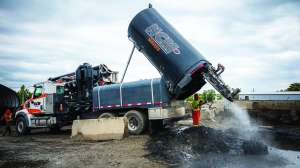
Swing-Out Loading Cyclone
Description: Enables simultaneous vacuuming and discharge through a cyclonic separation process.
Best Used For: Reclaiming recyclable materials, managing hazardous debris, and supporting applications that require uninterrupted vacuuming.
Advantage: Helps maintain operational uptime by keeping material handling and collection ongoing without interruption.
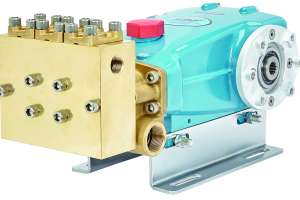
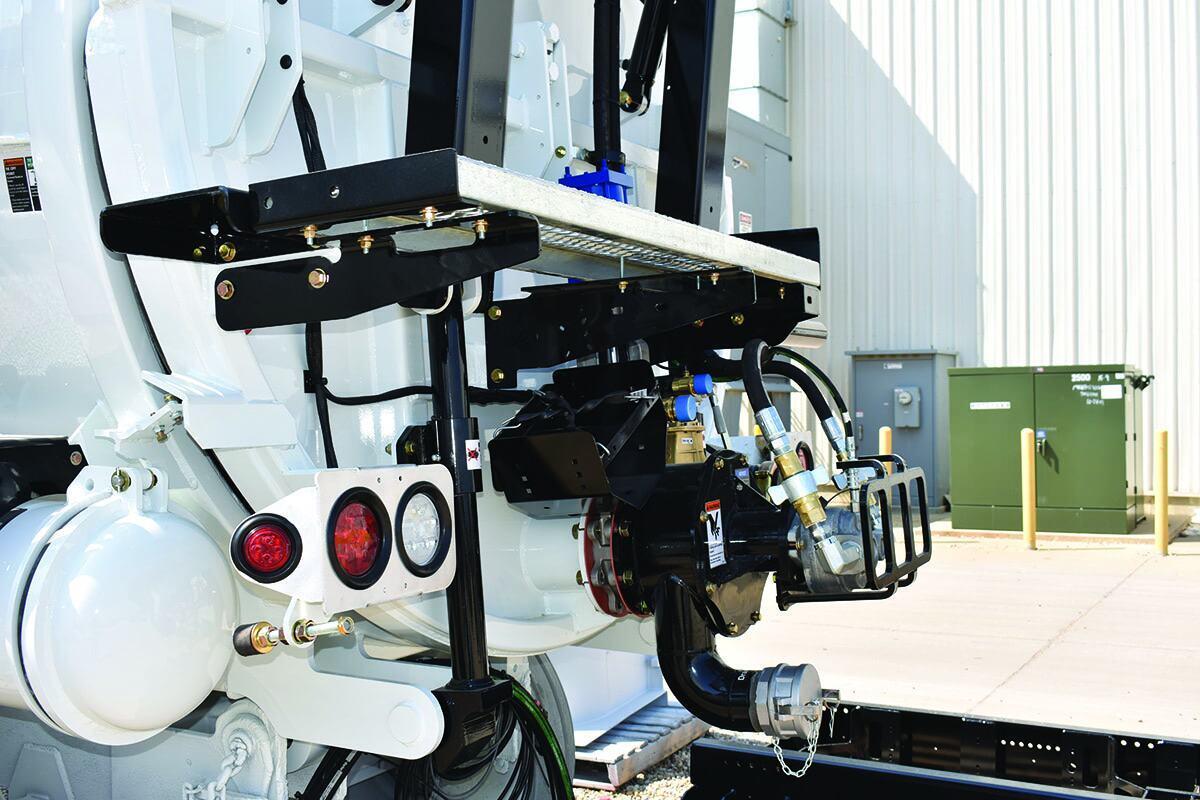
Sludge Pump Offloading System
Description: A hydraulically driven pump built for the transfer of liquid and semiliquid materials such as water, sewage, mud and silt.
Best Used For: Wastewater treatment, industrial cleanup, oil and gas applications and environments requiring movement of high-volume sludges.
Advantage: Can be used in continuous or batch modes, offering flexibility while maintaining steady flow through a 4-inch discharge outlet.

BATCH OFFLOADING SYSTEMS
Batch systems collect materials first and offload them later, making them useful when material must be conveyed over long distances or when precise flow control is required.
Dense Phase Offloading System
Description: Uses pressurized air and high airflow to pneumatically convey dry materials in a dense-phase stream with vertical conveyance capabilities up to roughly 120 feet.
Best Used For: Cement, dry powders, construction materials and bulk products requiring transport to silos, railcars or other elevated storage.
Advantage: Provides controlled movement of dry materials while helping minimize contamination.
Vane Pressure Offloading System
Description: Utilizes a rotary vane pump to pressurize a debris tank for offloading or to reverse for vacuum capabilities.
Best Used For: Liquids, slurries and thick sludges in sectors such as septic service, oil and gas, grease removal and tank cleaning.
Advantage: Offers consistent pressure for handling difficult materials while reducing filtration requirements.
SPECIALIZED OFFLOADING OPTION
Hi-Dump Into Roll-Off Containers
Description: Allows operators to discharge debris directly into roll-off containers up to approximately five feet tall through an electronically sequenced lifting system.
Best Used For: Construction, demolition and waste management sites where large containers are readily available.
Advantage: Simplifies handling by depositing material directly into roll-off bins, reducing manual labor and secondary material transfers.

SUPPORTING SUSTAINABILITY, EFFICIENCY AND COST SAVINGS
Advancements in offloading technologies contribute to more sustainable and cost-effective operations. Many industries produce byproducts that hold value when properly reclaimed. Dense-phase conveying and continuous offloading systems help recover materials that would otherwise be discarded, reducing waste and cutting material costs.
Examples include dry bulk powders in cement production that can be reintroduced into the process and plastic flakes in manufacturing that can be reclaimed instead of landfilled. These approaches support both environmental stewardship and economic efficiency.
CONCLUSION
Modern offloading solutions are helping facilities improve productivity, minimize downtime and integrate more sustainable practices into their operations.
Whether through continuous discharge systems that keep processes moving or batch offloading solutions designed for precise material handling, today’s technologies provide industries with effective tools for material recovery and waste reduction.
By making it easier to reclaim, reuse and recycle resources, these systems support both operational efficiency and environmental responsibility.
Continue reading for free