
Students preparing for careers in the energy sector have an innovative new facility for learning.
The Great Lakes Energy Education Center, located on the campus of Northeast Wisconsin Technical College in Green Bay, celebrated its grand opening on June 25 with a ribbon-cutting and open house, though it’s been available for students to use since January. Amy Kox, associate dean of Energy and Agriculture, says the “Great Lakes” reference reflects the center’s status as a leader in energy education in the Midwest. Years of planning went into the facility’s design, and it’s become a model for other energy centers.
Construction of the center was funded by part of a $66.5 million referendum passed by voters in 2015 with corporate donations helping with extras. One of those extras is a self-sustainable design. The 32,000-square-foot facility is net-zero capable, producing as much energy as it consumes.
Students enrolled at the energy center prepare for careers in power generation, distribution, and conservation that will lead to jobs installing and repairing electrical lines, natural gas mains, and solar panels, plus a whole range of other energy-related careers. A stand-alone directional drilling course is offered to students in the Natural Gas Construction and Service Program and Electrical Power Distribution Program.
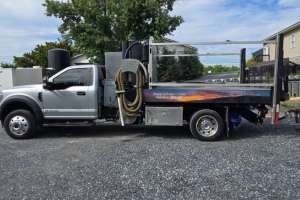
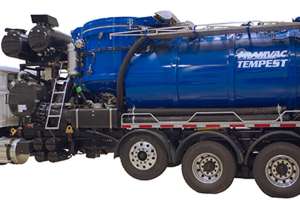
“We’re teaching the guys how to operate directional drills, both Ditch Witch and Vermeer, and we also have a hydroexcavator we use,” says Daniel Parsley, lead instructor.
“It’s definitely going to help us in the field,” says student Cole Piechowski. “Directional drilling is the way they’ll be doing it from now on because it’s less intrusive and it’s safer.”

Practical experience is easy to come by at the Great Lakes Energy Education Center. Nearly every aspect of the center is designed for instruction:
- The ductwork and vents are labeled and visible throughout the building.
- The mechanical room is spacious enough to double as a lab for energy management students.
- A geothermal system of 40 wells serves a dual purpose of instruction and heating/cooling.
- A 2,000-square-foot outdoor solar classroom is located on the rooftop.
- The grounds will be landscaped by the landscape and sustainable agriculture students.
The facility even has a mudroom, so dirty boots won’t track mud throughout the building. In the classrooms, instructors have state-of-the-art technology for instruction, plus storage for tools and equipment. The storage room outside the Gas Utility Lab is stacked floor-to-ceiling with gas stoves, water heaters, clothes dryers, and other appliances dating back to the 1950s. The appliances are moved into the classroom for student practice. A map of the U.S. is posted on a bulletin board with pins placed where students have found jobs across the country.
The Electrical Power Distribution Lab has tall indoor climbing poles and a mezzanine above the classroom for an aerial view of what’s happening. It also has short poles where students remain on the ground to practice different skills.
Students enrolled at the center earn certificates, technical diplomas, and associate degrees. In addition to educating college students, the center is open to corporate and apprenticeship training.
The center brings together the energy programs that were previously scattered throughout the college. The new facility also brings students closer to the utility field where they hang transformers, string lines, dig trenches, and practice other skills in a safe zone without the hazard of electrical power or natural gas. The utility field is conveniently located just steps away from the energy center, cutting travel time by 15 to 20 minutes for students who previously walked or drove to the field.
“Literally we can go out the back door … and we have two drills set up there. We can take them out to the field and get to work,” says Parsley, describing the directional drilling course.
Relying on his experience with the Northern Indiana Public Service Company, Parsley developed the course with another instructor five years ago.
“We try to get the majority of our students into the directional drilling program, and we also offer a stand-alone backhoe course,” Parsley says.
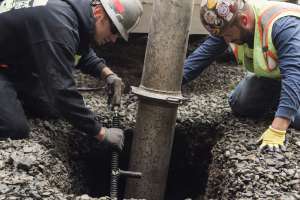
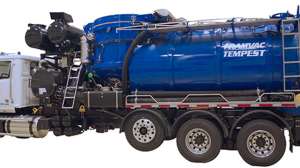
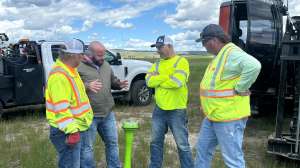
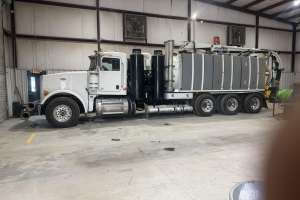
Students spend 20 percent of their time inside the classroom learning how the equipment functions and how to operate it safely. The remaining time is spent outdoors at the utility field where students operate the two drills and a vac truck.
“It’s a basic course. We give them some experience and try to get them broken into the industry,” Parsley says.
Student Aaron Fraser says he was impressed with the efficiency of the vac truck.
“I liked the hydrovac because we didn’t have to dig a hole. It did it for you,” he says.
Fraser, Piechowski and other students at the center said they like working with their hands, spending their days outdoors, and going home feeling tired. They also like the potential of earning $65,000 to $70,000 after completing their nine-month course.
Piechowski says the energy center has become his second home, and he likes having a central location for learning.
“Now we have a whole building just for us,” he says.
Continue reading for free