
In an industry where precision is everything and mistakes can cost millions, Smith Industrial Services has spent more than 50 years building a reputation on doing the dirty work right — above and below ground.
Based in Mobile, Alabama, the company’s bread and butter remains industrial cleaning and maintenance. The company, founded in 1969, has expanded its reach to seven states, serving industries from pulp and paper to power generation, oil and gas, and heavy manufacturing. Along the way, SIS has steadily expanded its capabilities — from vacuuming and chemical cleaning to hydroblasting, hydrodemolition and, increasingly, hydroexcavation — driven by a focus on safety, communication and hands-on leadership.
That evolution has been fueled by early adoption of technology, from CCTV pipe inspection systems to today’s advanced camera trucks and hydrovac fleets, allowing SIS to take on complex municipal and utility work with greater accuracy and less risk. Veterans of the company, which has grown from 10 people in 1986 to 500 employees this year, say that expansion has been shaped by safety, communication, attention to detail and hands-on leadership.
SEEING UNDERGROUND
Russ Ackerman, vice president of the municipal services and hydroexcavation department, joined SIS in 1996 with an electronics background from the Navy, starting with TV camera truck repairs.
The company was an early adopter of CCTV pipe inspection equipment, building long-term experience around complex line clearing projects, sewer and storm drain maintenance, and wastewater collection system work.
“We owned our very first camera truck, a Pearpoint with a fisheye on top that could view 22 degrees in each direction,” Ackerman says. “We were the first ones to have the capability in our territory. It felt like it weighed 150 or 200 pounds.”
It’s been about 20 years since SIS acquired their first combo sewer trucks for line flushing and vacuum excavation applications. They handle pipes from 1 inch to 120 inches in diameter using mainline and lateral inspection systems and several Vactor 2100 and 2100i combo units for jetting and vacuum work.
In total, eight camera trucks — Envirosight machines and RapidView IBAK technology — are deployed to evaluate lateral locations and pipe defects, collecting data that can be delivered with video and printed documentation after the line has been cleaned and derooted.
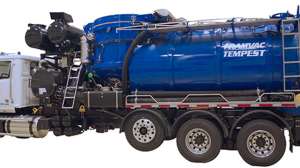
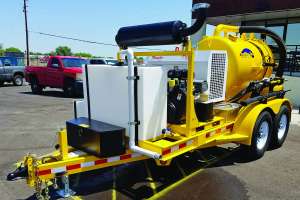
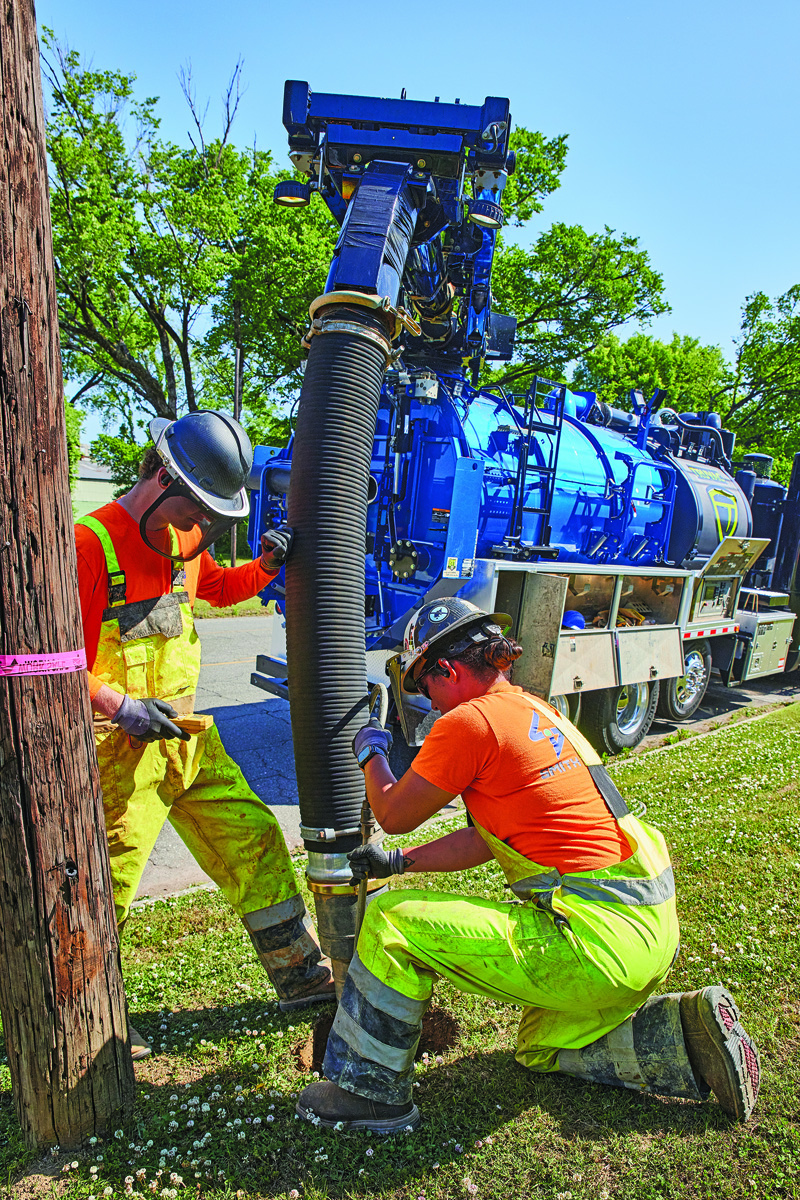
Around 2016, SIS started adding dedicated hydrovac trucks for nondestructive digging, ranging from cage and trench shoring to piling, potholing and HDD work. Today, the company operates more than 50 hydrovacs, mostly TRUVAC and SchellVac Equipment, along with a Vermeer unit, including owned and rented equipment to keep up with the demand.
INNOVATION STATION
According to ASCE’s 2025 Infrastructure Report Card, the nation’s sewers are estimated to be worth more than $1 trillion and include nearly 17,500 wastewater treatment plants.
For municipalities, maintaining sewer and drainage systems and related infrastructure often depends on more than routine cleaning. SIS encounters a wide range of challenges from reducing stoppages and responding to odor complaints to mitigating lift station failures and helping minimize the maintenance required for line cleaning.
Ackerman’s division was established around the time SIS began leaning more heavily into newer technology supporting the essential functions of municipal systems. That side of the business serves power companies, river-area utilities, smaller towns, electrical cooperatives and private organizations.

As CCTV inspection has moved beyond manual interpretation toward automated defect detection and more consistent condition assessment of storm and sewer infrastructure, he notes that the tools behind the work have advanced as well.
HD robotic pipe inspection gives contractors and public works teams a clearer look inside aging and newly installed lines, revealing infiltration, deterioration, joint separation and liner delamination. Jetters and vacuums have become more sophisticated, while camera trucks have evolved into smaller, highly technical units suited for specialized applications.
In Ackerman’s view, those capabilities help utilities, municipalities and contractors improve efficiency, limit unnecessary excavation and make better-informed repair decisions across a wider range of work.
“As an owner, they want a truck that can clean a sewer line, basin, manhole and can jet that line,” he says. “That’s basically how we started purchasing our dedicated trucks. We started with a multi-unit truck. We got so busy we had to have two separate trucks. This customer was calling to jet a line. Another is calling to dig a hole.
“That’s how you grow and we got to the point where we need a dedicated truck just for that.”
HYDROEXCAVATION AWAKENING
In 2011, a major storm system ripped through Tuscaloosa, causing significant damage. SIS was called in to dig for power poles and provide support as preparations were underway on site.
Ackerman recalls, “The auger crews were going to auger a pole hole, and one of the guys said, ‘No, let’s get a hydrovac company in here.’” It was at that intersection that they uncovered an unmarked fiber-optic line “as big as your arm” and running “from the East Coast to the West Coast.”
“If they hadn’t used us, it would have shut a lot of things down,” Ackerman says. “We saved the day on that. Good credit to the guy who said, ‘Let’s hydrovac that and see.’”
Preventing that strike left a lasting impression on the SIS team and still stands as a practical example of why nondestructive excavation has gained traction across utility and infrastructure work.
For Ackerman, looking back on the experience does more than underscore why daylighting, potholing and precise utility verification have become so important.
He believes early lessons such as those helped reinforce SIS’s value to a growing utility customer base that includes Alabama Power and regional utilities such as Southern Co., Entergy and Florida Power & Light.

SOFT DIGGING IT
Since then, SIS has encountered virtually every kind of hydroexcavation job imaginable, recently including a theater project in Birmingham where crews dug out a basement so an additional floor could be added, an airport, and a nuclear power site where crews dug and trenched a concrete pad.
Hydrovac trucks have grown into a major part of SIS’s operation. Many units — with pressurization levels adjusted for soil materials and conditions, nozzles operating around 3,000 psi, and flow rates in the range of 6 to 20 gpm — are outfitted with 12- to 15-yard debris tanks to maximize payload and stay on the job longer.
New construction projects are keeping the company busy, with added emphasis on utility locating, exposure work and excavation precision. That tracks with a wave of utility-intensive developments in states such as Alabama and Georgia, where technology investment and digital infrastructure are expanding.
Safety, accuracy and utility protection are increasingly required on large-scale developments such as data centers, power plants and other infrastructure-heavy projects.
“There are a lot of data centers up here, a lot of storm drains and sewer systems up for inspection and cleaning,” Ackerman says. “There is a lot of work out there for everybody. We reach just about everybody. We’ve got a pretty secure job for the next little bit.”
A GOOD CROSS TRAIN
SIS for decades has prioritized technology adoption alongside training and developing a culture that values hiring people with the right background, safety and compliance, shared learning and personal involvement from company principals and management on every project.
“We try to fit people where they are needed,” Ackerman says. “Same with management, everybody’s got experience. That makes the team stronger. We’ve done big projects where gas companies are putting in new gas lines and we mapped out all the sewer lines. We did all that years ago.
“People and technology are amazing,” he continues. “When it all comes together, there is really no job you can throw at us that we can’t do.”
SIS handles much of its workforce development through in-house training and certification in areas including OSHA regulations, PPE, CPR, confined space rescue, fall protection, vacuum practices, lockout/tagout and CDL training.
New employees go through a week of formal instruction before heading into the field for additional hands-on learning. Training beyond onboarding continues through leadership development and behavior-based safety programs. SIS also produces its own training videos, holds weekly safety meetings and offers ongoing internal courses.
Ackerman says cross-training is another notable part of the SIS model. His department alone comprises approximately 200 people, about 75% CDL-certified operators and 25% technicians or swampers.
The company’s NASSCO-certified video inspection operators use industry standards to assess underground infrastructure, consistently code pipe and manhole conditions and help municipalities determine the most effective next steps for rehabilitation.
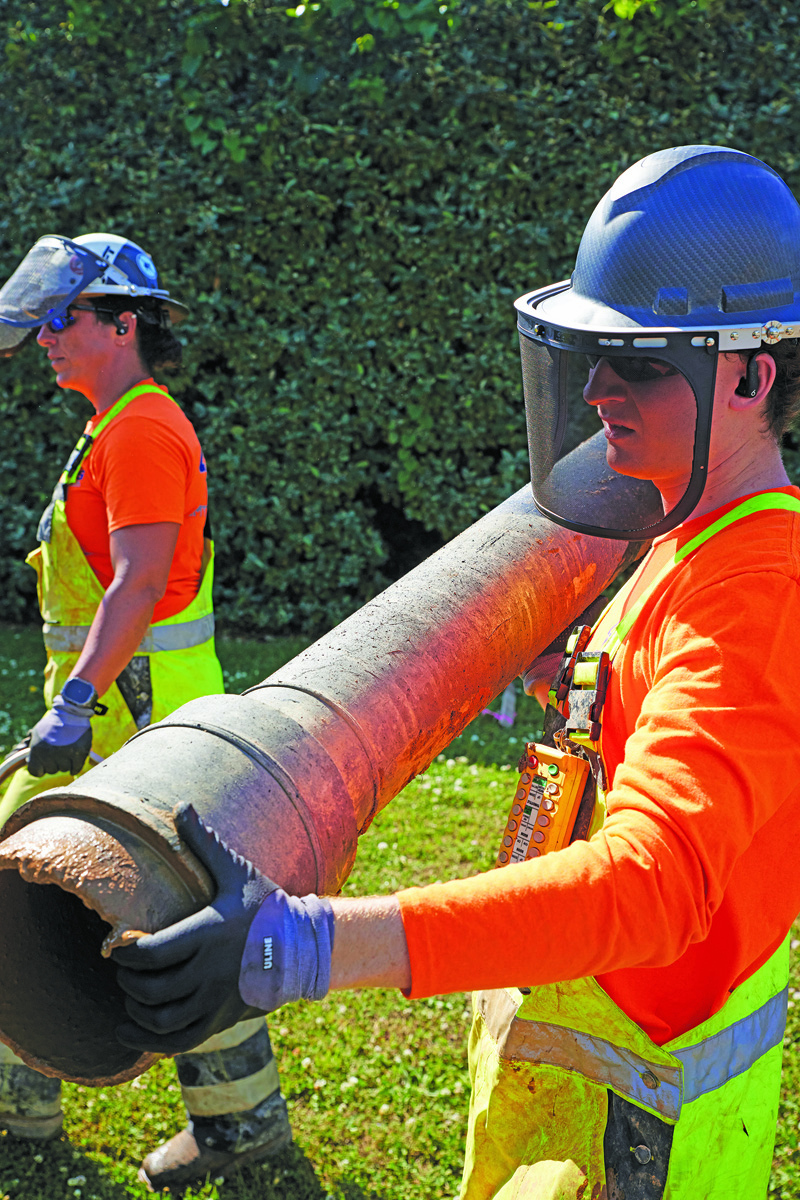
Many crew members can move between hydroexcavation and camera inspection work, while some are trained across nearly the full range of SIS’ service offerings.
A SERVICE CULTURE
Jobs change all the time, but relationships and credibility are what matter. In a competitive market, Ackerman says the company’s strength comes from recognizing that different employees bring different experiences to the table.
Based in Atlanta, Tyler Bruce, sales manager, joined SIS in early 2025. Over 11 years in the hydroexcavation sector, he says, he realized something that still applies across the industry: customers respond to people who understand both the machines at work and realities in the field.
Bruce got his first hydrovac job at 22, learned to operate the equipment and eventually began training other employees. After a year, he moved into the oil and gas industry, running similar equipment and later managing fleet operations.
He says, “I figured out how the job worked, how production is made each day. I started training guys there, started training everywhere, moved up into managing the fleet. They threw a laptop at me and a truck, ‘Hey, here you go.’ I was super nervous. I think I was 26 when they did that, but I ran with it.”
Much of what Bruce knows came through direct experience and guidance from mentors. Over time, he says, that gave him a better understanding not only of how hydroexcavation works, but also of what customers expect from a contractor and from a crew.
“I learned the hard way, but I had a lot of good mentors,” he adds. “I understand the capabilities of a hydrovac and can quickly give an honest opinion on how and if it provides that benefit. I got to see how it works with hydroexcavation, internally and externally. I know what they don’t want to see, and I can operate a truck too.”
THE EXTRA MILE
At SIS, the point is not simply to display machinery, but to help customers understand where it fits, what it can do and what kind of solution a job may require. That kind of responsiveness can also matter after the sale.
Bruce recalls a time when a customer in Georgia needed a hydrovac truck immediately, but SIS operators were already out on other jobs, so he decided to handle the work himself. “More than anything, it’s about who you are working with,” he says.
Since then, that customer has continued using SIS.
OWNING IT
For Ackerman, with 30 years at the company, he’s learned to apply what he has learned along the way, while attracting the right talent with a broader understanding of what it looks like to meet customer needs in the field.
“You run across a special job here and there,” he says. “For the most part it’s digging a power pole, trenching a waterline. The guys we’ve got here, they are knowledgeable and treat people well, do what’s needed, go the extra mile. That’s customer service.
“Everybody’s got a hydrovac now. Do something different than the competitor, make them want you back on that job. Being fair to everybody and if something goes wrong, owning it. That’s kind of the culture we try to create and in turn guys treat customers like that and we get repeat work.”
Continue reading for free