
Trenchless technologies include a number of methods and materials that can install a new utility where one does not currently exist or that can rehabilitate an existing utility. Trenchless is proven and has been a standard for many pipeline installation and rehabilitation programs throughout the world for nearly 50 years; however the technology continues to grow, expand and be more openly accepted.
One of the critical components with any type of construction is the risk management plan; this is also true for trenchless. Risk management means something different to the owner, the consultant or design engineer, and the contractor. I am a contractor who has been involved with trenchless rehabilitation and installation for more than 20 years and will share some basic strategies that may help you.
The first step to any risk management plan is to have a project management team or estimator who can clearly identify the risks associated with a project. These risks can be technical risks associated with the approach, risk due to unknown conditions, contract risk, and financial risks. A savvy team can identify these and begin to develop strategies to deal with them individually.
TAKING THE RIGHT APPROACH
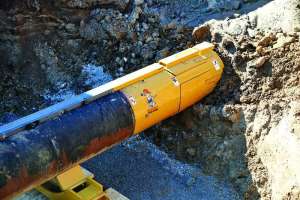
For a pipe bursting project, for example, a risk associated with the approach could be where a project is specified as pneumatic pipe bursting and the project team feels that static pipe bursting would be a better approach. Often an owner or consultant will specify the means and methods that can then transfer some of the risk associated with the subsequent failure of that approach to them or the owner.
UNKNOWN CONDITIONS
Risk due to unknown conditions on a CIPP project could be where current CCTV video of the segments to be lined is not supplied with the project documents prior to the bid. This adds additional risk to the contractor, as you now do not know the current conditions of the pipe and how much risk there is in attempting to line it.
CONTRACT RISK
Contract risk could be language associated with indemnification or damages being written in a way that the contractor is responsible for the actions of others, even their negligent actions. Someone well versed in contract law, either internally or through legal counsel, should review these contracts thoroughly before you consider bidding.
FINANCIAL RISK
Financial risks, like retainage and “pay when paid,” or even worse “pay if paid,” can add delays to receiving payment and often tie up critical operating cash flow or force you to use your operating line of credit. This reduces the net profit on a project and should be carefully reviewed and considered prior to bidding a project.
WHAT TO DO NEXT?
Once risks are identified, strategies can begin to be developed that can either avoid, transfer or mitigate those individual risks.
Avoidance is taking action to eliminate the risk. Transferring the risk is through contract language allocating the risk to another party. Mitigation in construction is the most common risk strategy where you either reduce the likelihood or minimize the consequence of the risk.
Trenchless technologies like CIPP, pipe bursting, pipe ramming, HDD, piercing and others are proven methods that can help a utility save money, reduce impact and meet their long-term goals. However, like any form of construction, they do not come without risk.
By having a strong risk management program, you can help meet or exceed the goals of the project while reducing losses.
ABOUT THE AUTHOR
Matt Timberlake is the president of Ted Berry Co., located in Livermore, Maine.
Continue reading for free