The construction industry has transformed drastically over the past 20 years. Smartphone apps have enabled real-time information exchange; a few taps on a tablet are replacing armloads of files and blueprints. Technology is changing almost every aspect of the industry, and companies that refuse to adapt and implement it risk being outdone by tech-savvy competitors.
One of the biggest fears construction company owners face when considering implementing new technologies is understanding what they do and how to use them effectively.
Below are snapshots of some of the newest and most innovative construction technologies available to the industry:
UAV TECHNOLOGY
Unmanned aerial vehicles, or UAVs, are a hot technology in several industries today because of all the different business-use cases they can provide. In the construction industry, companies are sending camera-equipped UAVs into the air to take dozens — if not hundreds or thousands — of images. The pictures, which are linked to GPS data, can be stitched together with special software, transforming them into a 2-D or 3-D site model. The model can be used to:
- Assess progress on a project — daily, weekly or at some other regular interval
- Locate specific areas where work is falling behind schedule
- Measure stockpile volume
- Determine the amount of overburden that needs to be removed from an area
- Monitor width and slope of haul roads
- Analyze quarry faces and berms
- Inspect hazardous areas
- Confirm that employees are wearing protective gear and working safely
- Get a high-level view of operator technique, load-zone placement, tire rotation and other factors that affect efficiency
- Show clients work in progress
- Create images for marketing presentations and materials
These tasks and many others can be done quickly, accurately and economically with UAV systems — assuming you have access to the right technology, analytics and expertise.
Companies that are considering taking advantage of UAV technology need to be aware of the laws governing the commercial use of UAVs because they are different depending on where you do business. The U.S. has the tightest federal regulations in regard to UAVs.
As this technology evolves, contractors will be able to combine machine data from telematics systems with geospatial data from UAVs, giving operators the power to take site efficiency to all-new levels.
GRADE WITH ASSIST
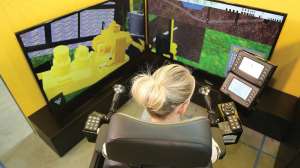
Grading technology helps make excavators, dozers and motor graders more efficient because it allows operators to get to grade faster with less effort. New grading technologies can help both new and experienced machine operators deliver dramatic improvements in grading efficiency over a wide range of applications. For example, GRADE with Assist, which adds automated grading sequences, is featured on Caterpillar excavators.
Among the benefits grading technology can provide:
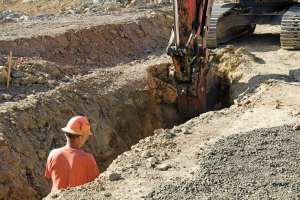
- Keeping people off the ground and out of trenches
- Reducing the cost of staking and grade checking
- Cutting grading time by up to 45%
- Conserving fuel and materials when you finish in fewer passes
- Saving time and costs related to rework
- Helping less experienced operators work like pros
Grading technology enhances job site safety, improves reliability and adds to the machine’s value, both on the job and at resale.
WORKPLACE SAFETY TECHNOLOGY
Several new technologies have become available to safeguard work sites and better manage risk. One of the most common accidents in the construction industry is being struck by, or trapped by, equipment or vehicles. Blind spots and backing-up accidents account for between 25 and 50 percent of the total. One in 10 construction workers are injured every year, so work site safety is paramount. Here are some of the newest work site safety technologies that can help prevent injuries:
Object detection technologies
Complete object detection systems include back-up cameras and pulsed-radar object detection. Cameras give operators a view of what is typically their biggest blind spot, and radar identifies objects and people hidden from the operator’s view and sounds an alarm.
Fatigue detection technologies
A camera installed in the cab that monitors pupil size, blinking and how long eyes stay shut determines fatigue detection. If the system senses the operator is falling asleep, an alarm sounds and the seat vibrates.
“Smart” wearables
Safety gear, with Radio Frequency Identification (RFID) sensors and biomonitors, has all hit the market within the last several years. The most common are RFID systems that alert workers and equipment operators when they are both moving through a work zone.
As it becomes more evident that technological innovations will shape the future of the construction industry, it’s up to you to determine if your company is going to embrace these new construction technologies or be left behind.
ABOUT THE AUTHORS
Jason Hurdis is the senior market professional for Caterpillar, while Tim Crane is the general manager of safety services for the company.
Continue reading for free