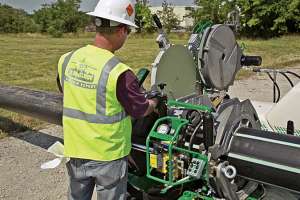
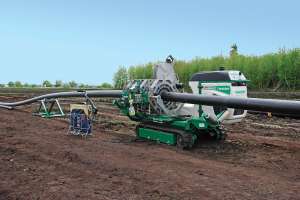
With their many small components, taking care of pipe fusion machines can sometimes be a challenge for contractors.
Without proper maintenance, the machines can slow down, malfunction or stop working altogether, says Jesse Smith, a technical service specialist with McElroy Manufacturing. And when machines don’t work, projects can be delayed, costing time and money.
“Proper maintenance is not just about making a fusion machine last a long time,” Smith says. “It is also about making sure the machine is going to produce a quality product each and every time.”
Here are some tips to make sure your pipe fusion machine stays in working order:
Cleanliness
It sounds simple, but keeping the machine clean is something contractors sometimes overlook. “We all know that fusion machines work in some really dirty, often wet environments,” Smith says.
Those conditions can lead to corrosion on guide rods or pivot pins that need to move freely so they can operate properly. Regular cleanings with water and soap prevent that corrosion, Smith says. Electrical components on heaters, facers, GFCI circuits, motors and generators are also affected by moisture and dirt, so keeping them clean will improve their operation and extend their longevity.
Heater care
For a heater on a pipe fusion machine to work properly, it needs to have the Teflon-coated butt plates or adapters installed, Smith says.
“Those areas need to be in serviceable condition, which means no scratches or gouges in the area that will contact the pipe and no excessive plastic buildup in those same areas,” he says. “I have received many phone calls from people using a McElroy heater that is damaged to the point it cannot perform the intended function, so caring for it is crucial.”
If the butt plates and adapters do develop scratches and gouges, Smith says they can easily be replaced.
Maintain the cord
Smith often sees electric cords on job sites tangled up and laying on the ground where people can easily walk or drive over them.
“Electric tools like facers or heaters are only as good as the cord that supplies them with the electricity,” he says. “Taking a few extra minutes to set up the equipment in such a way that cords are not being walked on or run over is an easy step that will help prevent downtime and repair costs due to broken plugs or damaged cords.”
One way to protect the machine’s cord is to use an extension cord to connect with the electrical outlet, since they are cheaper and easier to replace if damaged.
Keep a regular maintenance schedule
Pipe fusion machines sometimes go out to job sites with existing problems or showing signs of a potential issue. Then they break or are incapable of making quality joints, Smith says.
“If that same machine would have been inspected before going out to the field, any downtime could have been avoided,” he says.
Contractors should check the inspection checklist inside every product manual. Smith says the list is a great place to get information about developing an inspection and maintenance program for the pipe fusion machine.
“The manual calls out service intervals for things like hydraulic oil and filter changes and engine oil changes” for contractors to follow, he says.
Work with a technician who knows your machine
There are multiple pipe fusion machine designs on the market and each one operates differently, so it is vital that contractors have properly trained mechanics working on the equipment. Smith says contractors should ask the mechanic working on the machine what kind of experience or specialized training they have regarding the equipment.
“McElroy distributors have factory-trained mechanics on staff, so that is one option contractors can pursue,” he says.
In addition to following the prescribed maintenance advice regarding pipe fusion machines, Smith has another tip to help contractors improve the function and longevity of their equipment: make sure the machine is used correctly.
“Equipment is most often broken due to an operational issue like poor job site setup,” he says. “The use of pipe stands and rollers to minimize the stress being put on the machine is often looked at as an additional unnecessary expense, but if you look at the time saved and reduced equipment maintenance costs that setup and handling tools deliver, the cost is usually far outweighed by the benefit.”