It’s not unusual for contractors to invest in equipment so they can do the kind of work they typically hire subcontractors to do — and leave money on the table in the process.
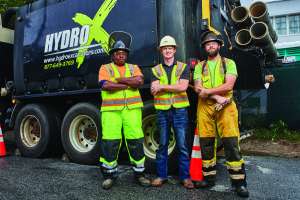
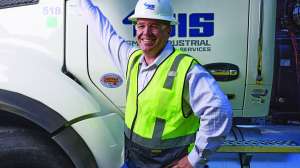
But at Artera Services, a national pipeline and energy-service infrastructure company, officials took that strategy to a whole new level by establishing an entire new company — Hydro-X, based in Atlanta — in 2019 so the companies under its corporate umbrella wouldn’t have to hire outside hydroexcavation contractors anymore.
The playbook worked so well that in 2021, Artera created another company — Hydro-X II, based in Wisconsin — to broaden its geographic reach in the hydroexcavation industry.
“We made a decision to keep that spend [on subcontractors] inside the company,” explains Stan Pitts, president of both Hydro-X and Hydro-X II. “We knew there was a strong market for hydroexcavation in metro Atlanta and we wanted to capitalize on that — and we’ve been very successful at doing so.”
The numbers back up Pitts’ assertion. In just four years since the company’s inception, its fleet of hydroexcavation trucks expanded to around 90, more than four times as many as the 20 vehicles Hydro-X started out with.
Employment rose to 160 workers (plus another 60 at Hydro-X II) compared to around 20 at the start. And along with its headquarters in Atlanta, the company now operates eight other facilities in four other states: Alabama, Florida, Mississippi and North Carolina.
“We’ve established a physical presence throughout the southeastern United States,” Pitts notes. “Having this many trucks and facilities allows us to flex a bit on asset location, based on workloads or upcoming needs.”
An expanded business base also testifies to the company’s growth. At the outset, Hydro-X was hired primarily by Artera-owned companies, Pitts says.
“But now only 40% of our business in the South comes from Artera-owned companies,” he explains. “That’s a testament to our marketing efforts and our expansive capabilities.”
The company’s primary customers operate in the energy market, but it also provides civil infrastructure customers space with sewer cleaning and inspections and pipeline jetting.
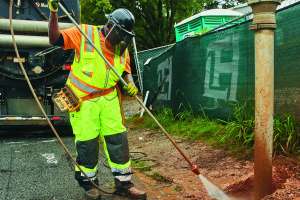
“We do any kind of construction work where environmental issues or concerns about unknown utility lines are prevalent,” Pitts explains.
LARGE TRUCK FLEET
A key factor in the company’s growth is the sheer size of its truck fleet, enabled largely by financial backing from Artera, Pitts says.
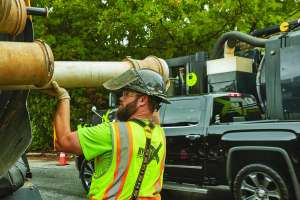
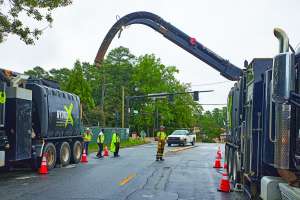
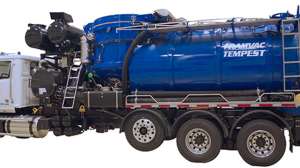
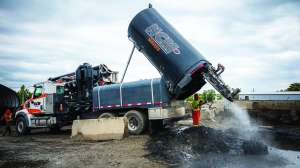
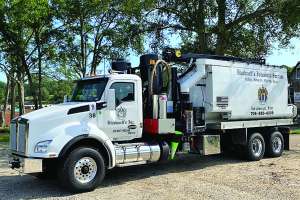
The company owns between 50 and 60 Mud Dog hydroexcavation trucks built by Super Products on Peterbilt chassis and featuring 12- and 16-cubic-yard debris tanks, 1,500- to 2,000-gallon water tanks and blowers built by Hibon Inc. (a division of Ingersoll Rand).
Rounding out the fleet are model X-13 and X-15 hydrovac trucks from X-Vac (a brand owned by Hi-Vac Corp.). Built on Peterbilt chassis, they’re equipped with 15-cubic-yard debris tanks, 1,150-to-1,400-gallon water tanks and blowers from Roots (a brand owned by the Howden Group). Trucks from GapVax also factor in, featuring mostly Peterbilt chassis, 14-cubic-yard debris tanks, 1,600-gallon water tanks and blowers built by Hibon.
“We have a very large fleet of hydrovac trucks, which differentiates us from competitors,” Pitts points out. “That enables us to tackle larger jobs that smaller companies can’t tackle.
“We have the resources and the ability to go in ten different directions at one time.”
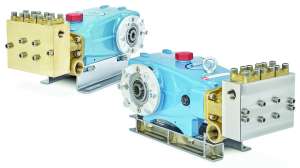
The company also owns Camel combination vacuum sewer trucks from Super Products. They’re built on Peterbilt chassis and used for jetting new pipelines prior to final inspections. They feature hose reels that can hold up to 1,000 feet of hose and rotate 270 degrees, 1,500-gallon water tanks and single-piston water pumps (3,000 psi at 100 gpm).
SIZE IS AN ASSET
In 2021, that wide scope of capabilities helped Hydro-X more firmly establish its reputation in the southeastern United States after Hurricane Ida slammed into Louisiana’s southeast coast on Aug. 29. Packing sustained winds of 150 mph, the Category 4 storm was one of the worst to ever hit the United States, killing more than 100 people and doing more than $75 billion worth of damages — including the destruction of more than 30,000 telephone poles, Pitts says.
“We took trucks from Georgia, North Caroline and Florida to do potholing for new telephone poles for a major utility there,” he says. more than 30,000 phone and power poles were broken. “We had 18 to 20 trucks working around the clock for more than two months.
“Having the resources to do all that solidified our position as a leader in the market,” Pitts continues. “Word gets around when you’re able to do things like that. It was pretty impressive.”
The trucks also offer two less tangible but important benefits: They help market the company and build positive brand recognition while also serving as employee-retention tools.
“Our trucks look really good and we work hard to maintain them,” Pitts says, noting the company recently hired a fleet director and a fleet manager.
“We have a contractor that regularly pressure washes our trucks in Atlanta,” he continues. “Taking pride in our equipment is critical. Our brand is very important to us and we have very positive brand recognition.”
SOFTWARE BOOSTS EFFICIENCY
Investments in business-management technology also drove growth. A good example is the HydroTraX, a custom-built customer-relationship management platform. The system took about six months to develop and went online in 2022 at Hydro-X and 2023 at Hydro-X II, Pitts says.
“We use it for scheduling, invoicing, payroll and pushing all necessary information to our operators via tablets,” he continues. “It provides us with a high level of operational sophistication — makes us more than just a company that digs in the mud.”
The HydroTraX system significantly improved the company’s flexibility and responsiveness. For example, when an operator submits a completed work order from a tablet, it automatically goes to a supervisor for review. If needed, a supervisor can send it back to an operator for refinement; then approve it and send it digitally to the billing and payroll departments.
“We can do in about four hours what used to take two days — and possibly even longer if a supervisor sent an invoice back to an operator for corrections,” Pitts says. “It also improved cash flow and made us a virtually paperless operation.
“Almost everything is done electronically,” he adds. “It also gives us a platform for communicating with customers — sending information back and forth. It’s been very beneficial.”
BRIGHT OUTLOOK
Looking ahead, Pitts is very optimistic about continued growth at Hydro-X and Hydro-X II, especially as more and more entities mandate hydroexcavation services because they’re so much safer and environmentally friendly than conventional excavation techniques.
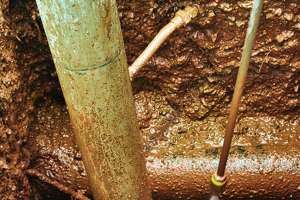
“People are willing to pay a premium for the service because of the safety factors,” he notes. “We recently completed a project in Atlanta and located 76 unknown, unmarked utilities — power lines, water and sewer lines, and gas and fiber optic lines.
“It’s very likely that some of those lines would’ve been damaged by a backhoe had we not located them,” Pitts continues. “Our customer was very pleased with the result of our services.”
But Pitts isn’t looking for exponential growth that could jeopardize customer service and work quality.
“We want sustainable, measurable and profitable growth,” he explains. “I’d be disappointed if we didn’t generate revenue and profitability growth year-on-year. And we should be able to keep doing that and keep our people safe, too.
“We see nothing but opportunity on the horizon.”