When Scott Lamers, general manager of Lamers Construction in Kaukauna, Wisconsin, was looking at ways to expand his general construction business, he had to gaze into the future to see what the next big thing would be.
OK, so he didn’t really look into the future. Instead Lamers had to look at what construction projects were coming up, what was being asked of contractors in those projects, any new trends, new equipment hitting the market, and a whole lot of other criteria to look at.
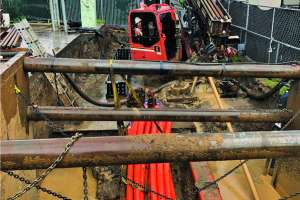
That helped Lamers to pinpoint pipe bursting as a service market to move into with his construction business. He saw the communities in that area of the state pushing to remove lead pipes from homes and homeowners not wanting their properties torn up. Lamers Construction went full-in on pipe bursting and hasn’t looked back since as you’ll read in this issue’s profile on the Wisconsin company.
FORECASTING THE FUTURE
Much like weather forecasters use data to give you a look at what the weather for the upcoming week could be like, you could be using data to determine several things with your utility construction company. Do you have a job similar to one last year that you handled coming up? Look at that experience and decide what you need at the job site to make it run more efficiently.
You can also use data to help with inventory. Winter is upon us, what parts and components do you tend to use more during these colder months? Maybe stock up more on those this time of year rather than ones that you tend to use more in the warmer months.
Not only will being able to plan for the future help in serving customers better, it will help you control costs better too. Why spend unnecessary money on parts you don’t need right now if you have enough of them in stock for work that could come up soon.
TAKING YOUR TIME
Finding the data to help you make a solid prediction shouldn’t be difficult. Just take a look at your past billing statements to customers and look at job tickets to see what your crew has done the last year, or further.
If you don’t have the data readily available right now, start collecting it. Keep track of tools and supplies you are using on each job, track how long your crews are on jobs. You can collect almost any type of data you think of and almost all of it will be useful at one point or another.
Scott didn’t jump into his new market right away, he took the time to explore opportunities and decide which way his company should go. The last thing you want to do is move too fast and get into a situation that destroys your company.
WHAT DO YOU TRACK
I’d like to hear what data you track at your company and how it has made your company more productive or profitable. Email me at editor@digdifferent.com.
Enjoy this issue!
Continue reading for free