Staying in business for 64 years is no easy task. But at M.L. Chartier Excavating, a company based in Fair Haven, Michigan, about a 40-mile drive northeast of Detroit, the formula for doing so is fairly simple and straightforward: Anticipate business and technology trends. Invest in quality equipment that enhances customer service. And listen keenly to customers and take calculated risks when they request additional services.
Certainly there were other factors at work, too, such as employee retention (two employees recently retired after 24 and 26 years’ service) and an emphasis on professionalism that includes uniformed employees and vehicles that receive daily washes. But in the end, few things loom larger in the company’s blueprint for longevity than management’s ability to stay attuned to customer needs, says Malcolm Chartier (pronounced “shar-teer”), a superintendent and the son of owner Todd Chartier.
“Our company trade has always evolved with our customers,” Malcolm says. “We want to grow as they grow. Whatever they call for, we try to commit to it.”
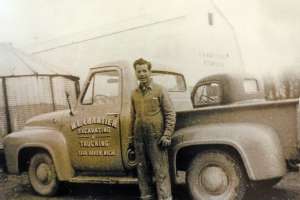
That business philosophy explains how a company that started out in 1954 as mostly a road-building firm now also does environmental-services work and hydroexcavating for utilities as well. Moreover, M.L. Chartier is a multimillion-dollar-a-year company with 60 employees and a large fleet of more than 300 major machines and pieces of equipment that represents a multimillion-dollar investment. Excavating services include site preparation, sewer and water main installations, road and parking lot construction, demolition and land-clearing and grubbing.
“We try to never say no when customers ask us to do something,” says Malcolm, whose grandfather, Malcolm Laverne Chartier, established the company. “We just say yes and then make it work.”
ROAD TO GROWTH
It’s unlikely that the younger Malcolm’s grandfather could’ve envisioned such growth when he started out building roads and drilling pads around Michigan for oil field-drilling companies. The company took its first steps toward building a more diverse business when Todd took ownership in the 1980s and moved into the market for environmental services. The main driver? Customers, of course.
“Dad foresaw that trend coming when customers started asking for those kind of services, so he jumped in with two feet,” Malcolm says of the company’s expansion into markets such as underground storage tank removal and soil thermal desorption (a process in which soil is heated to remove contaminants).
Today environmental-services projects generate about 35 percent of the company’s overall gross revenue. The primary customers are gas and electric utilities. Jobs might be as small as excavating and properly disposing of soil where oil dripped onto the ground from a blown pole-mounted electrical transformer to as large as pipeline leaks.
“We’ve had some massive (cleanup) sites where soil was contaminated, say, 10 feet deep over 6 acres,” Malcolm explains. “Sometimes the spills occur in already developed spots, like parking lots, so then we have to restore the site, too.”
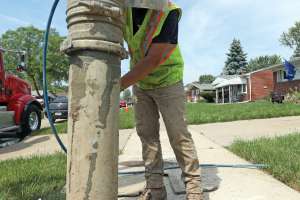
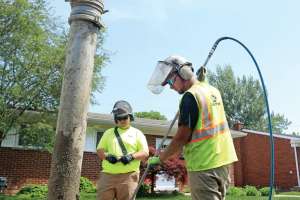
About 20 years after entering the environmental-services market, another opportunity arose when customers started asking about hydroexcavation for safer exposure of underground utilities. So around 2003, the company bought two hydrovac units from Vactor. “We were one of only a few companies in the state at the time with hydroexcavation trucks,” Malcolm notes.
One factor that keyed growth was cross-training employees to operate both traditional excavation equipment and hydroexcavators. That gives employees a broader perspective on excavating that improves efficiency and productivity, he says.
“For example, if we send out a guy with a hydroexcavating truck to locate a waterline, and he’s already done excavating for waterline installations, he has a better idea of where to look, how deep the line might be, and what it will look like,” Malcolm explains. “Cross-training is vital for us. It’s good for employees, too, because there’s always stuff to be done. Our guys like it because it’s not same job day after day.”
KEYS TO SUCCESS
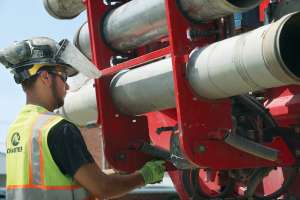
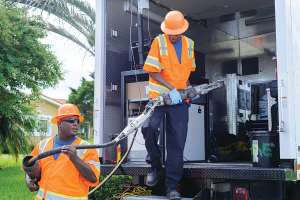
To differentiate the company from competitors, M.L. Chartier built a brand centered on professionalism, reflected in its clean, well-maintained trucks and uniformed employees. “Everyone knows that clean trucks are our brand,” Malcolm says. “It says a lot about our company. Customers know that when we arrive on a job site, we’re ready to go — trucks nice and clean and greased and full of fuel and ready to work. We pay for the gear the guys wear, which carries our company logo on it, so they project a professional image.”
The emphasis on clean equipment means operators typically have to stay about a half-hour longer at work to wash off their rigs. “But they buy into it,” Malcolm says. “They want to work in a clean truck every day. I’m not saying it isn’t tough if you work a 14-hour day and have to wash off a truck. But it’s not a big surprise to them because they’re told about it when they get hired.”
Chartier firmly believes that running newer, clean and well-maintained equipment is a great employee recruiting and retention tool. “I actually think we draw in new employees because of it,” he says. “We pay our operators industry scale, so why would they want run Joe Blow’s hydrovac that’s all ragged out when you can drive one of our trucks. It’s not like we’re paying them less to run better equipment.” Furthermore, each driver gets assigned to the same truck every day, which enhances a sense of responsibility to take care of the vehicle.
To help ensure in-the-field reliability and reduce repair costs, the company employs four mechanics in its primary facility in Fair Haven and two more in a branch facility strategically located in Webberville (near East Lansing). “We want to be sure our trucks can work long hours when they need to,” Malcolm says. Moreover, well-maintained trucks are worth more when the company decides to sell them or trade them in, he adds.
LARGE EQUIPMENT FLEET
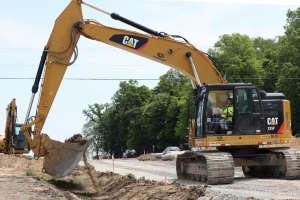
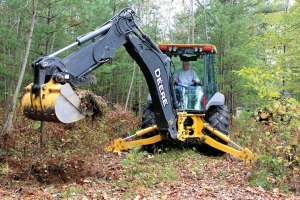
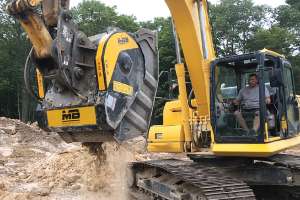
To provide a wide range of services requires a lot of heavy iron. The company’s fleet of road-building equipment (all made by Caterpillar) includes 22 excavators (standard and long-reach models), 16 bulldozers, seven skid-steers (both rubber-tired and tracked), 13 wheel loaders, seven rollers, two backhoes, four articulated dump trucks, two graders and two scrapers. The company also owns a Blount Hydro-Ax (a brand now owned by Caterpillar and since changed to Prentice), used to clear brush for right-of-ways.
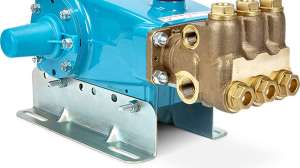
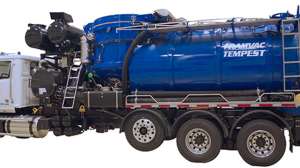
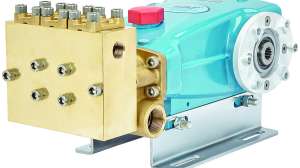
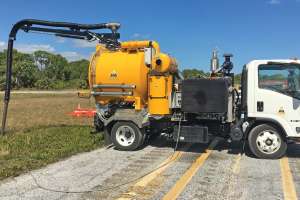
The company also owns 14 hydroexcavators. Nine of them are Vactor HXX units built on Peterbilt, International, and Kenworth chassis with 12-cubic-yard debris tanks, 1,000-gallon water tanks, Hibon Inc. (a division of Ingersoll Rand) blowers, and Cat Pumps water pumps. Three of the other four trucks are HX-12 units from Ramvac by Sewer Equipment, built out on Peterbilt chassis with 12-cubic-yard debris tanks, 1,100-gallon water tanks, Roots blowers from Howden, and water pumps manufactured by UDOR U.S.A. A Vactor HXX centrifugal compressor (fan) unit rounds out the fleet; it features a 12-cubic-yard debris tank, a 1,000-gallon water tank, a water pump built by Cat Pumps, and a single-engine, dual-stage fan (instead of a blower).
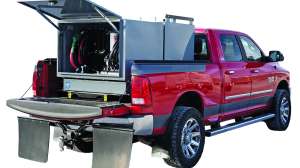
The company also relies on a custom-built Prinoth Panther T8 tracked crawler carrier equipped with a VSK-500HD vacuum unit from McLaughlin (a brand owned by Vermeer), used to perform vacuum excavation work in remote locations. In addition, the company owns eight International 4300 trucks outfitted with 14-foot-long cargo boxes; the trucks carry support equipment for hydroexcavating.
In addition, M.L. Chartier owns three water trucks equipped with steel tanks made by AGM and ranging from 2,600 to 4,000 gallons. For vacuuming wet and dry materials, the company also has invested in four vacuum trucks made by Guzzler (a brand owned by Vactor), Presvac Systems, and Cusco (a brand owned by Wastequip). Outfitted on Kenworth and Peterbilt chassis, the trucks feature 12-cubic-yard debris tanks, 250-gallon water tanks, blowers made by Dresser, and water pumps built by Fruitland.
To handle liquid waste, the company also owns seven 3,000-gallon steel and stainless steel tankers made by Presvac Systems and Cusco and equipped with Fruitland vane pumps and Roots blowers from Howden, as well as six 6,000-gallon tankers manufactured by Presvac Systems and Galyean. To haul equipment, the company relies on a variety of low-boy, dump, and drop-deck trailers made by Trail King Industries, East Mfg., and Holden.
ATTRACTING AND RETAINING EMPLOYEES
Despite the investments in new equipment and the emphasis on well-maintained equipment, finding field workers still remains a challenge. How does M.L. Chartier surmount that obstacle? Part of the company’s strategy centers on appearances at job fairs and visits to technical schools. The company also relies heavily on word-of-mouth referrals, he says.
In addition, it also offers health insurance, a 401(k) retirement-savings program, vacation pay and other benefits. Moreover, it also pays employees a $200 bonus if someone they refer as a job candidate gets hired, and then pays another $300 if that new hire stays with the company for 90 days, Malcolm notes.
Did Malcolm ever envision a time when the company would be paying its own employees for word-of-mouth referrals? “No, but you have to try something,” he comments. “The work is there, and we need more employees. These days buying equipment is the easy part — the hard part is putting someone in the driver’s seat.”
Malcolm also gives a lot of credit for the company’s success to employees who consistently do quality work that wins over customers and generates repeat business. To keep them motivated, the company treats them like family, even handing out cards to employees on their birthdays.
“I work side by side with the guys,” adds Malcolm, who worked for his father during summers and became a full-time employee in 2010 after earning a dual bachelor’s degree in business management and marketing at the Northwood University in Midland.
“I was brought in from the ground up,” he explains. “I started working when I was 10 years old, dumping trash and sweeping floors. When my buddies were sitting at home and watching cartoons on Saturday mornings, Dad would drag me out of bed and make me wash trucks and other equipment.”
FURTHER GROWTH EXPECTED
Looking ahead, Malcolm says he’s bullish about the future of the company he hopes to run after his father retires. “That’s the goal for my dad and me,” he says.
But one thing will remain constant, no matter who’s running the operation: the company’s continual adaptation to new technology and market trends. Malcolm is excited about the possibilities. “Who knew 30 years ago we’d have hydrovacs?” he asks rhetorically. “We want to keep evolving as the trade changes. That’s why we keep investing in newer equipment, so our fleet is never outdated in terms of technology.
“We certainly don’t want to get too big too fast,” he cautions. “We want to live within our means because the bigger you get, the harder you can fall. But the bottom line is that we’re a service company that listens to its customers. We may not always be the cheapest guy out there, but we get repeat business because of the customer service we provide and the quality of our work. We want to stick with that philosophy.”
Massive long-term, oil spill project taxed company’s extensive resources
One of the biggest inland oil spills in American history also turned out to be the largest job ever tackled by M.L. Chartier Excavating, an environmental-services and excavating company based in Fair Haven, Michigan, northeast of Detroit.
For about five months after receiving an emergency call in late July 2010, the company committed virtually all of its employees and roughly 250 pieces of equipment to cleaning up more than 1 million gallons of crude oil that leaked from a ruptured pipeline into Tallmadge Creek, a tributary to the Kalamazoo River, says Malcolm Chartier, a superintendent at the company.
The tar-sand crude oil, which originated from Canada, ended up traveling more than 30 miles downstream from the city of Marshall (east of Kalamazoo in south-central Michigan) and fouled 4,435 acres of land and flood plain wetlands along the river. Almost the entire Talmadge Creek corridor was completely excavated and then restored as much as possible with clean fill, according to official reports.
As of 2012, more than 186,000 cubic yards of oil-laden soil and debris had been collected and disposed of, along with 17 million gallons of oil mixed with water, according to figures from the United States Environmental Protection Agency.
“We got the call because we had the equipment,” says Chartier, noting that the company teamed up with two other firms on the project. It took years to complete and cost the Canadian oil company that owned the pipeline approximately $1.2 billion. “We worked 24 hours a day in 12-hour shifts for about the first five months. We had practically our whole fleet there: backhoes, loaders, articulating off-road dump trucks, vac trucks and hydroexcavators. Plus, we had to rent equipment and hire more employees, too.
“We had to do it — we really had no choice,” he adds, noting the company’s sense of responsibility for cleaning up an ecological disaster. “Other companies couldn’t get equipment because all the rentals were gone. Out-of-state companies were bringing in vac trucks. We had to put everyone up in hotels and provide meals. … It was pretty crazy.”
The company’s role in the cleanup effort lasted more than a year, but it wasn’t as extensive as the first five months or so. It was a struggle to handle the project along with servicing the company’s regular customers. “We bounced back and forth here and there whenever possible, but most times we had to say no,” Chartier explains. “We covered as many as we could, but we lost some customers.
“On the other hand, most of our customers realized the importance of the work we were doing,” he adds.