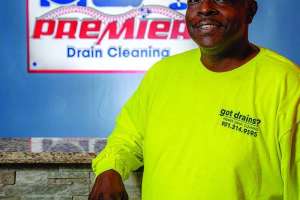
When a business claims it provides premier service, it invites pressure to walk the walk, not just talk the talk. So far, that hasn’t been a problem for Dwayne Mitchell.
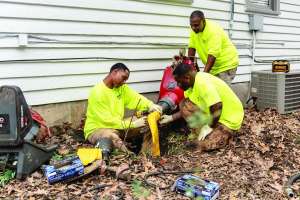
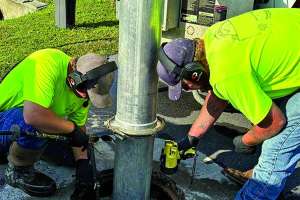
The owner of Premier Drain and Sewer Cleaning in Memphis, Tennessee, has compiled a roster of equipment that would be the envy of drain cleaners much larger than his two-man operation. Mitchell is well equipped to handle most drain cleaning and pipe rehabilitation challenges — and meet customer expectations for the quality service his company name implies.
Taking a calculated risk on investing heavily in trenchless pipe rehab technology was essential to the company’s success since Mitchell, established the business in 2007. He also drove growth by developing a network of plumbers who hire him as a subcontractor because they don’t want to do drain cleaning themselves.
With help from his nephew Brandon Mitchell, his only employee, the company posted revenue of about $500,000 in 2024. Not bad considering that Mitchell also works full time as a fire truck driver for the Memphis Fire Department.
“I’m working almost every day,” Mitchell says, noting that he works about 11 24-hour shifts a month at the fire department. The schedule also gives him four days in a row off work on a rotating basis and he cleans drains and lines pipe on most of those days.
Mitchell credits part of his success to a mentor, the late John Smith, who taught him about plumbing and drain cleaning during his early years in the industry. He also gives a shout-out to Cleaner magazine.
“I had no master plan,” he says. “I was just feeling my way through the dark for years, trying to find the next room. And Cleaner magazine helped show me the way.”
Today, residential work generates about 80% of the company’s revenue with light commercial work and miscellaneous jobs contributing the balance, he says.
BUILDING A CAREER
Mitchell’s path to drain cleaning started around 1999 when he dropped out of college, where he was studying mass communication and then music.
“I told my mom I was wasting her money and my time,” he recalls.
So he saved up some money and attended what’s now called Southwest Tennessee Community College where he earned a certification to work as an HVAC technician. Then he got hired at a company called Peak Heating and Cooling where he met Smith, a master plumber.
“He was very instrumental in helping me and other technicians,” Mitchell says. “I really appreciate his patience with me. It was a trying time. I wanted success but didn’t know all the steps needed to get there.”
Mitchell eventually was hired by the fire department in 2004, then started Premier Drain in 2007.
“I wanted a second job instead of sitting at home, so I figured I might as well get back into what I know,” he says. “So I bought an enclosed Wells Cargo trailer and a DM55 sled drain machine (made by Duracable Manufacturing Co.) and started cleaning 4-inch residential sewer laterals.”
HUMBLE BEGINNINGS
Mitchell started out with low expectations.
“My goal was to make about $300 a day on each of my days off,” he says. “And from there, it kept on growing and growing, mostly by word-of-mouth referrals.”
A bit of luck also played a role. A lieutenant at the fire department, Cody Childress, also happened to own a plumbing business, but didn’t do drain cleaning.
“So I took care of his customers and my own,” Mitchell says. “It was very serendipitous how it happened. Out of all the fire stations in Memphis, I got assigned to one where a guy had a plumbing company that needed a drain cleaner he could rely on.”
Childress also referred Mitchell to another plumbing company, which in turn led to others as Mitchell’s reputation grew. Today, Mitchell estimates that about 40% of his business comes from working as a subcontractor for plumbers.
While getting referrals was a big help, Mitchell notes he still had to seal the deal by providing quality work and great service.
“I take every job personally,” he explains. “When I go out and do the work, I don’t just do it to make money. I do it to truly satisfy the customers.”
GAME-CHANGING INVESTMENT
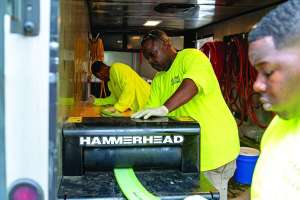
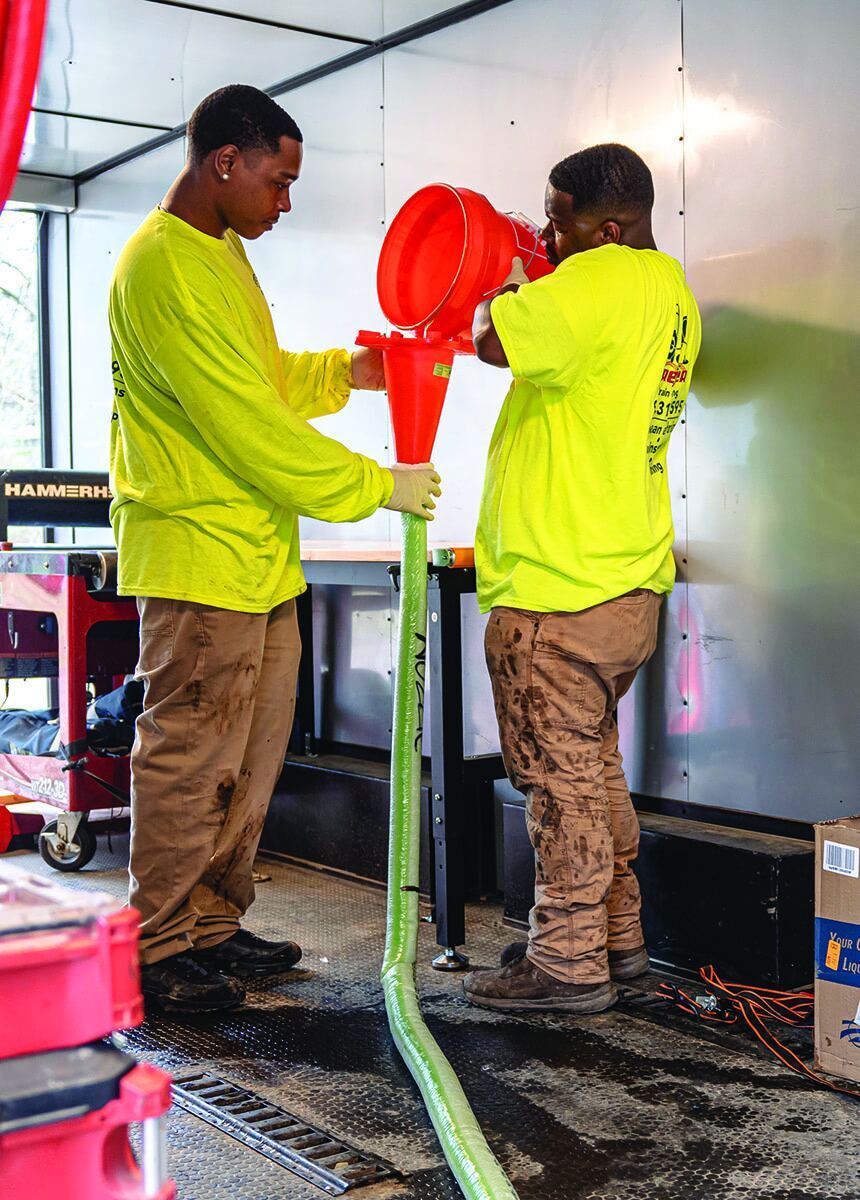
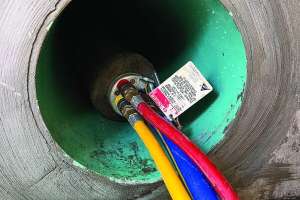
Around 2021, Mitchell made a game-changing decision to invest in a D125-QL pipe lining system from HammerHead Trenchless, designed for 2- to 8-inch-diameter lines. He uses BRAWOLINER liners from BRAWO SYSTEMS and HH Flex liners from HammerHead.
“I got into trenchless pipe rehab because of Cleaner magazine. Period. Point blank,” he says. “I’d read an issue and it seemed like every other page had a story about trenchless this and trenchless that.
“I saw the prices and thought, ‘Ugh,’” he continues. “But then I thought about all the older homes in midtown Memphis and how hard it was to dig and repair broken sewer lines. So I figured I’d give it a shot.”
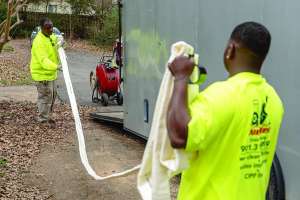
Financially, it was a big step for the small company. Mitchell estimates he invested about $45,000 in the HammerHead system. But he also paid about $11,000 for a Maxi Miller descaling machine from Picote Solutions, used to clean and prep pipes for lining as well as reinstate lines; another $60,000 for a 2020 Dodge Ram 2500 pickup truck; and about $13,000 for an enclosed Black Diamond trailer to carry all the lining equipment.
“I went for broke,” Mitchell says. “I probably made well over a $125,000 investment. But it was well worth it because there were only two or three other companies here that do pipe lining.”
Reflecting his philosophy of continually investing in new technology, Mitchell upped the company’s pipe lining game in 2023 when he invested about $30,000 in a Perma-Liner LightRay LR3 system with LED lights designed for point repairs in 3- to 6-inch pipes.
“The LED technology has been a game-changer,” Mitchell says. “I wish I would’ve gotten into the LED system right from the start. It relieves a lot of the worrying because you’re not constrained by a set curing time. So it minimizes the odds of failure.”
EQUIPPED TO GET WORK DONE
Premier Drain owns a large fleet of other equipment. For drain cleaning, Mitchell also relies on a Duracable DM125 and a DM138 cable machine, both designed for small sink drains; a DM175 upright cable drain machine for cleaning 3- to 10-inch lines; and a DM10 cable machine for smaller drains.
The company also relies on a Mini Miller drain machine, a Grabber claw and a Lining Cannon (for short-distance pipe lining), all from Picote; RIDGID SeeSnake pipeline inspection cameras (a Mini, a microREEL, a microDRAIN and an rM200A), plus a RIDGID CS12x digital monitor; and a Oiiwak endoscope camera that’s small enough to easily pass through 2-inch-diameter pipes during pipe coating jobs.
“I bought my first camera around 2010 — a used RIDGID SeeSnake,” Mitchell says. “Now I do a lot of sewer inspections for Realtors because home inspectors don’t do sewer line inspections.”
Mitchell also owns a PipeCatcher device from Boldan Pipe Technologies and an electric pressure washer (1,800 psi at 1.2 gpm) from RYOBI to flush out 2-inch drains prior to pipe coating.
For pipe coating, the Premier Drain owns a Spraypoxy MidiCoater+ coating machine. Mitchell also uses RIDGID Pipe Patch Kits and HammerHead patches for lining point repairs.
EMPHASIS ON PRODUCTIVITY
Premier Drain also owns a Roll-n-Vac HD-2 hydroexcavator from RNV (a division of Truebite). It’s used to suck things like dirt, water and gravel produced by, say, digging up a clean-out, Mitchell says.
“It’s like having a small vacuum truck at your disposal,” he says. “I’m glad it’s in our toolbox. If I see something new and it seems like it’ll help us be more productive and efficient, I’ll buy it. We may not use a machine like this every day, but I love to have it on hand when I need it. I bought it a few years ago for around $2,000 on a special sale price at the WWETT Show.”
Generators from Generac and DuroMax Power Equipment and air compressors from Husky (a brand owned by Campbell Hausfeld), Porter-Cable and Kyocera Senco Industrial Tools round out the company’s roster of equipment.
Why invest in so many different kinds of machines and equipment?
“I like to stay ahead of the curve,” Mitchell explains. “We’re a small company, but my philosophy is that if I can stay ahead of the rest of the competition here, with all the lining equipment and machines and things like that, small companies and big companies will use me as a subcontractor.”
As for how he can afford all this equipment, Mitchell notes that his fire department job pays him well enough to afford these kinds of investments.
SLOW, CONTROLLED GROWTH AHEAD
Looking to the future, Mitchell says he plans to retire from the fire department in about four years. In the meantime, he’s eyeing further growth — albeit slow and manageable — especially after he retires from firefighting, which will allow him to focus more time on the business. He also anticipates making further investments in equipment.
“I’m thinking about buying a large jetting machine,” he says. “I also want to get into an LED pipe lining system that can do more than just the spot repairs that we do with the Perma-Liner LightRay LED system. I might add a couple more trucks, too. But I don’t want to get too big — there’s too much stress when you do that.”
Mitchell’s primary concern going forward is further establishing a solid business base that his nephew Brandon — or perhaps other nephews — can eventually own and operate.
“I have three nephews and all of them have worked with me,” he says. “I want to leave something for them when I’m done — pave the way for Brandon and maybe one or both of my other two nephews.
“That’s what inspires me and keeps me going. I want to give them opportunities for careers in which they can make a decent amount of money.”