Conventional wisdom says the middle of a recession is the wrong time to start a business. For Richard Young, co-owner of Hydro Spy Vacuum Excavation Services, it was exactly the right time.
The company started operations during the Great Recession of 2008. Early on, lenders were reluctant, and it was tough finding work and finding the right employees. So instead of trying to land as many jobs as possible, Young worked on marketing his business and putting all the pieces into place to make the company thrive.
By the time the economy bounced back the company had made a name for itself. “Things just took off from there,” Young says.
“If we had started out when economic times were good, we would have been overwhelmed by demand and dismissed as unreliable. Customers may not have taken any chances on a startup, and we certainly wouldn’t be where we are today.”
BUILDING A FOUNDATION
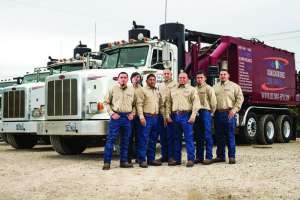
Headquartered in Houston, Hydro Spy has built itself into a well-respected company providing hydroexcavation and air excavation services to contractors and engineers in the oil, gas, chemical, civil construction and municipal industries.
The company serves the Gulf Coast region and has expanded to include services such as potholing, line locating, trenching, pipeline excavation, line cleaning and tunneling. Hydro Spy added a new office in Corpus Christi, Texas, and aims to add up to eight more locations over the next few years.
“In the heart of the recession proved to be the best time to start up a business,” says Young, CEO and president. “We weren’t ready to compete. We didn’t have any equipment, so we mostly focused on marketing, branding and our corporate infrastructure. There were no lenders, so we wound up renting our equipment and paying cash up front anytime we needed a hydroexcavator.”
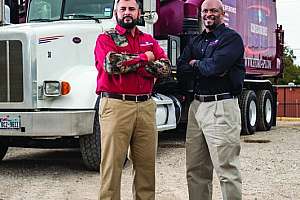
Hydro Spy has grown to 12 employees, including co-owner and vice president Jose Santos, and Young. Santos is in the field concentrating on quality control.
DIFFICULT WORK SETTINGS
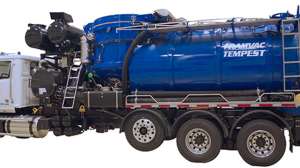
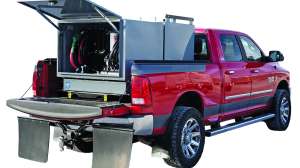
Hydro Spy has five GapVax hydroexcavation units within its fleet – four HV-56 models and one HV-46 model. The company also has two semis — an International (Navistar) and a Freightliner — and five service pickup trucks.
A sixth GapVax unit was de-stroyed in a traffic accident in July 2013; Young plans to replace that truck this year.
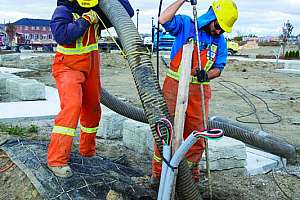
The hydroexcavators’ hose attachments and vacuum power turned out to be useful on many jobs.
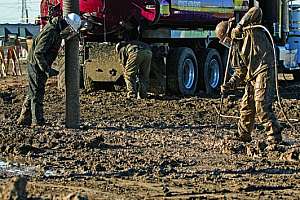
For example, when crews had to dig trenches, pit boxes and pier shafts during substation upgrades in Uvalde, Texas, there was no way to get the trucks close enough because of the overhead hazards such as high-voltage wires. Instead, workers parked trucks more than 900 feet away from the substation and used hose attachments to reach the work site.
The trucks also proved their worth for a New Jersey-based construction company and the Army Corps of Engineers, excavating a cofferdam for the installation of a municipal wastewater pump station.
The general contractor faced two hurdles: First, completing a 30-foot vertical excavation in a 23- by 18-foot box with a trackhoe, and second, removing excess water from the soil before the excavation process.
The general contractor drove sheet piles into the ground to form the box and installed wet wells around the box to manage the groundwater. Hydro Spy hydroexcavated the pit instead of using the trackhoe.
The crew reached an initial target depth of 20 feet in less than two days.
“The excavation process was interrupted for two days to allow the general contractor to install wales and braces around the interior of the sheet piles,” Young says. “We then resumed excavating, finishing the entire cofferdam pit in just three and a half days.”
The crew excavated more than 480 cubic yards of soil.
CHALLENGES OF THE BUSINESS
While getting work is no longer a challenge for Hydro Spy, finding the right employees has been.
“Our biggest hurdles involve personnel issues — finding men and women who can follow rules and commit to working hard every day for every client,” Young says. “This is dirty, dirty work and a job requiring you to stay unclean all the time tends to result in a revolving door for the technicians and service people we hire.”
Another challenge is that employees don’t like long hours spent on the job and away from their families. One way in which Young counters that is by “sending the ladies of Hydro Spy” (each employee’s significant other) on a one-week group vacation each year.
“When the spouse or significant other has skin in the game, boots hit the floor on time for work every morning,” Young says.
Then there are some things employees just have to get used to.
“There is always going to be mud,” Young says. “No matter how efficient we try to be, at the end of the day the guys are still going to be dirty. The key is finding people who can meet our standard of performance while living the mud life.”
STRONG BUSINESS ATTITUDE
Young takes pride in being available to customers whenever needed. During the last six years the company has earned over $500,000 more in business by being available at all times.
“Being able to answer the phone, even if it’s first thing on a Sunday morning, has led to a lot of opportunities for us,” Young says. “We will not let calls go to an answering service.”
The company has a strong presence online with its website, Facebook page and Twitter feed, and that exposure has pulled in work.
“We try to stay up-to-date with new client possibilities coming into our area, whether they are pipeline contractors, civil engineers, transportation projects or whatever,” Young says.
The industry has become extremely competitive recently, and Young’s goal for the company is to be known as the one that consistently provides quality service.
“Our philosophy is that it’s simply not wise to get a client mad with bad service; nothing good comes out of that. Sometimes that involves not taking on more than you can chew. If a client is going to be mad I’d rather it be because we weren’t available to service their project than because of poor service putting their project behind schedule.”
Young says calls from potential clients often lead to an education process. The company gets a clear picture of a project before committing to the work.
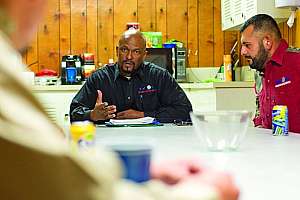
“We ask questions. We have a protocol form. If they can answer all questions and we have clarity as to what the project is and what they expect of us, that is helpful,” he says. “We can’t always get someone out there. We like to walk it with the client — to understand all hazards. We are often working with volatile utilities we need to work around. That is our job.”
FOR THE CUSTOMERS
Young and Santos worked in the industry before starting their own business.
“We know this line of work because we did it as technicians and operators for years,” Young says. “We taught ourselves, taught others and then eventually moved on with name recognition to maximize our potential in this industry.”
The company has also added additional procedures to do backfilling, pipeline repair, tie-ins and installation of pipe.
“We’re always looking for ways to serve our customers,” Young says. “They need to come first.”