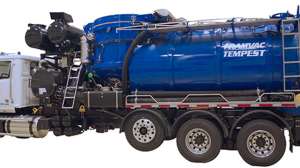
Hydroexcavator used to install communications conduit
Tractor used to cut trenches for new development
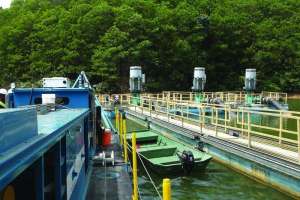
Dredging prevents sediment pond overflow at mining operation
Dredging prevents sediment pond overflow at mining operation
Problem: In 2006, Barrick Gold Corporation acquired the largest open-pit mine in Pueblo Vienjo, the Sanchez Ramirez Province of the Dominican Republic. The area had been damaged by a previous mining operation in 1999, which resulted in contaminated water, environmental damage and structures in need of demolition. When Barrick began a wide-scale cleanup of the area, it was determined that the area would need to be dredged to remove small grains of silt and sand that had been washing into sediment ponds, which created buildup and reduced the capacity for water storage.
Solution: A Wolverine Class Dredge from DSC Dredge was brought in to help maintain the sediment ponds to prevent additional contamination of the local water system. Dredging the area regularly removes the silt and sand buildup from the sediment ponds and maintains their depth while also preventing overflow into surrounding waterways, which is beneficial for the overall water quality. When water comes into contact with ore stockpiles or waste rock, it is fed through a series of canals, channels and sediment ponds that hold it until it can be pumped through the facility’s water treatment plant, significantly reducing contamination.
Result: Barrick’s efforts have helped to restore the Margajita River’s pH to a level low enough that the waters have returned to their natural color and quality. Additional efforts have included revegetating 8,650 acres of land to prevent soil erosion and removing 6.35 million cubic feet of contaminated soil. 985/479-1355; www.dscdredge.com.
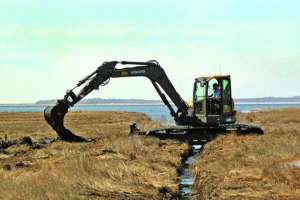
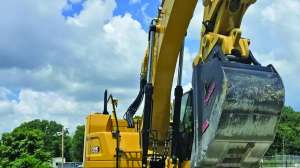
Custom excavator configured for wetland work
Problem: The State of Connecticut is one of several states with programs created to remediate the remaining acres of wetlands. Finding machinery that can effectively conduct restoration work without causing further land disturbance was a challenge.
Solution: The Connecticut Department of Energy and Environmental Protection purchased a zero-gravity marsh excavator for the Fletcher Creek Tidal Wetlands Project. The ECR88D excavator from Volvo Construction Equipment has a bucket capacity of more than 23 cubic feet and over 20 feet digging reach, allowing it to remove harmful plant life. Its low ground pressure, around 1.15 psi, makes it effective when operating in soft marsh that sinks under pressure. Special tracks by Norris Manufacturing were added, and the undercarriage was widened and lengthened to better distribute weight.
Result: The reliability and versatility of this machine are what make this project possible. Each salt marsh project can take four to six months, with plans for this Volvo excavator to be used in marsh conditions for at least the next 10 years. The Volvo machine works at least six hours per day, four days per week. 828/650-2000; www.volvo.com/constructionequipment.
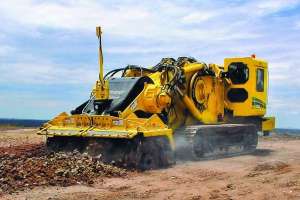
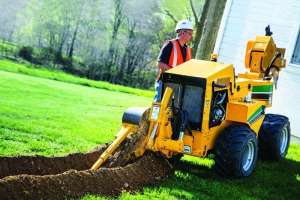
Tractor used to cut trenches for new development
Problem: In Texas Hill Country, San Antonio-based contractor SACC was hired to carve an intricate network of roads, water and sewer lines to accommodate a new 60-acre luxury gated community near the Dominion Country Club. “It’s easy to be fooled by the lush landscape and rolling topography,” says Jason Merck, co-owner of SACC. “Just below the surface is hard rock of the limestone variety. Milling and trenching through Texas limestone is no picnic. It takes operator patience and know-how, and tough equipment.” The milling component of the job was tricky. The development was platted with curves and arcs designed to complement the sloping terrain. Crews encountered porous limestone underground aquifers, bird habitats, flint and a variety of related “sensitive” zones along the roadways. Dust control was also a concern.
Solution: A Vermeer T1055 Commander 3 tractor with a Terrain Leveler attachment was used to chart the course for the roadways, followed by a T1155, T1255 and another T1055 Commander 3 tractor with trencher attachments that were used to cut three separate trenches — 15,000 feet total.
Result: Merck credits operator experience with knowing just how hard to push the machines. The corresponding result was production rates that exceeded expectations and projections, especially given all the obstacles. “Vermeer equipment is tough — especially in rock — which made 300 to 400 feet per day production rates a reality,” says Merck. 641/628-3141; www.vermeer.com.
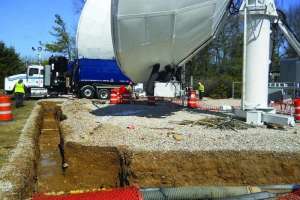
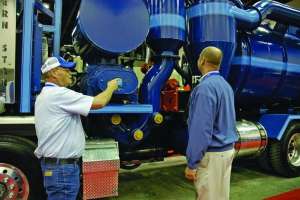
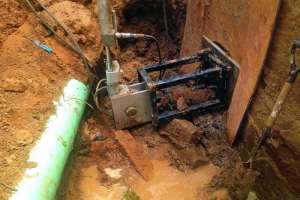
Hydroexcavator used to install communications conduit
Problem: Bancker Construction of Islandia, New York, was hired to install new communications conduit for a client that uses international satellite technology full time. Due to the sensitive nature of the business, this installation had to be done without the client taking an outage or shifting to a redundant system.
Solution: Bancker Construction used a GapVax hydroexcavator with the client, demonstrating faster dig capability, the exposure of subsurface utilities without risking damage to existing facilities, and a neat, efficient construction site.
Result: The job was successful and the client was satisfied. 888/442-7829; www.gapvax.com.