When you’re on the job site, poor audio can often lead to mistakes and create safety hazards. That’s why it’s important to be able to communicate continuously in environments where noise, distance and complex tasks can affect safety and productivity.
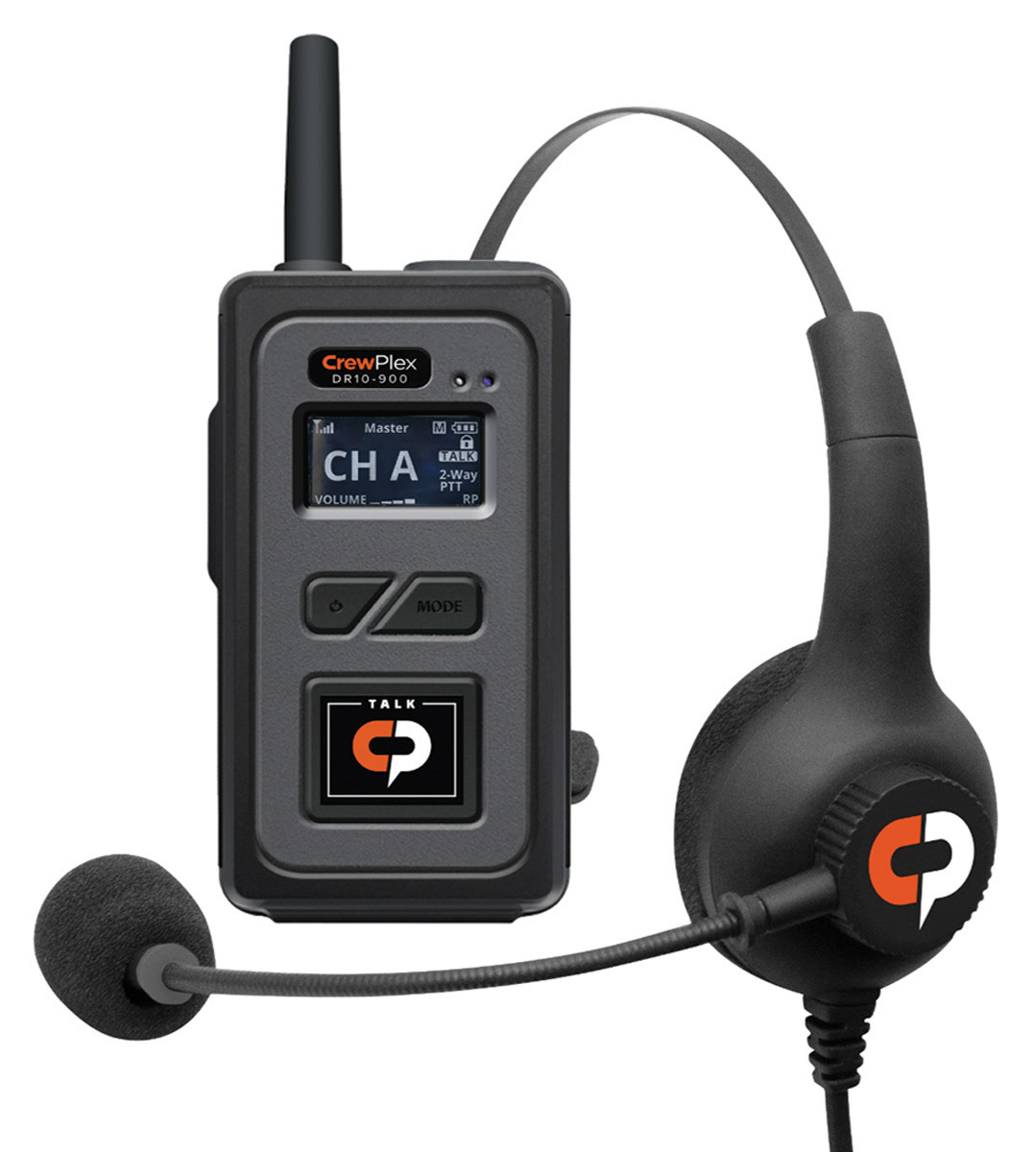
With the CrewPlex DR10, team members can talk and hear each other in real-time without delay and without voice triggering or pushing a button — just full-time talk/listen like a conference call. Available connectivity to two-way radio systems keeps workgroups in touch with a supervisor and extends the communication reach of an entire work team.
“Fundamentally, our technology sets us apart in how we deal with noise in loud environments, the frequencies that we operate in, and the variety of options we make available to the user,” says Debbie Hamby, vice president of marketing for CrewPlex. “We don’t operate in Wi-Fi or Bluetooth frequencies, or require system base stations, and we can work completely hands-free.”
Rugged and durable, the CrewPlex DR10 provides full-duplex, hands-free communication to crews and teams for critical workplace communication. In addition to 10 full-duplex users and two separate talk channels, the DR10 provides unlimited listeners and unlimited shared talk users, all without the need for a base station. High-quality audio, a long range and ease of use make it an ideal solution for crews to stay connected, be productive and focus on job safety, according to Hamby.
“From a research standpoint, we did our homework by spending time with boring contractors, directional drillers, milling/paving contractors, crane operators, hydroexcavators and users in other industries,” she says. “During our discovery phase of our product research, we discovered they all had issues with communications and were looking for solutions to improve productivity and safety.”
In addition to the company’s sports and professional intercom markets, they realized there were applications in industrial and construction environments that had similar communication challenges. Drilling and boring crews are especially challenged due to the nature of the work and high noise levels.
“When crew members can get clear, real-time instruction while working, it decreases the need to start and stop the job while also reducing expensive job errors,” says Hamby. “Constant communication enables workers to be more engaged and focused on the critical tasks at hand, which in turn, increases safety for the entire crew.”
Continue reading for free