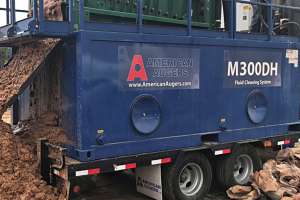
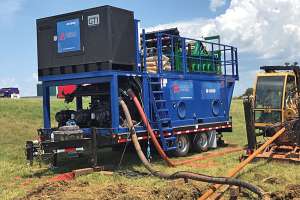
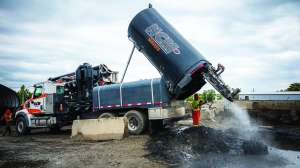
Horizontal directional drill operators know that having the right equipment is a key element to job site success. One integral piece of equipment that can help streamline operations and boost HDD uptime is fluid cleaning systems. Fluid cleaning systems are designed to assist HDD crews with their drilling fluid by removing solids from the drilling fluid as quickly and efficiently as possible. This can help reduce wear and tear on tools, pumps and other components, resulting in a cleaner, safer and more efficient operation.
From minimizing inadvertent return to helping contractors reduce environmental impacts and minimize haul-off costs, fluid cleaning systems are a fundamental piece of equipment in any drilling operation. Here are three ways a fluid cleaning system can boost HDD uptime and maximize downhole production.
MINIMIZE INADVERTENT RETURNS
Maintaining good fluid properties is proven to help facilitate a more efficient and cost-effective drilling program for the operator. One universal fact of drilling is that drilling fluid will always follow the path of least resistance. When drilling goes according to plan, the bore hole created by the operator will always be that path of least resistance. However, if there is a different path of least resistance, then inadvertent returns can happen. In other words, when an inadvertent return happens, drilling fluid surfaces through a path that HDD contractors did not intentionally create. This can happen in a variety of different ways. From solids settling in a bore hole to natural intrusions such as ground conditions, tree roots and pre-cut trenches, any encroachment to the bore path could increase the risk of an inadvertent return.
To reduce this risk, HDD operators leverage fluid cleaning systems. These systems help manage the fluid flow and ensure solids are brought out of the hole efficiently. This is done by slowing down the drilling speed and increasing fluid velocity so solids can stay suspended in fluid and not risk falling or settling in the hole.
With the help of a fluid cleaning system, operators can monitor if solids begin to move too slow, which can cause solids to fall and create a dam. If buildup in the hole occurs, the fluid will find another path to the surface and cause an inadvertent return. Ensuring operators have a fluid cleaning system will help maximize downhole production and improve job site productivity.
PROMOTE CLEAN DRILLING
As environmental, social and governance regulations grow, and the industry looks to the future, environmentally friendly drilling practices are on the rise. The modern driller needs to understand how to minimize environmental risks while protecting and improving the bottom line. HDD contractors know that some underground construction projects require thousands of gallons of drilling fluid to complete a bore successfully. Without a fluid cleaning system, contractors are constantly spending time and money disposing of used mud and mixing new clean drilling fluid. Some areas have tightened restrictions on dumping mud at the job site, which means contractors are required to contain and dispose of the used drilling fluids at approved waste facilities. As a result, contractors are spending more time disposing of fluids and less time where it really matters — on the job site.
The costs associated with containing and disposing of used drilling fluid can be significant. These costs include the need to buy or rent containment equipment, transportation and disposal fees and the cost of fuel. And the hassle does not end with disposal costs. Since used drilling fluid is being removed from the job site, HDD contractors must prepare more with additional water and additives, resulting in further expenses and downtime.
However, many of these costs can be reduced by incorporating a fluid cleaning system. A fluid cleaning system helps operators remove solids out of the drilling fluid, cleaning the water and allowing it to be reused. As a result, HDD contractors can cut disposal costs and reduce the environmental impact because less waste is created. In addition, by reusing the fluid instead of disposing of it, contractors can spend less time preparing a new drilling fluid for a cleaner, more cost-effective operation.
INCREASE HDD UPTIME
There are a few key aspects of the fluid cleaning system that determine a machine’s dependability. One of the most integral aspects, however, are the shaker screens. Shaker screens are the first line of defense. They remove solids on the first cut and can dispose of them before going into the fluid cleaning system. When working together, shaker screens and fluid cleaning systems can promote HDD uptime and boost job site efficiency.
In one example, an Oklahoma contractor was experiencing high sand content in their HDD operation. In fact, the contractor saw 11% of sand content in their unprocessed slurry, which could be determinantal to their equipment and 1,340-foot bore project. As a good rule of thumb, sand content should remain under 1% to ensure it can be efficiently pumped back downhole or further processed through a centrifuge.
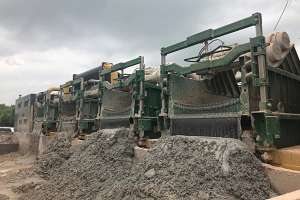
To help achieve their goal of 1% sand content during the entire pull, the contractor implemented a fluid cleaning system with a high-performance shaker and innovative screen technology. The drilling fluid was pumped from the pit to the shaker, and the first screen panel provided the primary separation. The fluid and undersized solids flowed through the screen to the first tank below the shaker. From this tank, the fluid was pumped over the second screen panel and finer screens were run on the second and third screen panels to dewater the underflow, essentially acting as a mud cleaner. The cleaned fluid then flowed into the second tank, which was pumped back downhole.
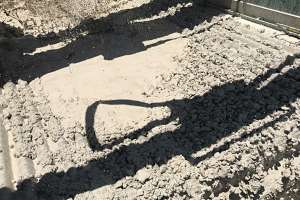
While back reaming from a 12-inch to an 18-inch hole, 213 tons of solids were produced. By utilizing a fluid cleaning system with a three-shaker screen panel, the contractor was able to process 100% of the fluid from the hole, in a span of two days. As a result, the contractor was able to reduce haul-off costs due to drier discard piles and minimize the quantity of abrasive sand-size particles, helping reduce equipment downtime and ensure an efficient operation.
The evaluation proved the ability of a compact, single-deck mud recycling system with a high-performance shaker and innovative screen technology to provide value-added savings by way of reducing the dilution needed and the quantity of abrasive sand-size particles
A WINNING TEAM
Fluid cleaning systems are the flux capacitor to the HDD job site. However, implementing a fluid cleaning system with a shaker screen can help contractors do more with less. This is especially important as environmental regulations continue to increase. With this winning combination, HDD contractors can reduce costs associated with haul-offs, minimize downtime caused by inadvertent returns and ensure a clean, efficient and safe job site.
ABOUT THE AUTHORS
Richard Levings is the product manager at American Augers and Ben Clark is the global manager for the civil division at Derrick Corp.