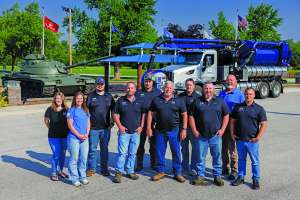

John West doesn’t mind if his crews aren’t rushing to get a job done, because that usually means they are taking his advice about being safe.
“Safety is the most important thing for us,” says West, vice president of Ultra Engineering Services. “I’ve told my guys to take their time, never rush and get the job done right, because at the end of the day everybody has to go home to their families. Speed is not the most important thing. Accuracy and safety are.”
Ultra Engineering, based in Winchester, California, has performed several jobs on military bases, thanks in part to the company’s safety procedures. “Our main reason for people hiring us is for safety,” West says. “We’re not going to hit a gas line or an electric line. Our main business is safety and that’s all we care about.”
Before working on military bases, there is plenty of paper work to fill out and maintain, much of it pertaining to safety. “To get work on a base, it’s a matter of having the proper safety training and making sure you have the paperwork and follow up on it all the time,” West says.
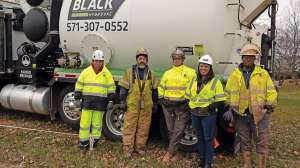
Crews are OSHA, ANSI and HAZWOPER trained. They also have training in first aid, CPR, heat stress, fall protection and confined-space entry.
Safety coordinator Jeremy Marginson leads employees through companywide weekly safety meetings, site safety evaluations and safety audits. The company has also drawn up health and safety plans for each field procedure.
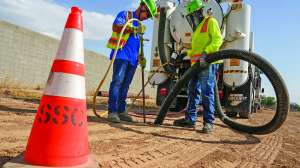
Training starts immediately with a new hire. The employee first watches the required safety videos and then shadows a vacuum excavation crew for several weeks before operating a truck. When a work crew believes the employee might be ready to be placed on a team, West takes over the training.
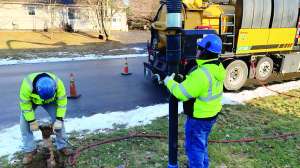
“I’ll typically go out with the new hire and pothole with them when they’re ready to step up and work on a truck,” West says. “I’ll go out for a couple days with them just to make sure I feel that they’re good enough and safe enough and they understand the job well enough.”
Continue reading for free