
It is one thing to talk about the ongoing shortage of utilities technicians in the construction industry. It is another to do something about it.
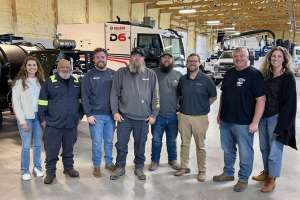
Fortunately for the construction industry, State Technical College of Missouri college in Linn, Missouri, and heavy equipment manufacturer Vermeer Corporation are doing something about it. To be specific, STM is now offering a two-year Associate of Applied Science degree in Utilities Technology.
“With our Utilities Technology program, you can keep communities and cities thriving by making sure utilities systems are working exactly as they should,” explains the STM Utilities Technology webpage. “By learning underground and overhead construction skills, how to install and maintain utility systems — including fiber optic and copper communications, natural gas distribution — and more, the program provides a broad set of skills to prepare you for employment with a variety of utility contractors and public utilities.”
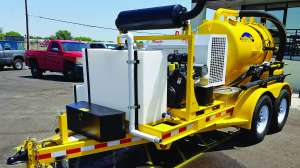
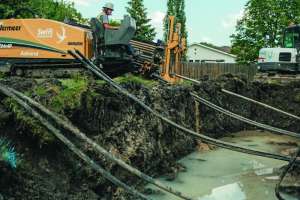
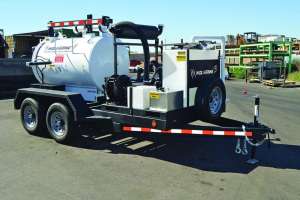
According to STM, enrolling in their two-year Utilities Technology program gives students the chance to attain paid internships in the utilities industry, and learn how to operate equipment such as directional boring machines, hydrovac trucks and mini-excavators. The degree also provides students with Class A commercial driver’s license instruction and testing, and “You’ll be prepared to earn Occupational Safety and Health Administration 10-hour training, CPR, first-aid and flagger certifications,” the STM website says.
Cole Schaefer is the department chair of STM’s Utilities Technology program. “Our primary focus is on the communication grid, but we also have courses that emphasize natural gas, and water/wastewater sanitary sewer grids,” he says.
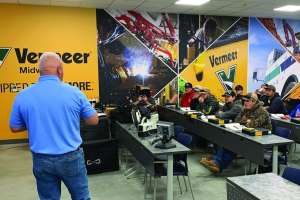
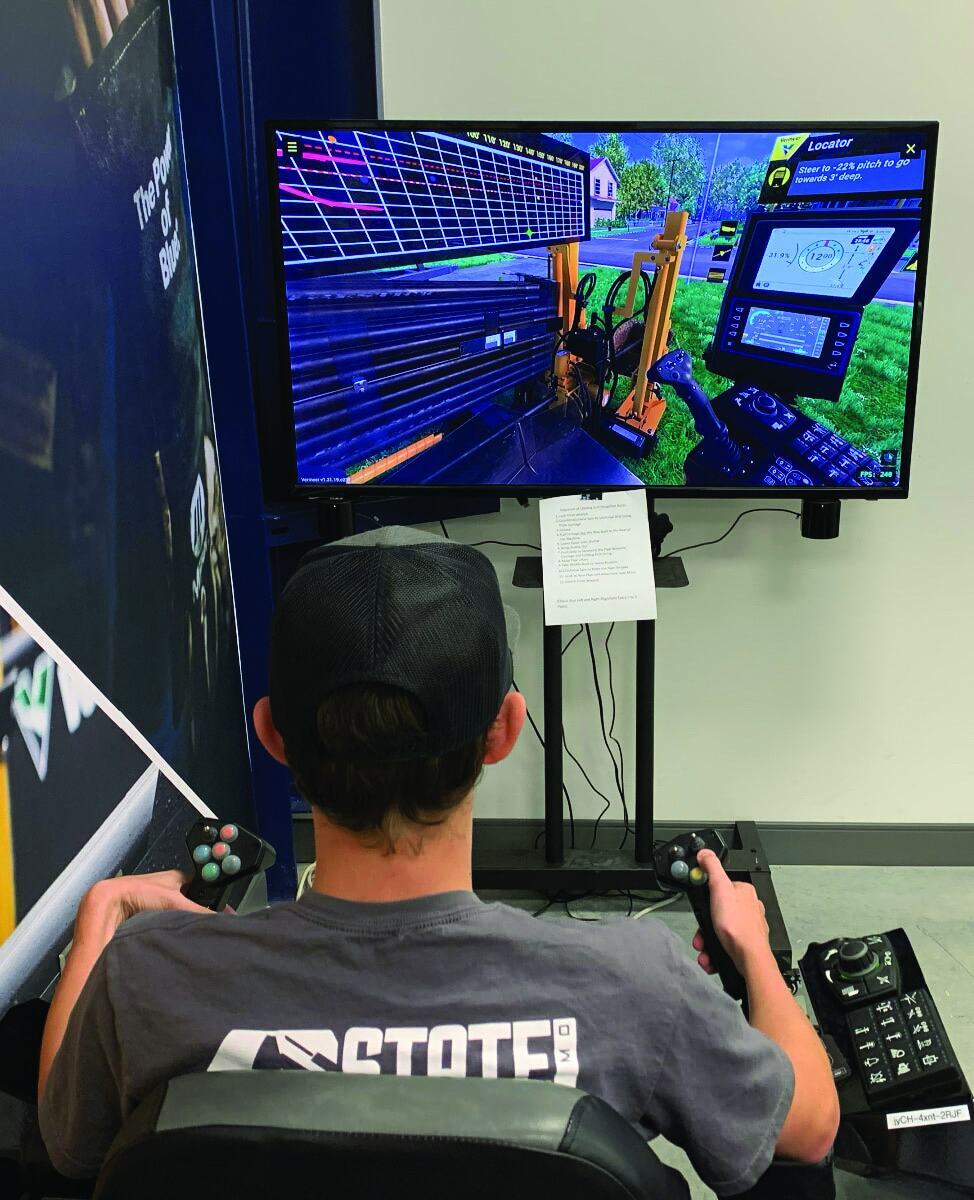
Although classroom work is included, most of the training in the Utilities Technology course is done outdoors using commercial-grade equipment, much of it provided in association with Vermeer Midwest, a Vermeer dealership.
“For many years, Vermeer dealers provided direct training to new hires at contractors,” says Chad Van Soelen, Vermeer Midwest’s general manager. “It got to the point that our people were running these programs on a regular basis on campus and they couldn’t keep up with the number of people that were requesting training. That’s why we welcome this training now being done by STM, and why Vermeer is happy to support it.”

A COMPREHENSIVE CURRICULUM
To put it mildly, STM’s Utilities Technology curriculum is comprehensive and thorough. The full curriculum can be viewed on line at statetechmo.curriqunet.com/catalog//iq/4310/5144. Here’s a brief sampling of what is being taught there:
- Customer Service and Safety, including Occupational Safety and Health Administration rules and regulations, and OSHA 10-hour, CPR, first-aid and flagger certifications
- Telecommunications Systems, covering copper and fiber optic basics, splicing and testing standards
- Equipment Operation I, II and III, including the operation and maintenance of directional boring machines, excavators, hydrovac units and related excavation equipment
- Construction of Overhead Broadband Lines
- Gas Pipeline Systems (an overview course)
- Construction of Underground Utility Systems, namely natural gas pipelines
- Utility Internships (on the job training with a working utility)
- Underground Utility Location
- Blueprint Reading and Job Site Management
- Fiber Optic Technology (an overview course)
- Water and Wastewater Systems (an overview course)
- Construction of Underground Utility Systems
- Special Topics in Utility Systems
The depth of this curriculum, and its emphasis on hands-on training, is a direct response to industry requests to STM.
“In fact, the evolution of the program started when the construction partners that we’ve been working with asked us to provide certain kinds of training that would better align with their needs,” Schaefer says. “They spent three-four years working with us to develop the Utilities Technology program, helping STM to deliver the graduates they need to fulfill the functions most in demand in their industry.”
Vermeer Midwest played a key part in developing STM’s program, which is not a new role for the company. “We’ve been involved with State Tech for over 15 years now, just on the technician side,” says Van Soelen. “Right now, we’ve got 10 technicians and an intern who have come to us from STM. They are a big help to our company, plus proof that training like this offers real employment opportunities in high-paying careers to graduating students.”
Vermeer has also stepped up on the equipment side for STM.
“Vermeer Midwest has donated millions and millions of dollars’ worth of equipment in the last several years to support what we’re doing both in the form of excavators and equipment packages,” Schaefer says. “Vermeer Corporation helped us lower the equipment-to-student ratio and aided our instructors by hosting our students at Vermeer’s own training facility so that they can learn about the equipment they’ll be using directly from the manufacturer.”
SOLID BENEFITS FOR STUDENTS AND INDUSTRY
It is fair to say that STM’s Utilities Technology degree program offers major benefits to students and industry alike.
For successful students, earning this degree gives them an entree into a well paid, secure and in-demand career. According to the STM website, the average mean salary for its graduates is $77,000 a year. Moreover, the program has achieved a 100% job placement rate since it started in 2019. Let’s say that again, because it’s important: the program has achieved a 100% job placement rate.
Meanwhile, the carefully monitored hands-on training environment offered by the Utilities Technology program allows students “to make mistakes without possibly harming themselves or their crew,” says Schaefer. “They get to do this in a safe environment, rather than on a work site where the consequences could be serious.”
Obviously, this level of education is a big benefit to employers. They know that the graduates they hire from STM have already gone through the newbie stage, and are mentally equipped to do what needs to be done on the work site properly and safely on Day One. But that’s not all: By attaining this degree, these graduates have proven that they have the life skills and maturity to be responsible employees on the job.
“I think every kid’s different, but at the age of 18, a lot of kids still need to grow up, right?” Schaefer observes. “The kids need to learn responsibilities, to be a team member, and to be somebody that is going to be reliable enough just to show up to work. At STM, we teach those ‘soft skills’ that a lot of employers want their employees to have on Day One.”
“Taking this degree also helps students launch themselves on a career path that can help them go on to be a job site foreman, superintendent, manager or more,” he adds. “Plus it doesn’t hurt Vermeer Midwest that these graduates know how to operate Vermeer equipment, and are more likely to want to purchase it when they are in a position to do so.”
Given that STM started its Utilities Technology program in 2019, the first class that went through it graduated in 2021. “We started out by recruiting 50 students for that first year, and we’ve been doing that annually ever since,” says Schaefer. “Everyone who has graduated has found a job. In fact, the demand is so high for our graduates that they have their pick of employers.”
Continue reading for free