
Evan Schroeder and Chris Teetaert started an internet service provider. Over eight years, they built up the company to include approximately 7,000 fixed wireless and fiber-to-home subscribers throughout rural southeast Manitoba.
The autumn 2021 sale of Swift High Speed to Xplore Inc. wasn’t just a successful exit for the business partners. The two men quickly pivoted to a new company called Swift Underground, establishing it as an underground utility contractor specializing in delivering turnkey fiber optic and wireless networks.
This was the logical next step for channeling new energy into their long-standing mandate — getting the internet into a greater number of rural Canadians’ hands. Along the way, they’ve expanded Swift Underground’s capabilities to include installations of water and wastewater, electrical, well hookups and geothermal horizontal ground loops.
The contractor’s approach leans heavily on prioritizing safety and working smarter through proper planning for the primarily remote environments in which they operate. From day one, Schroeder says, the aim has been to boost project owner confidence, expedite cleanup and make it less costly to remediate.

A RURAL LOOK
Based in Steinbach, Manitoba, southeast of Winnipeg, Swift Underground is no stranger to sprawling Canadian landscapes. Their focus is meeting needs in underserved communities. The organization primarily serves Manitoba and Saskatchewan, but works as far west as McBride, British Columbia, and east to Thunder Bay, Ontario. The company employs approximately 120 people and more during the busy summer months.
Prior to launching Swift Underground, Schroeder and Teetaert built their early momentum in rural broadband through tower installations and fixed wireless deployments. They knew getting fiber to the tower was the next step.
“We’re doing a lot of fixed wireless and tower work in rural areas that make sense,” Schroeder says. “But then we’re bringing fiber to rural areas that have never seen fiber before, and we’re extending water sewer services in towns and communities nobody really wants to go work at.”
In rural Canada, even getting to the work sites and maintaining operational fitness can present certain challenges. On scalable mainline work, Swift Underground crews may still operate miles apart due to geographic spread. They’ve used the satellite internet constellation Starlink to manage job site data and communications in low-connectivity zones and process implementations supporting remote-readiness.
“Most of our work is quite remote, so every drill truck is going to have their own signage, enough water to last them a full day, even on a rough drill day, condition-wise,” Schroeder continues.
“The project management piece is very focused on day-to-day, hour-to-hour operations. They’re going to have repair tools and extra product — knowing that they’re not near either a repair shop or a refill depot.”

EQUIPMENT DRIVEN
Schroeder and Teetaert have renewed their focus on staying out ahead in front of a quick-moving utility landscape and a competitive environment, in urban, less urban and rural areas.
Their company’s equipment and techniques are versatile, efficient and self-contained. Tough enough for rural Canadian work environments, allowing work in isolated areas without frequent resupply or extensive external support. Nimble enough to go just about anywhere.
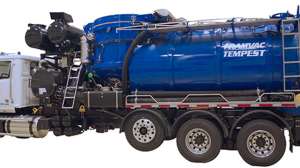
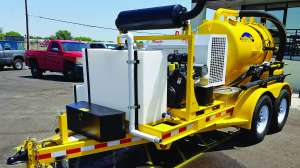
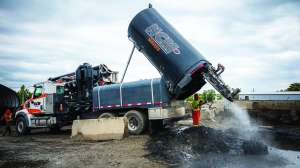
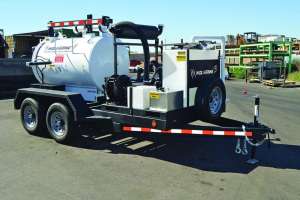
They leverage horizontal drills and hydrovac trucks for precise, minimally invasive installations of fiber optic cables, geothermal loops, utility repairs, sewer and waterline installations. Methods are deployed to minimize surface disruption while avoiding damage to existing underground utility lines, mitigate the need for extensive remediation and shorten project timelines compared to traditional opencut means.
The company prefers the compatibility of tri-drive setups, providing greater gross vehicle weight rating and better power distribution for off-road conditions. Heavy-duty and off-road capable, the overall size, traction and maneuverability of the contractor’s Kenworth T800 chassis meshes with robust hydroexcavation configurations and extreme environments.
The Tornado F4 rural vacuum system is engineered for long hauls and better fuel economy. The versatility of T800 and its setback front axle design makes it a popular choice for the company.
A BIG DRILL
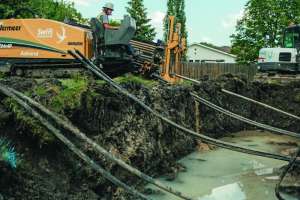
Swift Underground’s lineup includes Vermeer D100x120 and D24x40 directional drills. The D24x40 class is aimed at enhancing their operational efficiency and precision through the delivery of 24,000 ft-lbs of thrust and pullback. It facilitates the handling of diverse soil conditions, enabling the installation of various utility types.
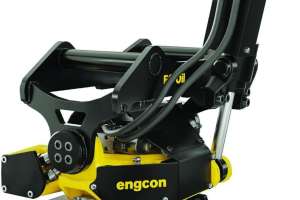
The transportability and maneuverability of excavators from makers like Bobcat and Takeuchi are valued for assistance with spoil removal, trench shaping and other support. Versatile for meeting Swift Underground’s needs, they can be deployed when working in unconfined rural settings or tight and particularly landscaped spaces.
“Most of our equipment is very rural-based — solely for the reason that was our operating region prior to selling the ISP,” Schroeder says. “We’ve since moved into urban work, both telecom and water, sewer and now in some geothermal as well, using the same types of drills, hydrovacs, fusion equipment.”
SHORING UP SAFETY, EFFICIENCY
Geothermal energy is gaining traction in Canada as a sustainable heating and cooling solution.
In 2024, Swift Underground was involved with an end-of-life heating and cooling conversion, to geothermal from natural gas, and was hired to construct a 24 horizontal ground loop system, stacked to 24 feet deep and totaling over 16,000 feet of pipe, for a church property in Winnipeg.
A header trench was dug for consolidating the loop connections and making it easier to properly protect, insulate and backfill around the piping that had to enter the structure. A header trench at a certain distance can also help by avoiding having to set back further to avoid oversteering drill rods.
Loop line installation was supported by the contractor’s HDD rig implementation, geared for drilling precise boreholes necessary for the geothermal system’s heat exchange processes. The trench essentially provided the contractor with more space to angle or “steer” the rods before they exit the ground — creating a practical drilling zone for achieving safer, more controlled transitions from underground runs to the building’s connection point.

PREVENTING DESTRUCTION
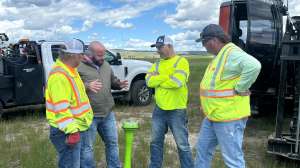
Additionally, integration of technologies like their Digital Control Inc. Falcon F5 digital control system allows Swift Underground’s team to map a bore on the job site and generate rod-by-rod plans. This provides an intersection of utilities and overbending warnings. A technician can walk a boreline and mark utilities while collecting as-drilled information.
Job documentation can be collected, organized and shared via the cloud or through detailed reports with personalized data and visuals. This ties back to Swift Underground’s commitment to maintain a prominent level of consistency in communication and keeping relevant stakeholders well-informed.
Moreover, the contractor demonstrated the effectiveness of its EasyDig round shoring when they safely excavated 25 feet beneath a newly constructed parking area, recovering failed drill rods.
Compared to traditional rectangular trenching methods that would have required a 20-foot-long by 5-foot-wide excavation, their use of a 4-foot-diameter round shoring reduced the surface disruption area by over 80%.
Operations are directed at leaving a smaller footprint than open trenching and causing zero damage to existing structures — in this case, the church building’s brand-new parking lot — that would otherwise have to be destroyed.
MACHINE RECOGNITION
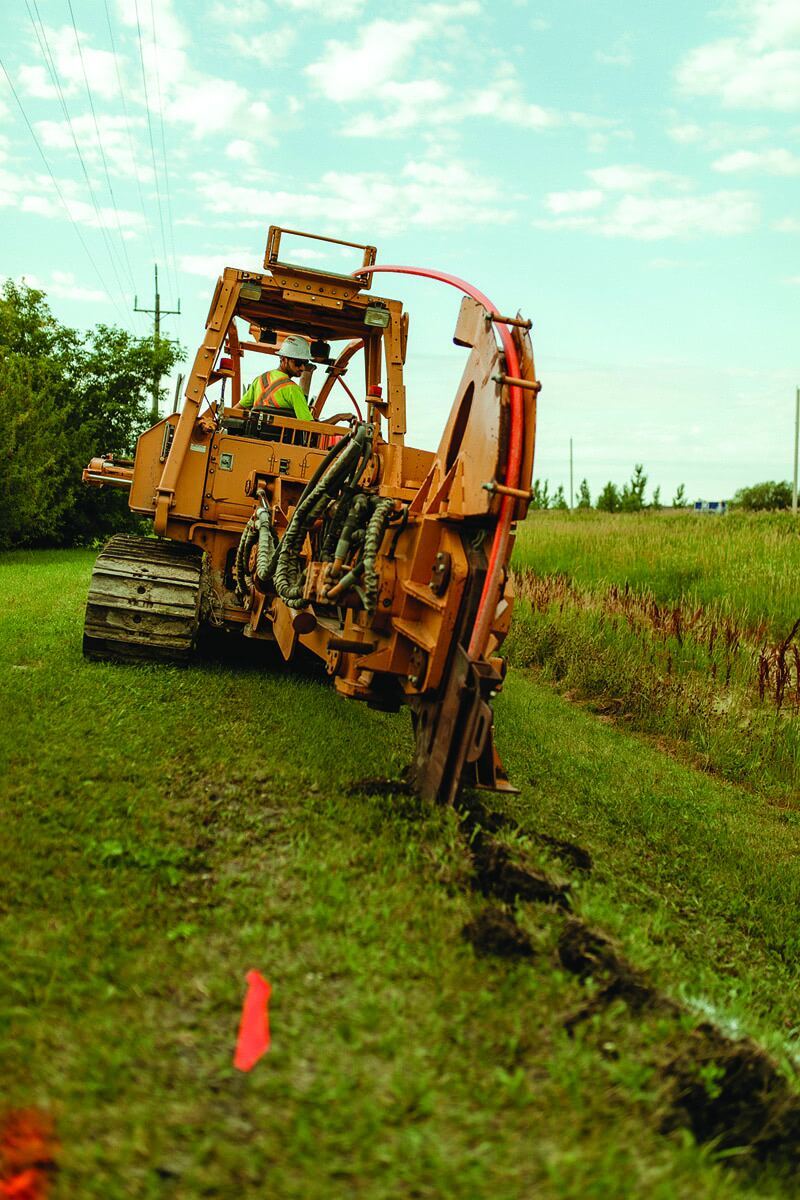
The only issue with the first cable plow Swift Underground purchased, says construction foreman Josh Hildebrand, is that they couldn’t try to obscure “Bumble Bee,” even if they had wanted to. The Vermeer unit was taller than the roof of the building, which was only able to partially conceal it.
Swift Underground prides itself on using technology to organize, track and manage large construction projects, and maintain visibility in the communities it operates. The company’s machines even have interesting nicknames, like Shrek, Bowser and Gator Done.
All equipment, outside of regular fleet vehicles, is named. Swift’s hydroexcavation units have some personalized color schemes. Their vehicles and equipment are often recognized by these characteristics, even by the public. Typically, the operator gets some input on what they want the next truck to be named.
“It’s easier to remember than a number,” says Schroeder. “And if the public remembers the name, that’s even better.”
A SWIFT SHIFT
Schroeder and Teetaert have witnessed the shift from near-empty ROWs in small towns and rural areas to increasingly crowded corridors in some places due to infrastructure densification.
Government of Canada funding programs continue in support of high-speed internet projects in rural communities, for building or upgrading access and transport infrastructure, and providing internet access services in eligible underserved areas across the country.
Market demand is growing for the quality and reliability of networks. At the same time, water infrastructure projects, including lead pipe replacement and system upgrades, will necessitate substantial digging.
Schroeder says, “One of the unique positions that we’ve been in is that we were a rural provider primarily installing new cabling in regions that before had not seen much cabling — for sure not civil.”
“Suddenly this became a hot region for competition and there are two or three other providers that started building,” he says. “And at the same time, new subdevelopments are doing water treatment plants and providing domestic water. We’re seeing power going civil instead of aerial because of the aesthetic reasons in various communities.”
NEW REALITIES
As Canadian cities expand, the demand for safe and efficient excavation techniques is expected to accelerate amid growing requirements for minimizing soil disturbance and reducing the ecological footprint of construction projects. As Swift Underground’s name recognition has grown, so has its reach.
Stepping into the role of an underground utility contractor and drawing on their experience, Schroeder and Teetaert still treat every job “like their own front yard.” To do it properly, Swift Underground owns the entire process “in-house” from field measurements to design, permitting and construction, and using certified pipe fusers and quality tooling.
They are also navigating tighter sites and more complex subsurface utility corridors.
Community and project owner interaction remains central. Precise and nondestructive approaches are required to navigate safety, limit surface disruption and mitigate damage. The types of best practices being implemented don’t just reduce liability exposure, boost end user satisfaction, and preserve structures like roadways and sidewalks, parking structures, historical sites and unique landscapes.
Where infrastructure is densifying and the margins for error are shrinking, Swift Underground is intent on coming up with innovative definitions for what it means to work cleaner and smarter. Their philosophy, accelerated due to new constraints in familiar places, is plotted around serving Manitoba and neighboring communities in areas while dealing with today’s right-of-way realities.
“We’ve gone from having nothing really to work around to very full rights-of-way and small rights-of-way because the right-of-way width hadn’t changed through that transition,” Schroeder adds.
“Traditionally, they’d call the guy with the largest excavator or largest backhoe,” he says. “They’re now calling us for a hydrovac and a mini excavator because they just don’t have the room for large equipment to go do that work and that repair. A big priority for us from day one has been customer interaction, customer positivity as we leave.”
Continue reading for free