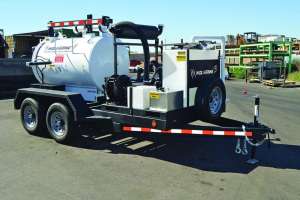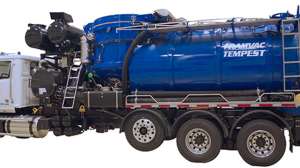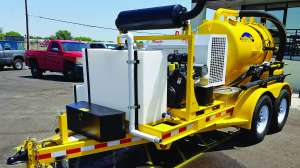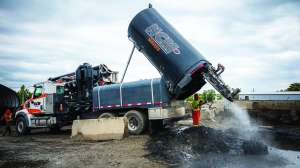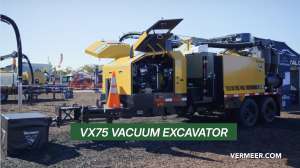
We’re not even through 2025 yet, and I can safely say that I’ve seen more vacuum excavators on job sites in my little neck of the woods in Northern Wisconsin this year than I have any other year. And that’s impressive.
It shows me that the industry is growing, companies are growing and aren’t afraid of expanding service areas — some of the companies I’ve seen have come from the southern parts of our state and even from bordering states.
Take a look online at social media and you’ll find a lot more vacuum excavation companies out there now than there were five, 10 years ago when Dig Different first started publication. The industry’s growth is driven by the need for safer, more efficient excavation methods in both urban and industrial settings.
GROWTH AHEAD
According to market analysts, the global vacuum excavator market has experienced substantial growth, with projections showing an increase from $1.2 billion in 2024 to a projected $3.5 billion by 2032.
Across the U.S. and around the world, infrastructure is aging and expanding. Whether it’s broadband fiber, power lines, water mains or gas distribution, there’s more underground utility infrastructure than ever before. With this increased complexity comes greater risk — one wrong move with a backhoe can knock out a neighborhood’s power or cause a dangerous gas leak. That’s where vacuum excavation comes in.
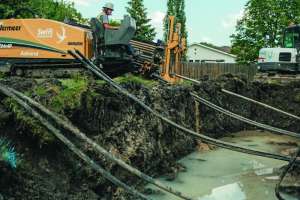
Evan Schroeder and Chris Teetaert, owners of Swift Underground, saw this as an opportunity and shifted away from being an internet service provider to being a service company that now installs fiber, water and sewer lines, and more.
Their company, based in Steinbach, Manitoba, does a lot of work in rural settings and they even see more work coming into those areas now. You can read more about Swift Underground in this issue.
That growth that they see is a lot like what I see happening in northern Wisconsin — all rural areas — as more overhead electrical lines move underground.
CHALLENGES AND OPPORTUNITIES
Despite the positive outlook, the industry does face challenges, including the high initial investment costs associated with advanced vacuum excavation equipment. However, the long-term benefits, such as reduced labor costs, minimized restoration expenses and enhanced safety, often outweigh the initial expenditures.
Opportunities abound in emerging markets, where infrastructure development is accelerating. The adoption of vacuum excavation in these regions presents a significant growth avenue for industry players willing to invest in education and training to build local expertise.
LOOKING AHEAD
As we look to the future, the vacuum excavation industry is poised for continued growth and innovation. Emphasis on sustainability, safety and efficiency will drive the development of next-generation equipment and techniques. Collaboration between manufacturers, contractors and regulatory bodies will be crucial in shaping a resilient and forward-thinking industry.
The past year has been transformative for vacuum excavation, setting the stage for a dynamic and prosperous future. Stakeholders who embrace innovation and adapt to evolving market demands will be well-positioned to lead the industry into its next chapter.
I’d like to hear what you are seeing in your area. Email me at editor@digdifferent.com.
Enjoy this issue!
Continue reading for free