A lot can change with a company in 10 years, and OE Utility Services is a prime example.
One decade ago, the hydroexcavation company based in Vaughan, Ontario, was profiled in Dig Different magazine when it went by the name Ontario Excavac. The name change isn’t the only thing that’s happened in those years. The company also moved locations and expanded its range of services substantially.
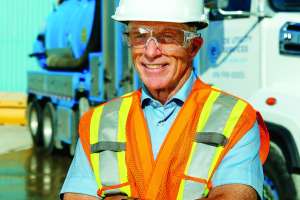
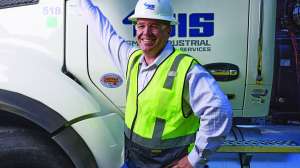
“We are still Ontario Excavac legally, but we changed our business name to OE Utility Services because it better reflects the broader array of services we provide now,” says Barry Wood, the company’s president and CEO. “The essence of it is that we moved to a much larger premises in the Greater Toronto Area. And as we were doing that, we were developing our soil reprocessing and recycling capabilities — including co-locating a recycling facility at our shop, which was an innovation for the industry.”
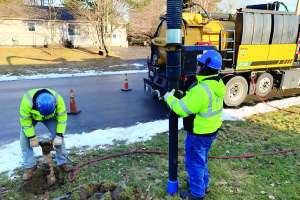
Soil recycling is just part of OE Utility Services’ expanded product line. Beyond hydroexcavation, the company now offers support services for gas and water distribution services, subsurface utility engineering and site restoration.
“This expansion was a major step for us, and we’ve continued to grow the business every year,” Wood says.
He added that the biggest chunk of growth has happened more recently with the acquisition of the company in July 2021 by Enbridge Inc. Enbridge is one of the largest energy services companies in North America, and the gas utility part of Enbridge was one of the company’s biggest customers.
“They decided that they wanted to acquire us to make captive the work that we were providing them,” Wood says. “And at the same time, they bought us as an investment to grow our business with customers outside of Enbridge.”
IMPRESSIVE RESOURCES
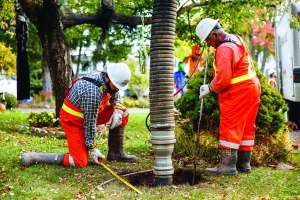
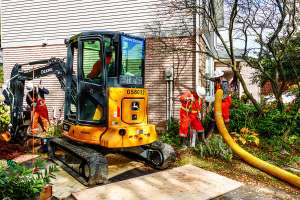
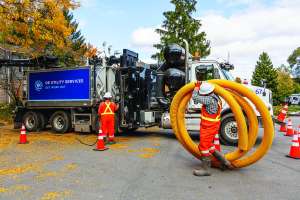
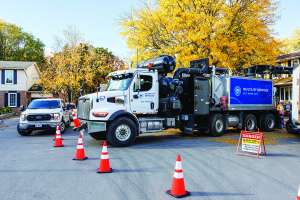
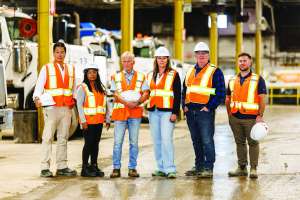
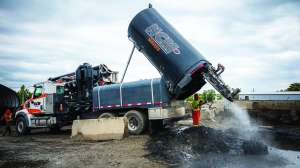
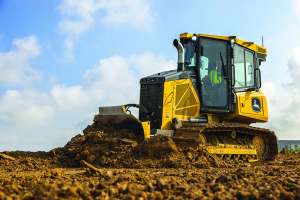
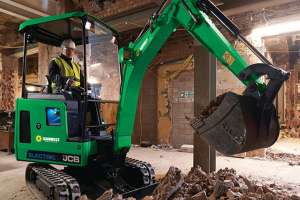
Ontario Excavac was founded in 1995 with just five employees and a single hydrovac truck. Today, OE Utility Services has about 200 employees and 68 hydrovacs. “We also have seven coring machines, seven U-fill trucks, five stone slingers, backhoes, couple mini-excavators (John Deere) and road saws,” Wood says. “In all, we have about 175 pieces of equipment.”
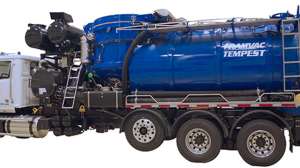
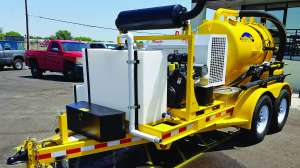
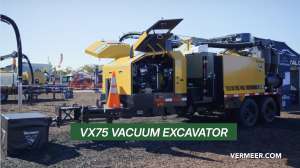
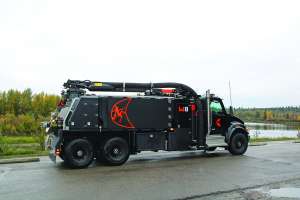
The hydrovac fleet consists of a mix of SchellVac, Vector, Transway and WesTech Wolf units. The coring machines are Utilicor, while stone slingers are Soil King Extremes; and the U-fill trucks are Bay-Lynx.
The company also has numerous cube vans — a mix of Ford and GMC — for the restoration work. Fitter vans OE Utility Services use are mostly Ford Transits.
OE Utility Services’s varied fleet aligns with the company’s goal of serving their clients’ complete needs.
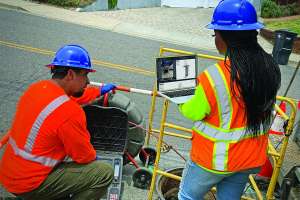
“We’re trying to be an end-to-end service provider,” Wood explained. “We’re providing work planning support for our customers, so that we can integrate our work more effectively for them. This encompasses helping to arrange locates, doing pre-inspections, which leads to us determining what type of locate requirements we have; safety related issues on that site, trying to understand what the requirements are for traffic control, both pedestrian and vehicular, whether or not it might require a paid duty police officer to control traffic — things of that nature. This takes us into hydroexcavation, reinstatement and restoration activity. Then we have our soil disposal operation, where we reuse our aggregate and sand fraction in the water that is used in our process. All of it gets reused in some fashion.”
This integrated approach is designed to deliver on an important company policy. “We are committed to aligning ourselves with our customers’ long-term interests and providing these end-to-end services in the most cost-effective way,” says Wood. “One of our business mantras is that we try to find the lowest overall cost and the highest possible return for our customers and ourselves at all times.”
DOING THINGS DIFFERENTLY
A lot has changed in the business world over the past decade. OE Utility Services has done its best to adapt to these changes, and to do things differently to profit from them.
“Ten years ago, people only thought of a hydrovac as being a very expensive and sophisticated backhoe,” Wood says. “What they didn’t realize is that the hydrovac is much more than just a piece of equipment: It sets the pace for the fieldwork that’s taking place. Today, we know better.”
This knowledge has shaped OE Utility Services’ strategy in the field with a focus on using hydrovacs effectively in order to keep costs down and productivity up.
“One of the innovations that we’ve brought to the industry is to apply modern ‘lean’ management principles from the manufacturing arena where we do our best to eliminate waste,” says Wood. “In the utility construction industry, eliminating waste starts with realizing that the pacesetter for productive work activity is the effective use of the hydrovac. It’s the device that sets the schedule for work every day. This is why you should be planning your workflows around the hydrovac to reduce your wait times, make sure there’s no delays, and ensure that the flow of work is maintained. These are some of the key things that we’ve brought to the table.”
Applying lean principles to other aspects of its business is another way that OE Utility Services is doing things differently.
“We follow what we refer to as the three S’s in our company: safety, sustainability and savings,” Wood says. “Fundamentally, when you look at construction projects, there’s often excess resources on the site; for instance, too many people than are required to execute the work. This is why we focus on having the right number of people working at the site at the right time. As well, there’s often excess movement that goes on at the end of the day, when you’re taking material to a disposal site. We’ve eliminated those costs by co-locating our soil recycling facility at our shop, allowing us to come back at night, dispose of unwanted materials, and park. That eliminates a significant portion of unnecessary travel, which saves everyone money.”
Adapting to change also means replacing old ways of doing things with newer, more efficient methods.
“We do our work in such a way that our customers’ service people are able to immediately go to work,” says Wood. “In other words, we schedule our work so that we execute our work before their crews arrive, so that their work can be done without any wait times. Likewise, when we’re doing our work, we try to ensure that there’s no wait time that we incur when we go on site. This is why we do pre-inspections on our sites to make sure that we’ll have a pretty good idea of what we have to do. Then, when we arrive on site, we complete a job site safety assessment, which we call our JSSA, which includes the preplanned movement of our vehicles and what we intend to accomplish during the day.”
TODAY AND TOMORROW
Although OE Utility Services cut its teeth in hydroexcavation, the company’s focus has shifted since being acquired by Enbridge.
“We’re not doing as much on the water side,” Wood says. “Instead, our focus over the last two years has been on our gas services business. Now we’re doing repair and replacement work for Enbridge, where before we only provided hydroexcavation and restoration service support to them.”
Given that much of this work is being done in urban areas, OE Utility Services has had to increase its attention to site safety.
“There’s a lot of distracted drivers and pedestrians out there, the latter not paying enough attention to where they’re going with their faces in their smartphone and AirPods in their ears,” says Wood. “So we really focus on training our people to put up proper safety barriers to keep pedestrians safe from our work sites and keep vehicular traffic properly controlled. That’s one of the bigger challenges I’m seeing right now: As cities are densifying, it’s becoming something that’s an increase in challenge.”
This being said, the future looks bright for OE Utility Services with Enbridge acquiring three natural gas distribution utilities in Ohio, Utah and North Carolina.
“We plan to expand our hands-on gas service work in collaboration with Enbridge,” Wood says. “We’re hopeful of working with the folks in those jurisdictions to bring some new ideas to the table, understand what their needs are, and possibly be able to help them.”
OE is also growing its non-Enbridge business in a variety of different ways. The subsurface utility engineering sector has been one that they’ve been particularly interested in, focusing on providing support for Level A verification of utility locations. Wood says they are also trying to grow the ancillary parts of the business to provide backfill and reinstatement services to customers.
Clearly, OE Utility Services has ambitious plans for the future. But Barry Wood doesn’t think his company is overreaching by pursuing them all. “We’ve got a very deep-pocketed company that is our owner now,” he explained. “That’s why we believe that we’ve got the ingredients to really grow the business.”