Safety hazards, utility strikes, equipment damage and job site delays: The risks posed by today’s increasingly complex and congested job sites require an increasingly coordinated response.
Every utility crew knows the nightmare that could await them underground, especially in urban areas already overwhelmed with fiber, gas, electric, water and sewer lines. There’s no room for error as even small mistakes can have serious and expensive consequences.
To ensure their crews can work as accurately and precisely as possible, many contractors are leveraging the combined power of utility locating and vacuum excavation, whether installing, repairing or inspecting utilities. These methods work together to enhance safety and minimize costly downtime — and ongoing improvements in techniques and equipment help to make the job easier and more efficient.
STEP 1: LOCATING EXISTING UTILITIES
Every underground construction project should begin with a call to 811 to have a locate technician map out the underground blueprint. This allows contractors to start with a clean slate and develop an informed and effective construction plan.
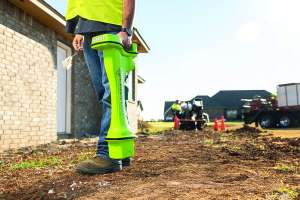
Once onsite, the locate technician will use a locator to connect to each target utility, find the correct frequency to send down the utility line and trace that signal through the ticketed area. What complicates this process is potential interference — objects or sources onsite that disrupt or distort the frequency of a locator. Interference can be active or passive, and both types make it more difficult to trace the utility, which can potentially lead to a mislocate.
Sources of active interference have their own electrical signal and can range from cable lines and cathodic-protected gas mains to underground fences and electrical-based irrigation systems. Sources of passive interference do not have their own signal, like storm culverts, chain-link fences and even the rebar. The locate technician can visually inspect the job site to find previous locate markers and visually identify signs of active or passive interference.
Once possible interference has been identified, the locate technician can start to find the frequency for the target utility. While some contractors get in the habit of using a “favorite” frequency, the best practice is to begin with the lowest possible frequency (usually between 263 Hz and 870 Hz) and increase slowly, in small increments, until the utility is located. Higher frequencies are often easier for a locator to pick up, but they also run a higher risk of bleeding off onto sources of interference, potentially resulting in a mismark and/or utility strike.
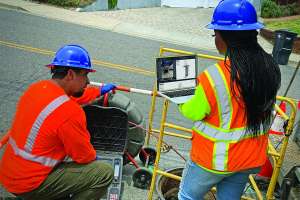
One way to help solve the interference/frequency challenge: improve your AIM. Utility locators that use ambient interference measurement (AIM) technology, like Subsite’s UtiliGuard 2 RTK, scan the area for noise and recommend the operating frequencies with the least interference. It helps the locate technician work faster without losing accuracy — down to the centimeter level with the RTK — so the ticket can be completed successfully. Also, Subsite’s UtiliView application enhances recordkeeping by enabling users to attach photos to log points, take instant distance measurements, and revisit unlimited mapped Points using the Point Navigation feature.
Administrators can set up layers with custom schema and share them via QR codes, promoting uniformity across devices. By combining high accuracy locating with streamlined mapping, this system increases productivity while reducing errors in the field.
These capabilities are especially important in areas where the locate technicians are stretched thin with high ticket demands, short turnaround times and a shortage of workers. Technologies like AIM and streamlined data mapping solutions help them work more efficiently and move from job site to job site faster, completing their allotted tickets for the day with confidence that the locates are correct.
STEP 2: EXPOSING UTILITIES TO SUPPORT DAMAGE PREVENTION
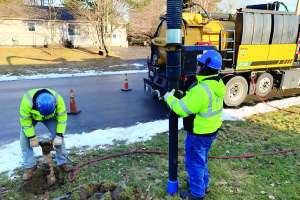
After locating is complete, contractors can enhance job site safety and confirm underground utilities by exposing (or daylighting) them. This process reinforces the work of the locate technician, allowing crews to see and avoid utilities that are in the path of construction or simply nearby. Visual confirmation is the most thorough way to avoid utility strikes or cross bores.
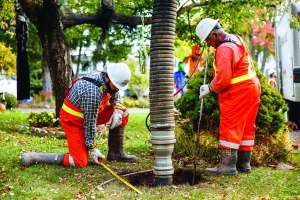
Soft excavation methods are ideal for this purpose, and techniques like vacuum excavation have become increasingly popular with contractors. Potholing, for example, uses a vacuum excavator rather than a shovel or backhoe to create a hole and remove debris. Using air or high-pressure water (hydro), contractors can safely dig underground to expose the existing utilities.
There are several best practices that prevent equipment and utility damage, supporting efficient, safe potholing.
- Start small and expand as needed. Whether using air or hydro, this prevents the contractor from making a larger hole than is required, streamlining efficiency and productivity.
- Maintain water pressure below 2,800 psi.
- Keep the nozzle 6 to 8 inches away from the utility and out of the dirt.
- Move the nozzle constantly during excavation, so the water is not focused only in one specific area.
- Never use the nozzle as a shovel for digging, which can result in clogs and costly downtime.
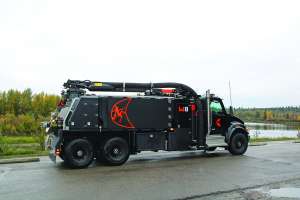
Today, most equipment manufacturers design vacuum excavators with both air- and hydroexcavation capabilities, so operators have the option of using both to meet different needs within a project. OEMs also continue innovating equipment to operate more efficiently on challenging job sites. For example, Ditch Witch’s W8 vacuum excavator is well suited for those congested urban settings. It’s slightly smaller than the W12 truck vac while still maintaining the same level of power and performance.
STEP 3: SECURING A SUCCESSFUL OUTCOME
While the demand for and complexity of underground construction projects continue to rise, underground construction professionals can work together to support safer, more efficient job sites. With today’s advanced utility locators, locate technicians can troubleshoot interference and find the most accurate locate to support informed construction plans.
Vacuum excavation operators can provide visual confirmation of the utilities and prevent any unwanted downtime. Working in tandem, these processes can help mitigate damage, improve productivity and ensure a successful job site.
ABOUT THE AUTHOR
Rodolfo Cabello is the utility locating product manager for Subsite, and Chris Thompson is the vacuum excavation product manager for Ditch Witch.